
Guptkashi Uttarakhand, is a serene town of immense importance for its spiritual charm and timeless beauty. Situated at an altitude of 4,327 feet (1,319 meters) above sea level and surrounded by snow-capped peaks and flowing rivers.
Also, serving as a crucial stopover for pilgrims en route to the Kedarnath Temple, this small site offers a perfect blend of devotion and Himalayan tranquillity for travellers.
In this guide, I’m going to tell you about Gupt Kashi, covering its location, attractions, how to get there, its importance, and everything you need to plan a safe and smooth journey.
You can also check out our Kedarnath tour package cost and details, as it includes a visit to this sacred place along the route.
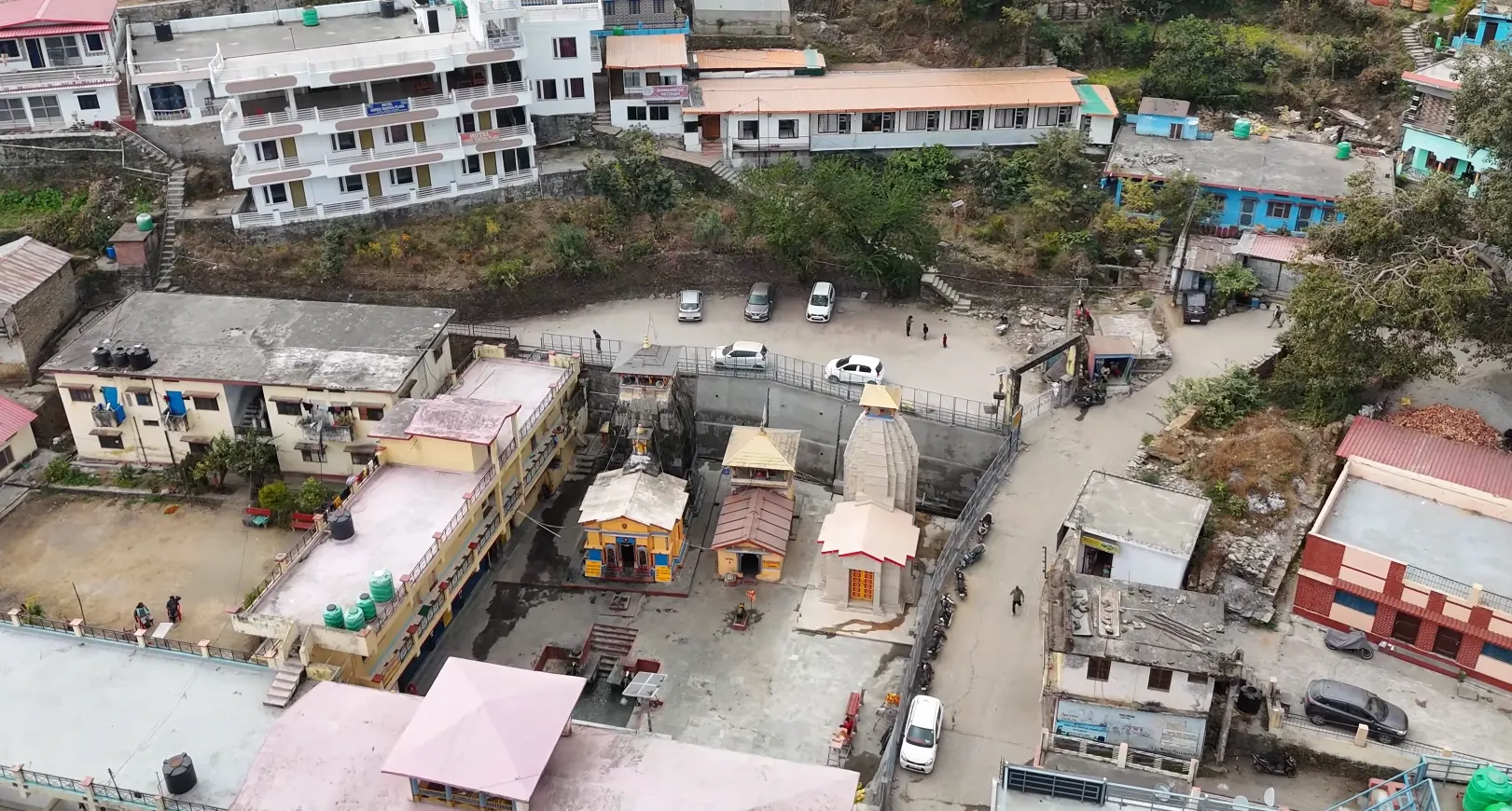
About Guptkashi Uttarakhand
Guptkashi is a significant town in the Garhwal region of Uttarakhand. Located in the Rudraprayag district within the Mandakini River valley, it serves as a vital stopover for pilgrims on the Kedarnath yatra route.
It is often referred to as the “Hidden Kashi” or “Hidden Banaras,” the literary meaning of Gupt Kashi. Holds immense spirituality as the real Kashi Vishwanath Temple in Banaras and mythological significance due to key attractions, such as the Vishwanath Temple (also known as the Vishwanath Temple) and the Ardhanarishwar Temple.
Believed to be a place where Lord Shiva hid himself before appearing in Kedarnath. Beyond its spiritual significance, Guptakashi is a practical hub for Helicopter service to Kedarnath Dham.
Quick Details About Gupt Kashi
- Location: Rudraprayag District, Uttarakhand
- Altitude: 1,319 meters (4,327 feet)
- Guptkashi PIN Code: 246439
- Postal Division: Tehri Garhwal district
- Weather in Guptkashi: Tropical climate all year, from pleasant summer to cold winters
- Nearest City: Rudraprayag
- Nearest railway stations: Haridwar, Rishikesh, & Dehradun Station
- Nearest Airport: Jolly Grant Airport in Dehradun
- Nearest helipad: Guptkashi helipad
- Best time to visit: May to June & September to October
- Key Attractions: Vishwanath Temple (Guptkashi Temple), Ardhnareshwar Temple & Manikarnika Kund
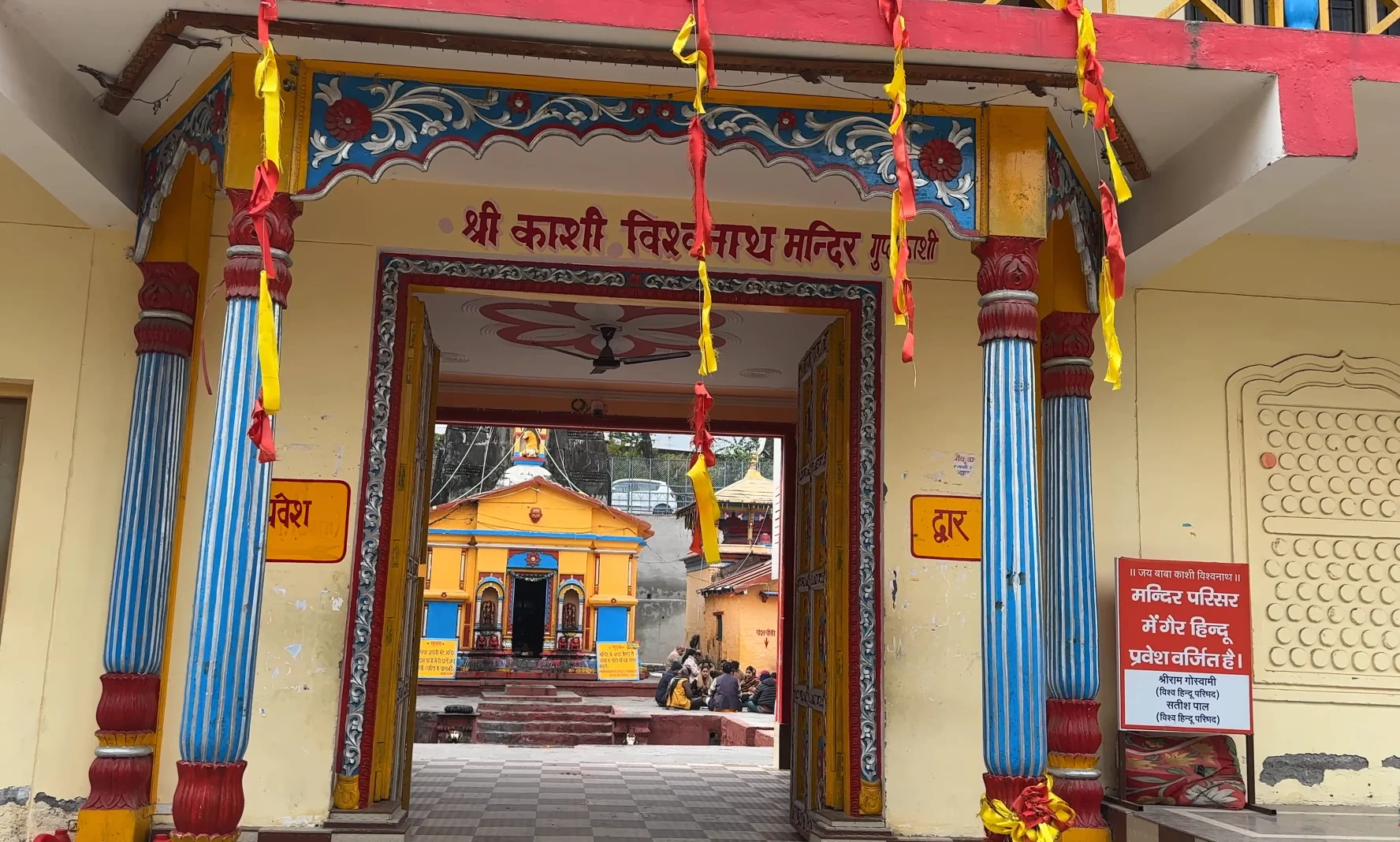
Where is the Guptkashi Temple?
Guptkashi Temple is located in the Rudraprayag district of Uttarakhand, within the Garhwal Himalayas. The temple is just adjacent to the Ardhanarishwar Temple.
- Proximity town: Around 27 km from Sonprayag and 32 km from Gaurikund
- Geographical feature: Nestled in the Mandakini River valley and surrounded by lush green mountain peaks, it attracts pilgrims and travellers.
Why is Guptkashi famous?
Guptakashi is a sacred Himalayan town, located in the Rudraprayag district of Uttarakhand. Widely famous for its ancient temples, like the Vishwanath temple and the Ardhnareshwar temple, the sacred Manikarnika kund, and also serving as a crucial stopover for pilgrims to the Kedarnath yatra.
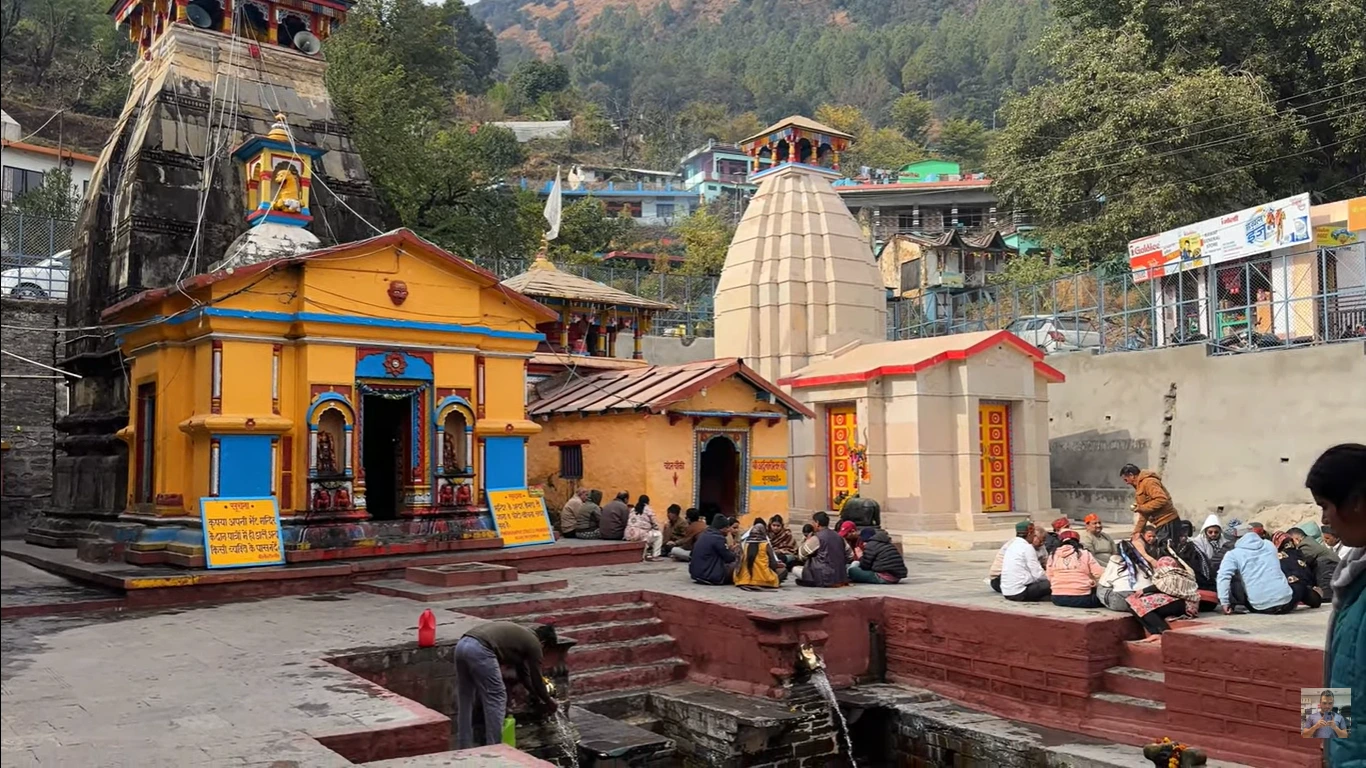
Guptkashi Story
The story of Guptkashi is linked with Hindu mythology and centred on the ancient Vishwanath temple.
The Guptkashi history is primarily rooted in the following legends:
Legend of Mahabharta: According to the belief, Guptakashi is a place where Lord Shiva hid himself in the form of Nandi during his escape from the Pandavas, who sought Lord Shiva’s forgiveness to atone for the sins of killing their Kinsmen in the Mahabharta war.
But Shiva was not ready to forgive them easily; it hid here before its final appearance in Kedarnath. This event gives its name “Gupt Kashi,” or Hidden Kashi.”
Lord Shiva & Goddess Parvati legend: Some local beliefs suggest that Lord Shiva proposed to Goddess Parvati, who performed intense penance to win Lord Shiva’s heart in nearby Gauurikund. While the proposal was here in Guptakashi, their divine wedding took place in the Triyuginarayan temple.
Spiritual Significance of Gupt Kashi
Gupta Kashi is one of the six kashis in India, considered to be as sacred as Varanasi. Visiting such holy sites in Guptakashi, like the Ardhanarishwar Temple and Vishwanath Temple, is equally spiritual to visiting the Kashi of Varanasi.
Manikarnika Kund, within the temple complex. Where the streams of two holy rivers, the Yamuna and the Ganga, meet together, making it a sacred site where pilgrims take a holy bath to purify their bodies and souls before heading on their journey.
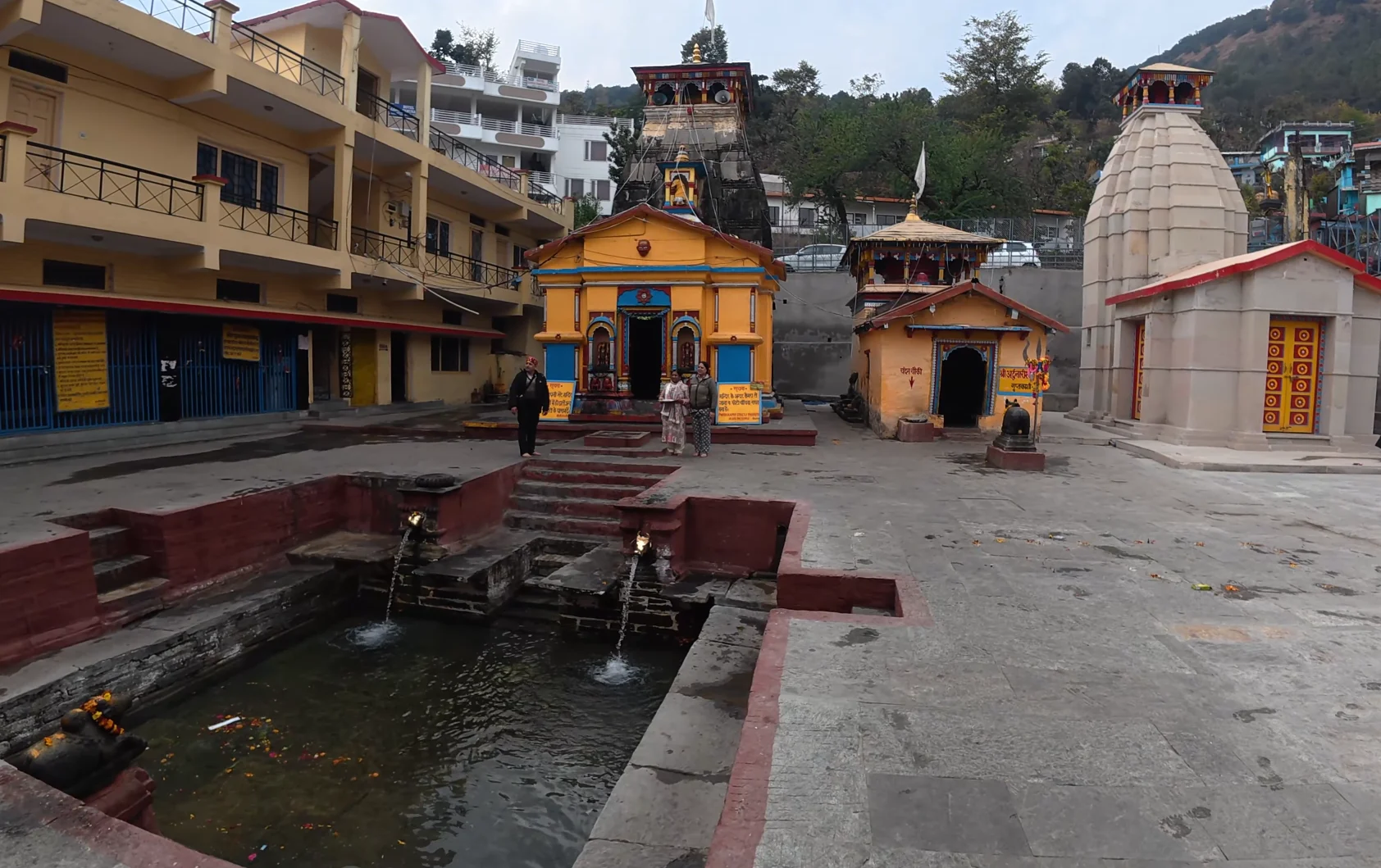
How To Reach Guptkashi
Guptkashi is well-connected by motorable roads from the major transit hubs of Uttarakhand, like Haridwar, Rishikesh, Dehradun, and Rudraprayag. While there is no direct connectivity via air or train to the town itself.
Common Route: Delhi → Haridwar → Rishikesh → Devprayag → Rudraprayag → Guptkashi Temple
Brief overview of how to reach Guptakashi by air, train, or road:
By Air: Take a flight to the nearest Jolly Grant Airport in Dehradun, which is around 195 km away. From the airport, take a cab/taxi or continue to Rishikesh to catch a bus for a direct trip.
By Train: There is no train to the town itself; take a train to the nearest railheads, Haridwar and Rishikesh railway stations, which have great connectivity to all major indian cities.
By Road: Well-connected by road via the NH-7 route, passing through the hilly roads of Uttarakhand.
- From Delhi: Take a bus from ISBT Kashmiri Gate to Haridwar, then Rishikesh first, then a taxi to Guptkashi Temple.
- From Haridwar & Rishikesh: Many pilgrims ask about the Haridwar/Rishikesh to Guptkashi. The answer is to take a local bus to Sonprayag, which has a stop in Guptakashi, or take a private taxi to Guptkashi Temple, for comfort.
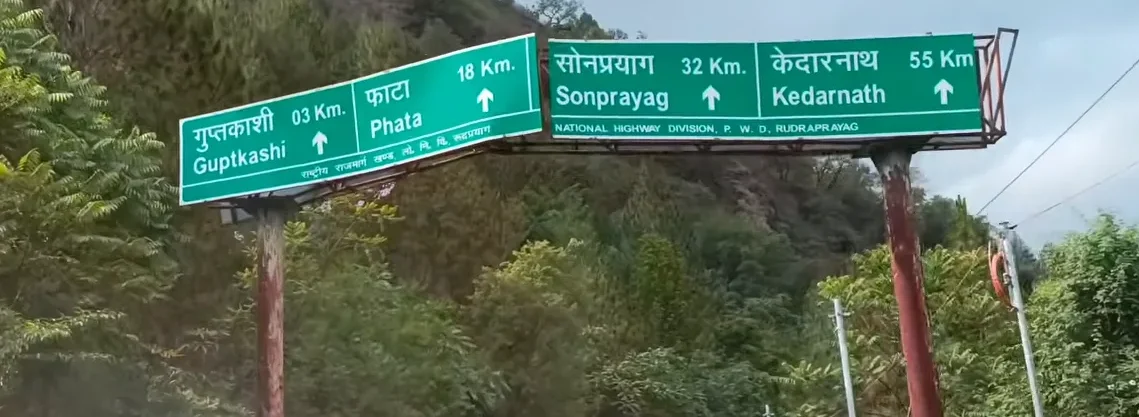
Check: Guptkashi Distance Chart 2026
Guptkashi Weather & Temperature
The weather in Guptkashi remains cold and pleasant all year round and can fluctuate quickly due to the hilly region. Here is a short overview of Guptkashi temperature and weather, and the best time to visit.
- Summer season (April to June): Summer is an ideal time to travel, as during this time, Guptkashi weather is pleasant and stable with temperatures ranging from 10°C to 30°C. Ideal for pilgrimage and sightseeing.
- Monsoon season (July to August): Heavy rain, leading to landslides and roadblocks, making travel risky, so avoid travel during this time.
- Autumn season (September to October): Pleasant and clear views with temperatures ranging between 8 °C and 15°C, making it ideal for pilgrimage and sightseeing.
- Winter season (November to March): Cold and harsh weather with sub-zero temperatures. Occurring snowfall is ideal for those who only love cold climates.
What To See In Guptkashi?
There are so many things to see in Guptkashi Town, including the ancient Guptkashi temple, sacred kunds, scenic beauty, and cultural heritage, which offer a perfect mix of serenity and spirituality.
Here are some top places to visit in Guptkashi, offering a perfect extension for pilgrims heading to Kedarnath and Badrinath.
Top Places To Visit In Guptkashi
- Vishwanath Temple/Guptkashi Temple: An ancient temple dedicated to Lord Shiva, renowned for its similar architecture to the famous Kashi Vishwanath Temple in Uttarakhand. It is believed to be the place where Lord Shiva hid himself from the Pandavas before appearing in Kedarnath.
- Ardhanarishwar Temple: Located just adjacent to the Guptkashi Vishwanath Temple, Ardhanarishwar is another sacred site. It is depicted as a unique feature that represents Lord Shiva as half-male and Goddess Parvati in a half-female form, where these two deities are worshipped together, symbolising the unity of Shiva and Parvati.
- Manikarnika Kund: A small holy pond located within the Vishwanath temple complex. Renowned as a sacred place where the streams of the two most holy rivers, the Yamuna and Ganga, meet together. Pilgrims often take a holy bath in this kund to reduce travel fatigue and find relief here before continuing their journey to the main shrine.
- Narayan Koti Temples: A cluster of some ancient temples dedicated to Laxmi Narayan. Located just 3 km away from the town. Associated with the legend of the Pandavas, mentioned in Kedarkhanda.
Nearby Places To GuptaKashi
- Kedarnath Temple: A main attraction of the region, a revered abode of Lord Shiva. Part of the 12 Jyotirlinga and Char Dham circuits of Uttarakhad. Accessible by a trek from Gaurikund.
- Rudraprayag: A prominent town and meeting point of the Alaknanda and the Bhagirathi rivers, known as one of the Panch Prayag.
- Dhari Devi Temple: An ancient temple dedicated to Maa Dhari Devi (an incarnation of Goddess Kali), located just a few kilometres away from Rudraprayag. It is considered the guardian deity of the Char Dham circuits.
- Triyuginarayan: Located around 40 km away from the town, Triyuginarayan Temple is the site where Lord Shiva and Goddess Parvati got married, making it a prominent site for devotees. It is accessible by a short road drive
- Ukhimath: Ukhimath is a significant spiritual town, famous for its role as the winter home of the Kedarnath and Madhamaheshwar Temples, placed at the Omkareshwar Temple during the winter. Accessible by road; drive via taxi from Guptakashi.
- Kalimath: It is a powerful shrine dedicated to Goddess Kali, known for its unique worship of the Sri Yantra instead of physical idols. Kalimath is one of the Shakti peeths.
Importance of Gupta Kashi in Kedarnath Yatra
Gupta Kashi plays a crucial role in the Kedarnath yatra, serving as a stopover for pilgrims heading to Kedarnath. Offers practical logistical support along with spiritual significance.
Key aspects of Guptakashi’s role in the Kedarnath yatra:
- Hub of crucial amenities: It is a prominent halt point for pilgrims who stay here before heading to the higher-altitude Kedarnath. It offers essential amenities, such as hotels and restaurants. In fact, many travellers are often searching for the best hotels in Guptkashi, as it offers a range of accommodation at various price points.
- Guptkashi Helipad: It is a primary hub for helicopter services to Kedarnath, along with nearby helipads in Phata, Sirsi, and Guptkashi helipad, making it a practical support. The helicopter covers the Guptkashi to Kedarnath distance of 46-48 km in just 10-20 minutes.
- Religious Hub: It is home to ancient temples, such as Vishwanath Temple and Ardhanarishwar Temple Guptkashi, where devotees seek blessings before heading to the main shrine.
- Cultural Heritage: The local Guptkashi market is also popular; travellers can explore to purchase devotional items, such as Rudra beads or other traditional items.
Best Hotels In Guptkashi Uttarakhand
It offers a wide range of accommodation options for pilgrims, who can choose according to their budget and needs. Ranges from basic dharamshalas to luxury resorts.
Below are some suggested options to stay in Guptkashi hotels and resorts:
- Buransh Heli Resort
- Musafir Resort Guptkashi
- Char Machan Resort
- Kedar Valley Resort
- Hotel Narayan Pleasant Inn
- GMVN tourist rest houses
Food options: It features local dhabas and in-site dining restaurants that serve authentic Garhwali cuisine and simple vegetarian meals.
- RR Hotel & Restaurant
- Santhusthi Restaurant
- Several local eateries
Must-try local Garhwali dishes: Kafuli curry, Madhua roti, aloo ke gutke, and Jhangore ki Kheer.
Travel Tips for Visitors
- Start the trip early: Roads are busy in peak season, so start early to avoid traffic.
- Check Road & weather: Weather can change quickly in the hills; avoid travelling in the monsoon and be ready for sudden change.
- Pack essentials: Pack warm clothes, basic medicines, essential documents, and miscellaneous items, including a power bank and a reusable water bottle.
- Connectivity: Networks are weak in the Himalayas, so stay informed. JIO and BSNL work better.
- Book a stay in Advance: The rush is high during peak season, so book your hotel well in advance to avoid last-minute hassle.
- Carry cash: Cash is king in the mountains, as ATMs are rare to find and online payment is disrupted due to poor networks.
- Respect the site: Follow local customs and rituals of the holy sites in the town, and avoid littering.
Final Thought
Guptkashi Uttarakhand, is a destination with its own spiritual charm and natural beauty, making it more than just a stopover on the way to Kedarnath. Offering a perfect blend of devotion, tranquillity, and calmness, it makes an ideal spot for both spiritual enthusiasts and peace seekers.
So whether you are exploring Gupt Kashi as a part of the Kedarnath yatra or just an explorer in the Himalayas, it has something for everyone.
FAQs
Is there snowfall in Guptkashi?
Yes, between December and January, Guptkashi experiences snowfall in the high-altitude region, making it ideal for travellers seeking a snowfall experience and a serene atmosphere.
Why is Guptkashi called Guptkashi?
The place Gupt Kashi, meaning “hidden Kashi,” is named after Shiva escapes from the Pandavas. According to mythology, Lord Shiva hid (gupt) in this sacred spot from the Pandavas, who were seeking atonement for their past sins. Shiva hid himself here in the form of a bull (Nandi) before appearing in Kedarnath.
Which river is in Guptkashi?
The Mandakini River flows in Guptkashi. The town itself sits on the Mandakini River valley ridge, surrounded by lush green peaks, attracting travellers with its scenic beauty.
Are Guptkashi and Kedarnath the same?
No, Guptkashi and Kedarnath are not the same. Kedarnath is a sacred pilgrimage site dedicated to Lord Shiva, while Guptkashi is a sacred spiritual town that serves as a vital stop on the journey to the Kedarnath temple.
Are Sonprayag and Guptkashi the same?
No, Sonprayag and Guptkashi are not the same; both are two different towns in the Garhwal region of Uttarakhand and serve as crucial stopping points for pilgrims visiting sites like Kedarnath, Triyuginarayan, etc.
What is the best time to visit Guptkashi?
Well, the site is accessible all year round, but the best time to visit Guptkashi is considered to be May to June and September to October. Both offer pleasant weather and clear views, making it ideal for pilgrimage and sightseeing.

Partiksha is a dedicated travel content writer with over 5 years of experience in exploring various destinations in India. From mountains, beaches, treks, to spiritual sites, she believes in sharing experiences through creative storytelling, publishing travel guides, and engaging blogs.
She holds the technique to embrace cultures, stories, mythologies, and various experiences to engage with travellers. With an eye for aesthetics, Partiksha has crafted content that motivates travellers to explore beyond the ordinary itineraries. She doesn’t just write content, but makes it relate to the audience and helps them find what they are looking for.
Her expertise is not limited to writing content, but she also does travel blogging, destination reviews, SEO-friendly travel writing, and creative storytelling that reflects both value and authenticity. She believes that every travel destination has a story worth sharing, which helps to connect people with a place. To make your every visit memorable, she continues to do it through her expertise.

Comments (23)