
Introduction
Kalimath is a famous Hindu temple dedicated to Maa Kali. The lower half of Kali is worshipped here, while the upper half is worshipped at the Dhari Devi Temple.
It is one of the 108 Shakti Peeths in India and is considered to be a very powerful seedha peetha. It holds great spiritual significance for devotees who worship Shakti.
The active divine energy of the shrine makes it a perfect spot for those seeking devotion and peace in one trip. Pilgrims often add
This guide explains all about the Kalimath temple, including location, history, significance, nearby attractions, and more. So let’s start.
Quick Facts About Kalimath Mandir Uttarakhand
- Location: Kalimath village within the Rudraprayag District, Uttarakhand
- Altitude: 1,800 meters (6,000 feet)
- Idol: Sri Yantra (there is no traditional idol)
- Significance: Part of the 108 Shakti Peeth
- Nearby towns: Guptkashi (13 km) and Ukhimath (20 km)
- Nearest railway station: Haridwar and Rishikesh
- Nearest Airport: Jolly Grant Airport, Dehradun
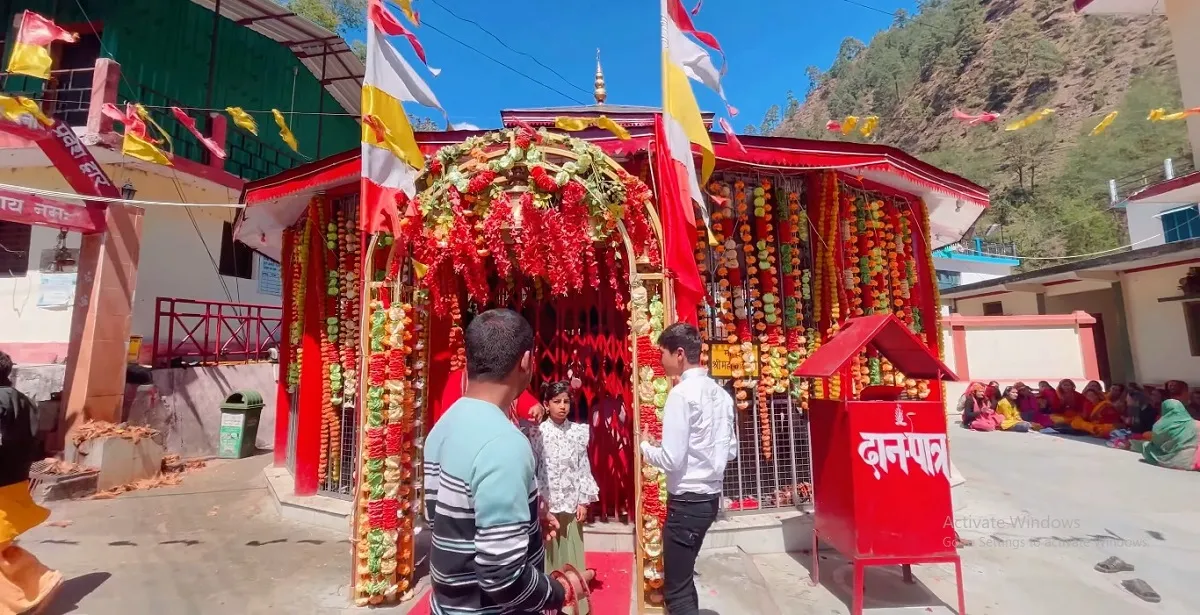
Where is Kalimath Located?
The Kalimath temple is located in the Rudraprayag district of Uttarakhand. This temple is situated on the banks of the Saraswati River (which is known here as Kaliganga) at an altitude of 6,000 feet (1,800 meters) above sea level.
Pilgrims visiting Kedarnath often include this temple in their Kedarnath tour package, as it is a famous Kali Devi Mandir near Kedarnath.
Which river is near Kalimath, Uttarakhand?
The Saraswati River flows near Kalimath Temple in Uttarakhand, which is locally known here as “Kali Ganga” and often called Madhu Ganga (Madhamaheshwar Ganga). The temple sits on the bank of the river Saraswati.
Kalimath Temple History
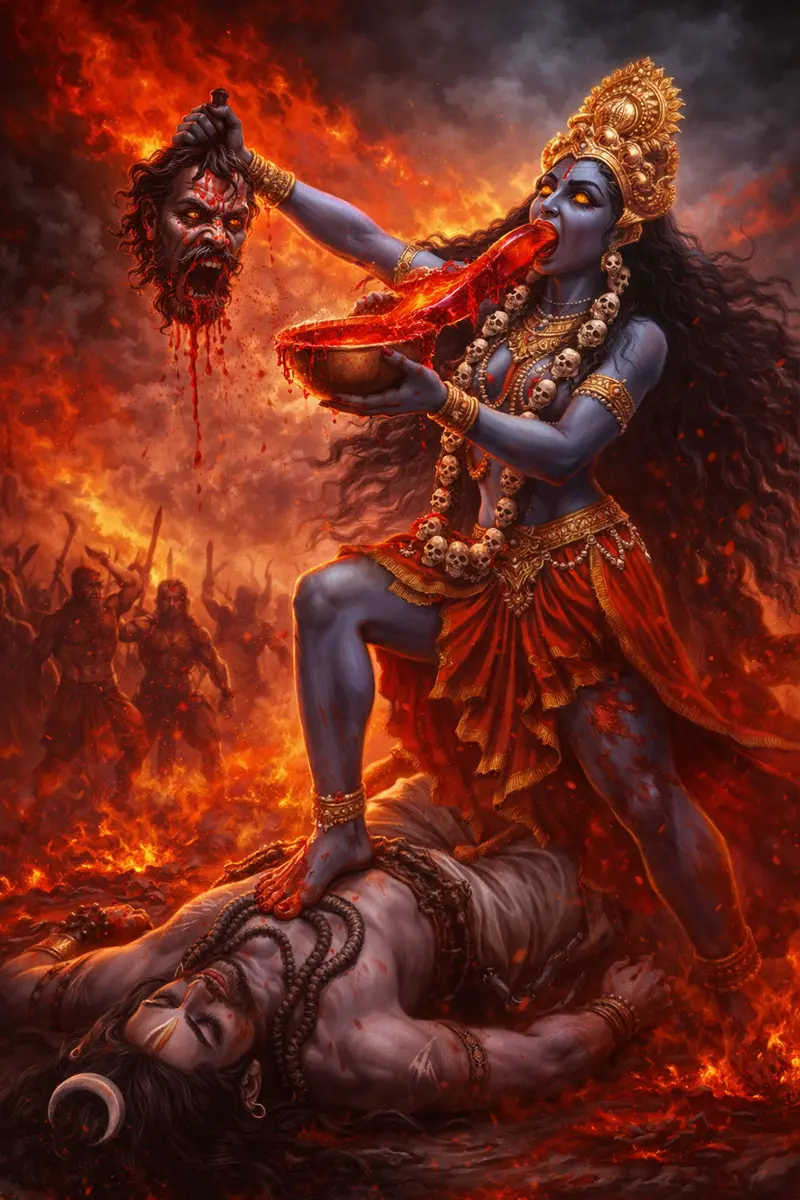
Kali Math is a highly revered ancient shrine, deeply rooted in Hindu Mythology, associated with Goddess Kali. Kalimath history was recorded in Hindu-revered texts such as the Skanda Purana.
According to legend, the temple is the very spot where Goddess Kali killed a demon, Raktabija, who could multiply from every drop of blood. After defeating him, Devi Kali descended underground to earth, making it a sacred spot.
Instead of any traditional idol, Kalimath is worshipped here as a sacred pit known as the Sri Yantra. It symbolises the divine grace of Goddess Kali.
According to local beliefs, the legendary Kavi Kalidas performed intense penance here and was blessed by Goddess Kali to attain extraordinary wisdom and poetic genius at this very sacred site.
Another legend suggests that Adi Shankaracharya, the 8th-century philosopher, rebuilt this temple and performed and promoted some rituals that maintain its status as a sacred Shakti Peeth.
Spiritual Importance of Kalimath Temple
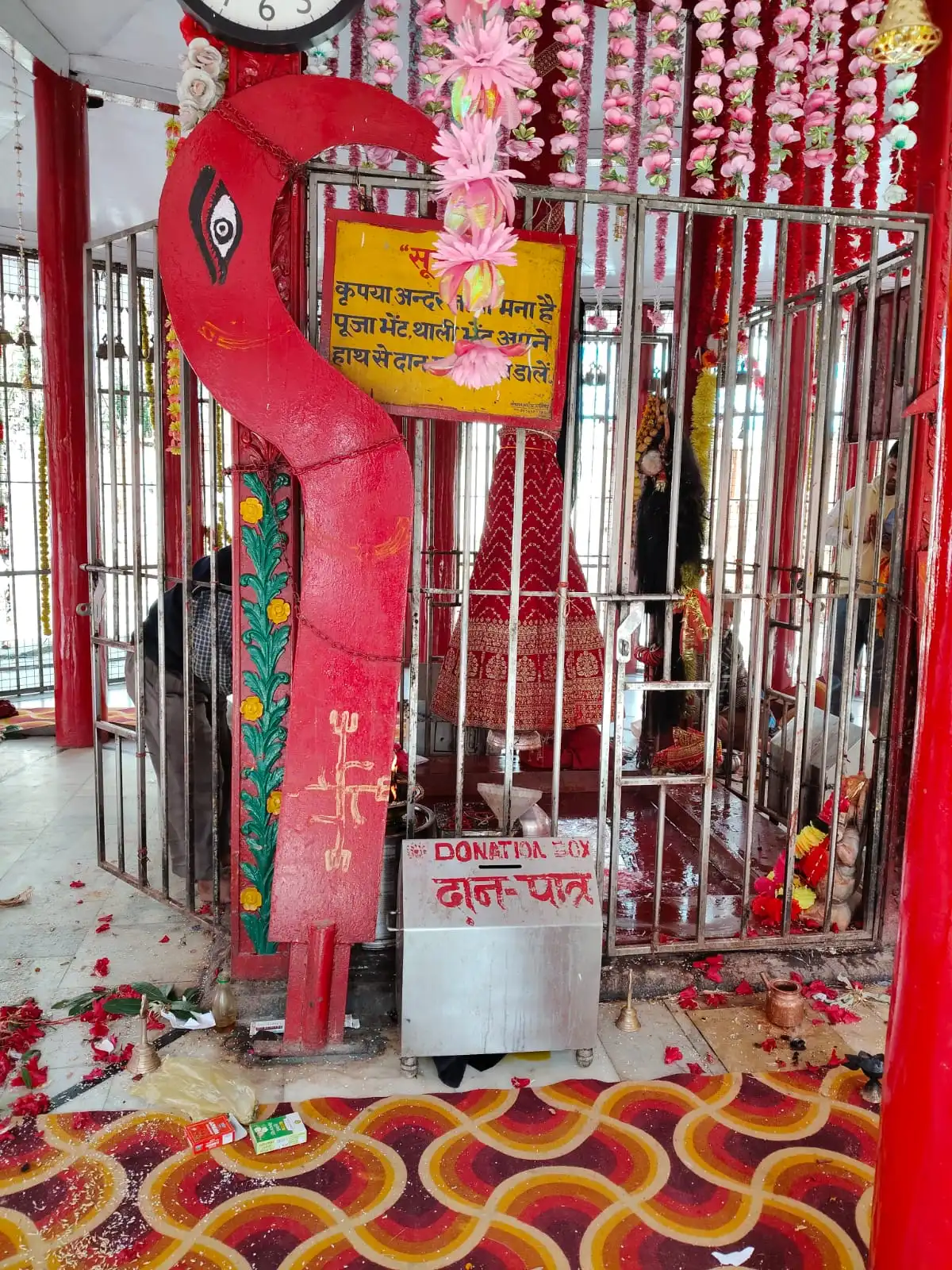
Kalimath holds immense spiritual significance; it is believed to host the deity’s lower half, while the upper part is worshipped at Dhari Devi Temple, another revered shrine in the Rudraprayag district.
But there is another fascinating part about the deity: there is no idol in the temple. Kalimath Temple idol is signified by a Sri Yantra placed on a silver plate, believed to be the spot where the Goddess resides.
Another legend holds that Kalimath is one of the 108 Shakti Peeths, believed to be where Goddess Sati’s right ankle fell, making it an important destination for Shakti devotees.
During Navratri, the temple hosts great festivals and rituals, attracting devotees and saints to experience its powerful energy. Shree Kalimata Mandir in Kalimath is one of the sites where Goddess Kali has three primary forms: Maa Kali, Maha Laxmi, and Maa Saraswati are worshipped together.
Is Kalimath a Shakti Peeth?
Yes, Kalimath is a Shakti Peeth, as one of the 108 Shakti Peethas, mentioned in ancient texts; Srimad Devi Bhagwat Mahapuran and Skanda Purana. The lower half of Maa Kali is worshipped in the temple as a Shakti Peeth, and the upper half is at the Dhari Devi Temple. It is one of the famous Shakti Peeth near Kedarnath.
Which part of Sati fell in Kalimath?
The right ankle of Maa Sati fell here, making it a spiritually revered Shakti Peeth in Kalimath Temple for devotees of Shakti. The temple houses the lower half of Maa Dhari Devi, but there is no idol inside the temple; a Sri Yantra is enshrined as the Kalimath temple idol.
Architecture Features of Kalimath Temple
The Kalimath temple has a very simple architecture that reflects the traditional Garhwali Himalayan style. The main sanctum is built on a square platform with a sloping roof.
It houses the temples of the Trinities: Mahalaxmi in the centre, Mahakali to the right, and Mahasaraswati to the left. It follows the Durga Saptashati.
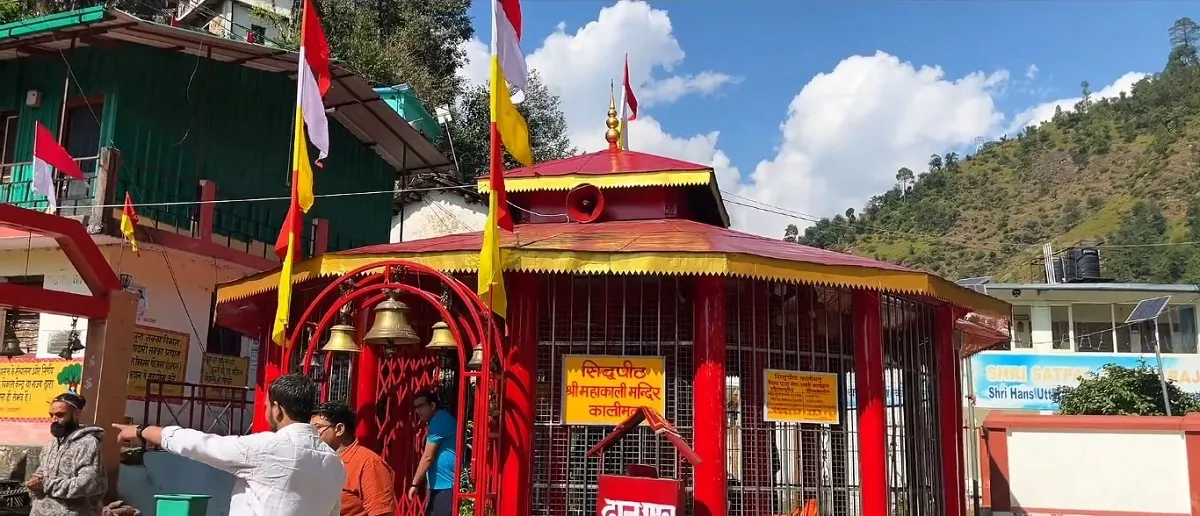
Other temples in this area are the Gauri Shankar Temple and the Bhairavnath Temple.
Let’s take a look at key temples in Kalimath.
- Kali Temple: The main shrine, featuring modern architecture. It is built on 7-foot-high pillars that do not contain any physical idol of the deity, but rather this plate (Sri Yantra) is worshipped. This Rajpat Sri Mahalaki Yantra is covered with a kund, and a hanging structure is beautifully dressed in a saree.
- Mahalakshmi Temple: Mahalakshmi temple is the largest among the three temples, featuring a 12-tiered shikhara. It also houses a sacred flame, Akhand Dhuni, which is believed to have been burning for three yugas. The temple resembles a four-armed (Ashtadhatu) idol of Goddess Laxmi.
- Mahasaraswati Temple: Situated just to the left of the Lakshmi temple. It showcases an eight-armed idol of Maa Saraswati that holds weapons rather than a veena. It symbolises completing the trinity.
- Gauri Shankar Temple: Another prominent shrine dedicated to Goddess Parvati and Lord Shiva, and established by Adi Shankaracharya within the same vicinity. It is a 30-foot-high temple, showcasing an idol of deities in Pranay Mudra (loving posture).
Kalimath Temple Timings
These are the Kalimath Temple Timings for darshan and aarti:
| Event | Time |
| Kapat open time: | At 5:00 a.m. |
| Morning Aarti: | 6:00 a.m. |
| Morning Darshan: | 7:00 a.m. to 12:00 p.m. |
| Bhog & Afternoon break: | 12:00 – 2:00 p.m. |
| Evening Darshan: | 2:00 p.m. to 7:00 p.m. |
| Evening Aarti: | 7:00 p.m. |
| Kapat Closing: | At 9:00 p.m. |
Kalimath temple opens at 5:00 AM every day. After the temple opens, morning aarti is performed at 6:00 AM, and then the general public is allowed to have darshan of Maa Kali.
Morning darshan timings at Kali Math temple are from 7:00 AM to 12:00 PM, and from 2:00 PM, there will be an afternoon break for bhog and rest.
After the break, devotees can visit the temple for evening darshan. The evening darshan timings start from 2:00 PM to 7:00 PM. Evening aarti in the temple is at 7:00 PM, and the temple closes for the day at 9:00 PM.
Auspicious timings based on Spiritual Events & Festivals
Chaitra Navratri (Springtime): Major nine-day celebrations honouring the Goddess.
Sharad Navratri (Autumn): Another auspicious time, on the 8th day of Navratri (Ashtami), the silver plate is opened and the idol is brought out at midnight for a special Puja, performed by the Chief Priest.
Best Time To Visit Kalimath Temple
Unlike many Himalayan temples, the Kalimath temple is open all year round, but the best time to visit Kalimath is from April to June in summer and September to November in autumn.
However, it depends on travel styles, the weather and the experience you are looking for, based on religious importance.
Ideal Time To Visit Based on Weather & Accessibility
Summer Season (April to June): One of the most ideal times to visit Kalimath is during the summer months, considered as peak season. Offering pleasant weather with a temperature range from 10°C to 30°C and clear skies, making it perfect for temple visits and sightseeing.
Autumn Season (September to November): Another good time after the wet monsoon, offering a lush green Himalayan landscape and clear visibility of the surroundings. During this period, the weather is pleasant and cool with crisp air, ideal for exploration.
Time to Avoid
Monsoon season (July to August): Monsoon is considered an avoidable time for Kalimath, as it experiences heavy rain in this region, leading to landslides and road blockages, making it risky to travel. So avoid it.
Winter season (December to March): During the winter, the temple remains open, but it experiences freezing weather with temperatures dropping to sub-zero degrees. Only a good time for those seeking a peaceful experience with snow-clad peaks.
How to Reach Kalimath
To reach Kalimath, you may first reach Rudraprayag, which is well-connected to major pilgrimage hubs. From Rudraprayag, you can take any local transport to reach the temple.
Here is a brief on how to reach the Kalimath temple.
By Air: No direct connectivity to the site itself. The Jolly Grant Airport in Dehradun is the nearest airport to Kalimath, which has great connectivity to major indian cities. From the airport, you can take a taxi or shared jeep to reach the temple.
By Rail: Like the airport, no rail connectivity to the temples. But to reach Kalimath by train, you can take a train to nearby railheads, which are Haridwar (HR) and Rishikesh railway stations, well-connected to all Indian cities. From either of these stations, you can hire a taxi or local bus to Rudraprayag or Guptkashi, Uttarkhand. From there, take a shuttle taxi to reach the temple.
By Road: Travel by road is the most direct way to reach Kalimath, offering great connectivity to all major indian cities. Firstly, travel to Haridwar/Rishikesh. From there, board a bus to Rudraprayag, where the Kalimath temple is around 45 km away, easily reachable via shared taxi or private car.
Most common route:
Haridwar Uttarakhand → Rishikesh → Devprayag → Srinagar → Rudraprayag → Guptkashi → Kalimath
Note: If you are planning to visit here by your own vehicle during the Kedarnath Yatra season, then make sure you carry a car cover and an extra wheel lock with you, as there is a high chance that you may not get any proper parking spot, and you need to park on the road.
Nearby Places To Visit In Kalimath
There are numerous places to visit, which you can explore while visiting Kalimath. Here are some scenic and spiritual attractions near Kalimath.
- Kalishilla: A sacred rock near the Kalimath village. Holding significance, it is believed to be a place where Goddess Kali Meditated and Sati was reborn as Devi Parvati. It is accessible by an 8 km scenic trek.
- Kaviltha Village: A serene village, located 2 km east of the Kalimath temple. It houses a museum of Kavi Kalidasa. In this village, a three-day festival is celebrated in his honour.
- Ukhimath: A nearby town, located at a very short distance of around 20 km from Kalimath. Known as the “Winter abode of Kedarnath“, it holds great spiritual significance.
- Guptkashi: Another scenic attraction, Guptkashi, is located just 13 km before Kalimath. Serving as a main stop for devotees heading to the Kedarnath Yatra and widely known for its scenic and serene environment. You can check out the details about how to reach Guptkashi by visiting our blog section.
- Kedarnath Temple: Located around 45 km from Guptkashi, Kedarnath Temple is one of the sacred shrines of Lord Shiva, part of the 12 Jyotirlinga and Panch Kedar circuit.
- Dhari Devi Temple: Located around 66 km away, Dhari Devi holds the upper half of Goddess Kali, making it a must-visit place for devotees.
- Triyuginarayan Temple: Well known as the marriage place of lord Shiva and Maa Parvati, Triyuginarayan Temple is one of the most famous places to visit near Kalimath Temple. It is located at a distance of just 48 Kms from the temple.
Most pilgrims visiting Kalimath also cover Triyuginarayan, Guptkashi and Kedarnath in the same journey. You can check our detailed Kedarnath Yatra Itinerary for route planning and travel tips.
Accommodation & Food Options In Kalimath
Where to Stay In Kalimath
Kalimath offers a wider range of accommodations, including Lodges, guest houses, homestays, and resorts. For better options, you can choose to stay in nearby towns such as Guptkashi and Ukhimath. We are located in Guptkashi. You can consider staying at Musafir resort, Guptkashi, for the best hospitality and amazing views.
Where to eat in Kalimath
You can easily find simple local eateries inside the village, serving simple, authentic local North Indian cuisine. Sristi Restaurant, City Family Cafe, and Sristi Restaurant are popular nearby food options in Kalimath.
Travel Tips For Visitors
- Pack essentials: Packing is a crucial part of a journey; carry all necessary things such as warm clothes, a medical kit, day packs, energy bars, and documents.
- Start early: Start your trip early in the day to avoid traffic and spend more time at the sanctum.
- Check the weather: The weather can change quickly, so check the weather before planning the trip.
- Respect the site: Kalimath is a divine site, so follow the local rituals and customs of the site.
- Book a stay in Advance: Book your hotel in advance, especially if you plan to visit during peak season (April to June).
- Prefer an experienced driver: Hire an experienced driver who is familiar with mountain roads for your entire trip.
Conclusion
Kalimath is a truly enriching spiritual experience that connects devotees with Inner peace and the powerful energy of the site. The serene and divine environment of the site offers a perfect escape from chaotic life. It offers the perfect blend of nature, divinity, and serenity.
So if you are planning for Kedarnath or the Do Dham Yatra, Kalimath can be a perfect add-on for your complete spiritual journey. Check out our Kedarnath trip package form Haridwar to customise your trip, aligning with your requirements.
FAQs
Why is Kalimath famous?
Kalimath temple is famous as the revered shrine of Goddess Kali, who is worshipped here with her sisters Maa Laxmi and Maa Saraswati. It is the same place where Maa Kali killed the demon king Rakta Beeja.
Is there any idol of Goddess Kali in Kalimath?
No, there is no physical idol of Goddess Kali in Kalimath. Instead of this, a silver plate, often known as the “Rajpat Sri Yantra,” is worshipped here, attracting many devotees across India.
What is the history of Kalimath?
The history of Kalimath is connected to ancient stories of Kalimath; it is believed that the Goddess Kali killed the demon Raktabija at this very spot. The demon could multiply by a drop of blood. After killing the demon, Maa Kali resided in the earth and made it a sacred spot for devotees.
Are there other deities worshipped in Kalimath?
Yes, there are several shrines inside the main sanctum of Kalimath, which are the Mahalaxmi temple, the Maa Saraswati temple, and the Gauri Shankar temple, worshipped here along with the Goddess Kali shrine.
| Packages Kedarnath Package From Ahmedabad Kedarnath Tour Package from Bangalore Nagpur To Kedarnath Packages Surat To Kedarnath Tour Package |




Can we visit to Kedarnath and Kalimath temple in 4 days tour. Please suggest.
Yes definitely. You can cover both the Kedarnath and the Kalimath temple in just 4 days trip. Kalimath temple is located at a distance of just 13.2 kms one way, which can be covered in 1 hour. So on the very first day of your travel from Haridwar to Guptkashi, you can start your journey early in the morning and can have darshan at the Kalimath temple on the same day.