
You must have visited thousands of places, but have you ever thought of visiting the Shiv Parvati marriage place and witnessing the holy flame of Akhand dhuni (perpetual fire) burning since their marriage?
Welcome to the Triyuginarayan temple (त्रियुगीनारायण मंदिर), where devotion and nature come together with an ancient legend that cannot be erased. It is not just a site of exploration but a holy place dedicated to lord Vishnu. It has witnessed the first love marriage on earth.
Many locals also name it as Trijuginarayan, as it is believed to have stood since three yugas, i.e. Satyuga, Dwapar and Treta yuga. Today, this holy place is gaining popularity as a famous destination for weddings, and devotees visit here to seek blessings for a prosperous married life.
This guide will explain everything about Triyuginarayan, covering its location, history, significance, how to reach it, the best time to visit, and more, to help you plan a comfortable spiritual journey.
About the Triyuginarayan temple
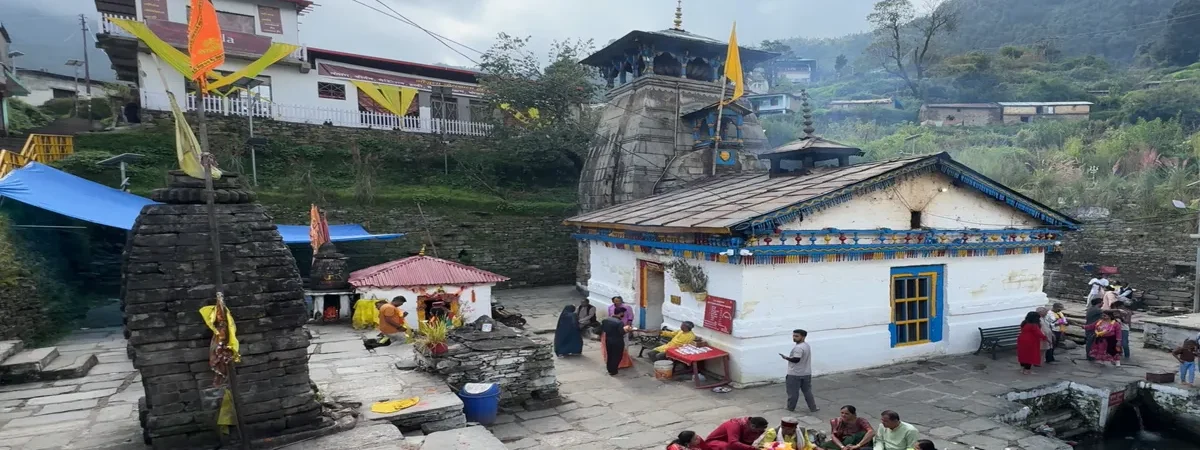
Triyuginarayan is an ancient Hindu shrine where lord Shiva and Maa Parvati got married. It is located at an altitude of 6500 feet (1900 meters) above sea level in the Garhwal Himalayas of Rudraprayag district in Uttarakhand.
The closest market to Triyogi Narayan temple is Sonprayag, which is located at a distance of just 12 Kms. Sonprayag is also an important base and starting point of the Kedarnath trek.
Every year, millions of travellers, including pilgrims, couples, and spiritual travellers, visit here to witness the grandeur of lord Shiva and Maa Parvati’s marriage spot.
Now it is becoming a popular and official wedding destination even under the Uttarakhand government scheme of “Wed-In-India.” In addition to this, many celebrities are also taking an interest in getting married at the Trijuginarayan temple.
Note: In our Kedarnath group tour package, this temple is not included, but if you are planning a customized package, then definitely you can get it included in your Kedarnath personal tour package.
Triyuginarayan Temple History
Triyuginarayan’s temple history dates back to three cosmic yugas: Sat Yuga, Treta Yuga, and Dwapar Yuga. While the physical stone temple has been re-established by the sage Adi Shankaracharya.
Origin of Triyuginarayan
The name “Triyuginarayan” translates as the abode of Lord Vishnu across the three yugas. It derives from the word “Tri” (meaning “three”) + “Yug” (meaning “ages”) + “Narayan” (meaning Vishnu) and signifies its existence through the cosmic ages. Some locals also name it as Trijugi Narayan, in which Tri means three and Jugi means from three yugas or ages.
It is believed that this temple has been standing here since the three yugas and is a living witness to the first love marriage of Lord Shiva and Maa Parvati.
The present structure of the temple is attributed to Adi Shankaracharya, who built it in the 8th century and established this site as a significant shrine.
Mythology Story of the Triyuginarayan temple
Triyuginarayan is steeped in great mythology and mentioned in texts such as the Skanda Purana. According to Hindu mythology, it is the divine place of the union of Lord Shiva and Goddess Parvati.
Story of Divine wedding
The story of this holy marriage starts when the Pandavas went to Kashi to seek the abstention from sin of killing kins and gurus in the battle of Kurukshetra. As lord Shiva was angered by the huge bloodshed, he left Kashi and sought shelter at Guptkashi Uttarkhand.
Maa Parvati, who was the daughter of King Himavat, fell in love with Lord Shiva and tried to allure him with her beauty, but failed. Then she decided to do intense penance near Gaurikund. Lord Shiva was pleased with her penance and agreed to get married to Maa Parvati.
Scriptures suggest that Triyuginarayan was the capital of King Himavat, so the wedding took place in that temple.
Their wedding was a grand procession, attended by all gods and sages and the divine roles played by gods. Like Lord Vishnu acted as Goddess Parvati’s brother and performed the Kanyadaan ritual, while Lord Brahma (the creator of the universe) played the role of head priest and officiated the entire wedding. So this holy temple is well known for Lord Shiva and Maa Parvati’s marriage, but is dedicated to lord Vishnu.
Triyuginarayan Temple Architecture & Features
The Triyuginarayan temple architecture is simple yet attractive, showcasing traditional north indian himalayan architecture, resembling the nearby Kedarnath temple, Guptkashi temple, Omkareshwar temple in Ukhimath, etc. Constructed from massive grey stone slabs and featuring classic structures, the Garbha Griha (Sanctum) and Mandap (Shikhara).
Triyuginarayan is dedicated to Lord Vishnu, and the main sanctum houses a 2-foot idol of Lord Vishnu, accompanied by the idols of Goddess Laxmi and Goddess Saraswati.
Unique architectural features:
Akhand Dhuni: Symbol of Timeless History
Akhand Dhuni, a perpetual flame, is one of the prominent historical elements located in the courtyard. Believed to be lit during the divine marriage in Satyuga and is being preserved by the locals from generation to generation. It is burning in a hawan kund located in front of the temple, and has been alive since the marriage of Lord Shiva and Maa Parvati.
It holds great significance; devotees offer wood, sesame seeds and jowar in this fire to keep it alive. Many devotees also collect its ashes (विभूति), believed to promote marital harmony and family well-being.
Sacred Kunds Near Triyuginarayan Temple
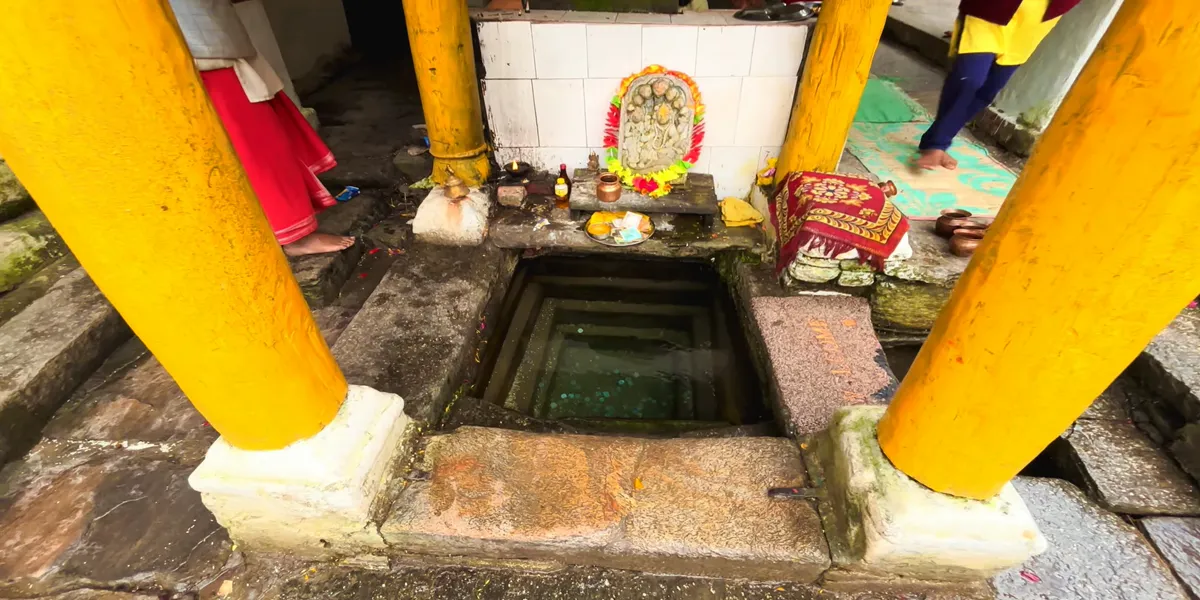
There are four main holy ponds, each of them dedicated to a different deity and believed to be replenished by the natural stream named Saraswati Ganga. Let’s know more about it.
- Rudra Kund: The first and foremost kund located in the compound of the Triyuginarayan temple is Rudra Kund. It is dedicated to lord Shiva. As per the holy scriptures, it is believed that this is the same pond in which all the deities took a bath before taking part in the marriage ceremony. Even today, devotees take a bath in this Kund before entering the temple. It signifies the purification of body and mind.
- Vishnu Kund: Another most holy kund located in the compound of the Triyuginarayan temple is Vishnu Kund. It is dedicated to lord vishnu and is believed that he took a bath in this Kund before the Kanyadan ceremony. The water of Vishu Kund is now used for purification purposes before organising any pooja or wedding.
- Brahma Kund: The third most important kund located in the temple compound is Brahma Kund, dedicated to lord Brahma. It is believed that water from this kund is used for sipping water ( आचमन), Tarpan and ancestral offerings. Brahma, being the head priest of this marriage, used the water from this pond for this purpose.
- Saraswati Kund: Saraswati Kund is the source of all other Kund dedicated to Maa Saraswati and is believed to originate from the naval of lord Vishnu. This kund signifies the source of knowledge, purity and origin of life. Water from this kund is generally used for purification before marriage and pooja.
Brahma Shila: Brahma Shila is a sacred slab made of stone, located in front of the temple, marking the exact spot where the wedding rituals took place.
Significance of Triyuginarayan Temple
Beyond its historical and mythological significance, Triyuginarayan is a living spiritual heritage. For many years, the scenic atmosphere and divine energy have attracted sages, pilgrims, and devotees who are seeking divine blessings.
Due to its unique history and divine connection, Triyuginarayan holds a special place in Hindu beliefs. Under the new initiative “Weds-In-India” of the Uttarakhand Government, the Triyuginarayan temple has become one of the most spiritual wedding venues. Attracted many couples across the world to take their pheras, or “Saptapadi” (seven vows), around the same eternal fire, the Akhand Dhuni.
Notable Celebrities Married at Triyuginarayan Temple
Till 2015-16, this temple was visited only by the travellers to Kedarnath temple and especially by those devotees who were interested in the story of lord Shiva and Maa Parvati.
Nowadays, many celebrities consider the Triyuginarayan temple to get married instead of a luxurious destination wedding. It is believed that getting married at this temple is very auspicious. This has brought much media coverage and influencer blogging to this temple.
Some of the most celebrities or public figures who got married in this temple are:-
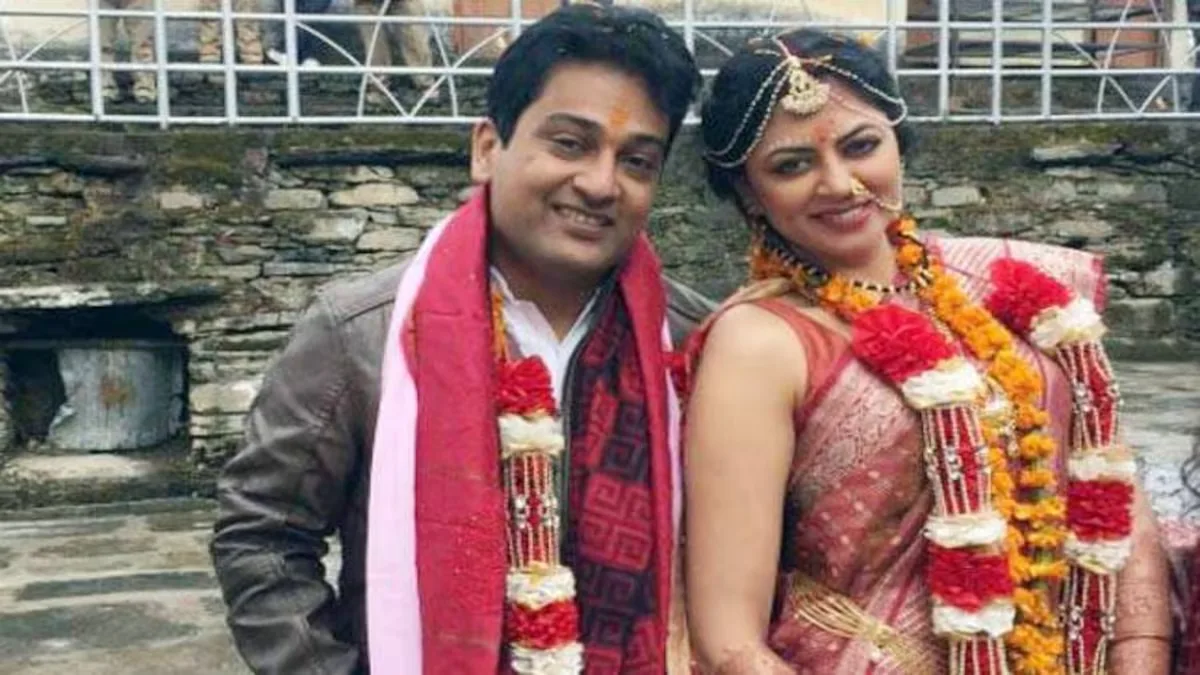
Kavita Kaushik & Ronnit Biswas (2017)
Well-known actor of the FIR serial, Kavita Kaushik and Ronnit Biswal got married in 2017. It is being considered to be the first worldwide media endorsement of this temple.
The marriage took place during the winter season, which also glorified it as a unique mountain wedding instead of a traditional banquet hall wedding.
Nikita Sharma & Rohandeep Singh (2021)
Another prominent TV serial actress, Nikita Sharma, who is also known as Antara Kaul in the Do Dil Ek Jaan serial, married Rohandeep Singh at the Triyuginarayan temple in 2021. The wedding took place as per the Hindu tradition around the Akhand Dhuni, and she proudly highlighted the meaningful wedding where she could receive the blessings of Lord Shiva instead of extravagance.
Chitra Shukla & Vaibhav Upadhyay (2023)
Actress Chitra Shukla is married to IFS officer Vaibhav Upadhyay, which signifies the growing temple popularity among public figures.
In addition to these celebrities, many social media influencers also got married at the Triyuginarayan temple. Some celebrities like Arti Singh and Dipak Chauhan did not really get married here, but they visited this temple after their marriage to seek the blessings of the deity.
How To Reach Triyuginarayan Temple
To reach the Triyuginarayan temple, you must travel to Sonprayag (the primary base point), which is well connected to major transit hubs like Haridwar and Rishikesh (Yoga Capital of India). From Sonprayag, the temple is around 12 km. If you book a package with Musafir resort, we provide a personal vehicle for your visit; else, if you are travelling on your own, you can hire a local taxi, which is easily available during the Do Dham yatra season.
Here is a short overview of how to reach the Triyuginarayan temple.
By Air: Fly to Jolly Grant Airport in Dehradun, which is the nearest airport to Triyuginarayan, around 250-26 km and well-connected to major indian cities. From the airport, you can take a taxi or bus to Sonprayag. After reaching Sonprayag, you need to take a shuttle taxi to reach Triyuginarayan.
By Rail: There is no direct train to Triyuginarayan, as there is no railway station in the village itself. You can take a train to the nearest railway station, Haridwar and Rishikesh, offering great connectivity to all major indian cities. From either of these stations, you can take a local bus or taxi to Sonprayag and continue to Triyuginarayan.
By Road: Travelling by road is the more direct way to reach Triyuginarayan, following a very scenic route, the NH-107.
How to reach Trijuginarayan Temple from Haridwar or Rishikesh.
You can take a government or privately operated bus from Haridwar or Rishikesh bus stand to Sonprayag. These buses generally start early in the morning, from 5- 8 AM. If you don’t get a direct bus, you can also take a connecting bus till Rudraprayag. From Rudraprayag, you can either take a local taxi or another bus to reach Sonprayag.
From Sonprayag, you need to hire a local taxi to reach the Triyuginarayan temple. Total travel time from Haridwar to Triyuginarayan is going to be 10 to 12 hours during peak season and 7 to 8 hours during the off-season.
Common route: Haridwar → Rishikesh → Devprayag → Srinagar → Rudraprayag → Sonprayag → Triyuginarayan
Note: The road from Sonprayag to Triyuginarayan is very narrow and steep, so it will take about 1 hour to cover 12 Kms. There are limited stay options near the Triyuginarayan temple, so make sure to book your stay well in advance or complete your yatra well on time and return to Sonprayag before 6:00 PM; otherwise, you may not get a return taxi.
Also Check: Triyuginarayan Temple Distance Chart
Best Time To Visit Triyuginarayan Temple
Although the Triyuginarayan temple is accessible and open all year round, the best time to visit is from April to June (Summer) and September to November (Autumn), as these periods offer stable weather, excellent visibility and accessibility, making it perfect for temple visiting and sightseeing. If you want to experience the snowfall and peace, then December and January are an ideal time to visit here.
Here is a brief about the seasonal breakdown of Triyuginarayan weather, which helps you to choose the best time to visit.
Ideal Time to Visit
- Summer (April to June): Summer is the most ideal time to visit Triyuginarayan, as it experiences pleasant weather with mild temperatures ranging between 10°C and 30°C, and clear views of the peaks make it an ideal time to visit. This time is ideal for travelling with family, especially kids and older people.
- Autumn (September to October): Post-monsoon is another ideal time to visit Triyuginarayan, as the weather becomes pleasant again and landscapes turn green, offering great visibility, making it ideal for sightseeing and outdoor activities. This is good for youngsters willing to have a peaceful darshan.
- Winter (December or January):- Those who are planning for a peaceful holiday with some of the beautiful views, then visiting here in December or January is the best option. It is ideal for newly wed couple and youngsters.
Time to Avoid
- Monsoon (July-August): Monsoon occurs with heavy rain that leads to landslides and makes trails slippery and difficult to navigate and travel. So avoid it.
- Winter season (December to March): Visiting here during the winter season is not suggested for old age people or kids, as the temperature here during winter falls to sub-zero degrees. You may also experience live snowfall during this time, making roads slippery.
Triyuginarayan Darshan & Aarti Timings
The temple follows a basic schedule of Darshan and Aarti events, given in the table below.
| Event | Timing |
| Kapat Open: | At 5:30 a.m. |
| Morning Aarti: | At 6:00 a.m. |
| Morning Darshan: | 7:00 a.m. to 12:00 p.m. |
| Bhog & Afternoon break: | 12:00 p.m. to 2:00 p.m. |
| Evening Darshan: | 2:00 to 8:00 p.m. |
| Evening Aarti: | 6:30 to 7:30 p.m. |
| Kapat Close: | At 9:00 p.m. |
Note: Timings can vary by season or on special occasions, so confirm with the locals.
Stay & Food Options In Triyuginarayan
Accommodations in Triyuginarayan are basic, with budget hotels, dharamshalas, and homestays near the temple.
Some popular hotels in Triyuginarayan, such as Hotel Achutyam, Hotel Mandakini, and GMVN Triyuginarayan, are near the temple.
For a better option, you can choose to stay near Sonprayag or in Guptkashi. You can also consider staying in Musafir resort as we provide the best accommodation with all the modern amenities possible on the mountain.
Restaurants in Triyuginarayan:
- Food options in Triyuginarayan are basic, serving local Garhwali cuisine and North Indian food.
- Mandakini Restaurant and Vidya Jagat Restaurant are some popular food options.
- You can also prefer some local small dhabas, like Kavya Hotel & Restaurant and Kanahiya Hotel, which provide local thalis.
Tips for Visitors
- Start early: To avoid the crowd and mountain traffic, start your journey early.
- Book your stay in advance: For better deals and secured preferences, book your stay in advance.
- Respect the site: Follow the rituals and rules of the temple and avoid littering around the site.
- Keep emergency contact: Always keep emergency contact ready, as the network is very poor in remote regions.
- Pack Essentials: Pack warm clothes, basic medicines, rain gear, light snacks, etc.
Conclusion
Thus, Triyuginarayan is a powerful symbol of eternal love, devotion, and divine blessings, which make the site more than just a destination.
So whether you are a pilgrim seeking blessings, a traveller seeking solitude in the Himalayas, or a couple beginning their new journey, Triyuginarayan offers something unique. The calm and scenic environment makes it a must-visit destination for every traveller, especially those who are on their spiritual journey to Kedarnath Temple, as it lies on the same route. Many pilgrims include Triyuginarayan in their Kedarnath Yatra Package as it lies on the same route
So if you are planning your next pilgrimage in Uttarakhand, make sure to add Triyuginarayan to your playlist. Just contact our customer care executive on “87961 23073″, and they will help you design the best itinerary for you.
FAQs
Why is it called Triyuginarayan?
The place called Triyuginarayan, as the name derives from three words—”Tri” means three, “Yugi” means Age, and “Narayan” means Lord Vishnu—reflects the site of Lord Vishnu across the three yugas.
What is Triyuginarayan famous for?
Triyuginarayan is widely famous for its devotional and natural charm. Known for the ancient temple of Lord Vishnu, Akhand Dhuni, and the sacred Kunds, which surround the temple.
Can one get married at Triyuginarayan Temple?
Yes, you can get married at Triyuginarayan temple, as it’s a highly revered wedding destination, believed to be the place of Lord Shiva and Goddess Parvati’s marriage.
What is the story behind Triyuginarayan Temple?
The story of the Triyuginarayan temple is deeply rooted in Hindu mythology. According to Hindu scriptures, it is a sacred place where Lord Shiva and Goddess Parvati got married, which is a grand procession attended by all gods and many sages.
Which celebrities got married in the Triyuginarayan Temple?
Due to its devotional charm, the temple attracts many celebrities who marry at this sacred site. Kavita Kaushik (Indian television actress) married here in 2017. Akasha Ambani also performed vows with Shloka Mehta here, and actress Nikita Sharma married here in 2021.
| Packages Kedarnath Package From Ahmedabad Kedarnath Tour Package from Bangalore Nagpur To Kedarnath Packages Surat To Kedarnath Tour Package |




Comments (20)