
About Badrinath Temple
Badrinath Temple is one of the most sacred pilgrimage sites in Hinduism, dedicated to Lord Vishnu. Holds great importance, especially for Vaishnavites, as it is one of the 108 Divya Desam (sacred temples of Lord Vishnu) and the Panch Badri Temples.
Amidst the majestic Nar-Narayan mountain ranges, the temple sits on the banks of the Alaknanda River valley. The temple is an integral part of the famous Do Dham Yatra and Char Dham Yatra, including Gangotri, Yamunotri, Kedarnath Dham, and Badrinath Dham, attracting millions of devotees across India seeking the divine grace of Lord Vishnu.
If you are planning to embark on the sacred Badrinath Yatra, you must know all about Badrinath Temple, including its history, significance, best time to visit, how to reach it, nearby attractions, and travel tips for a safe and smooth pilgrimage.
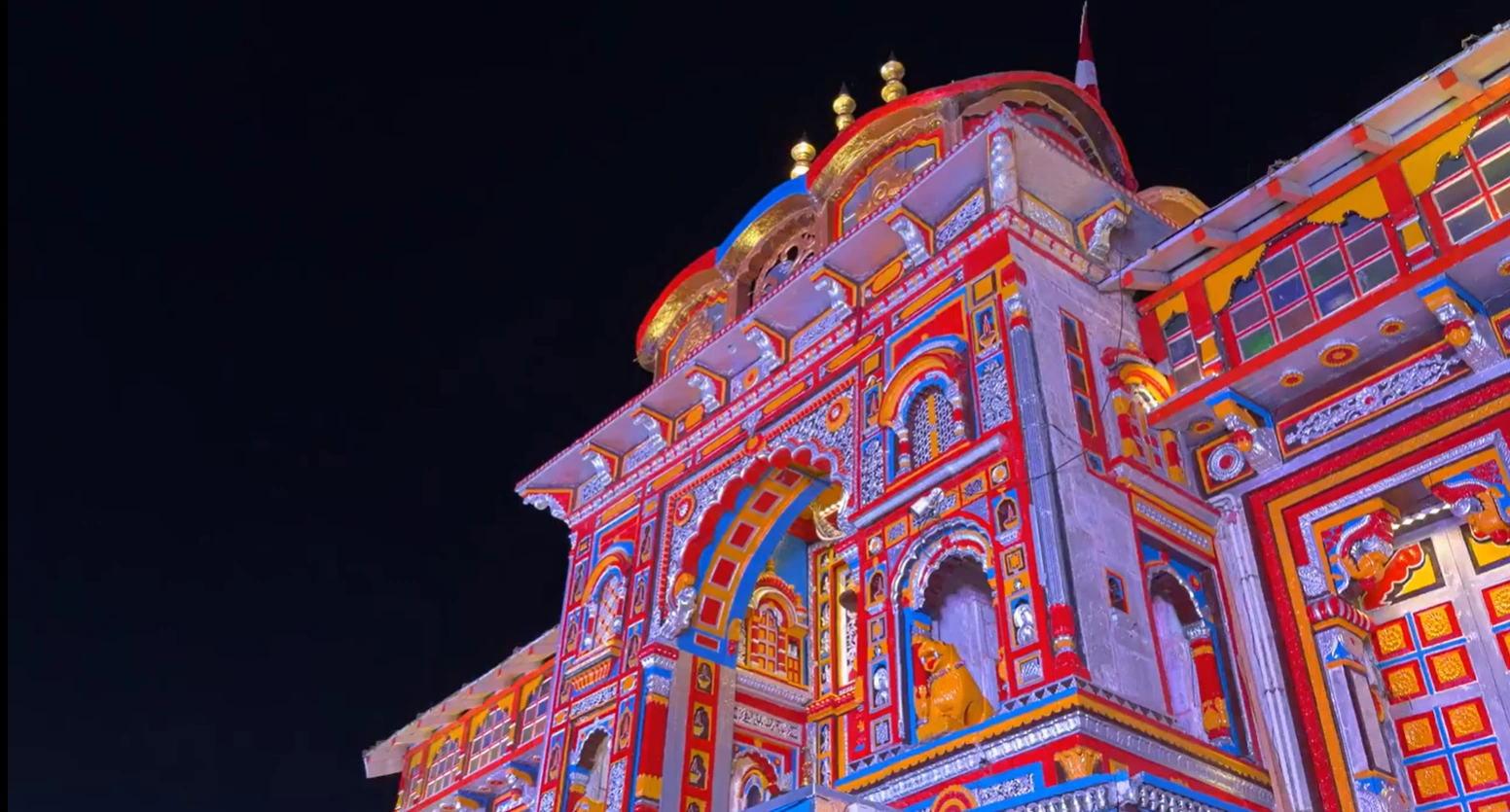
Quick Information About Badrinath Temple
- Location: Badrinath town within Chamoli District, Uttarakhand
- Altitude: 10,279 feet (3,133 meters)
- Idol: Lord Vishnu
- Riverbank: Alaknanda River
- Significance: Part of Chota Char Dham, Bada Char Dham, Panch Badri, and 108 Divya Desam
- Best time to visit: May to June & September to October
- Highlights: Nearby hot spring, colourful architecture, and scenic surroundings
- Nearby Attractions: Tapt Kund and Narad Kund, Brahma Kapal, Charan Paduka, & more
Where is Badrinath Temple Located?
The Badrinath temple is located in the Chamoli District of Uttarakhand, situated within the town at an altitude of 10,279 feet (3,133 meters) above sea level.
The temple sits on the riverbank of the Alaknanda River, surrounded by the Nar-Narayan ranges in the Garhwal Himalayan region. The temple is easily accessible by road journey, passing through major towns like Joshimath.
Why Is Badrinath Famous For?
Badrinath Dham is famous as a part of the sacred Char Dham of India and Chota Char Dham of Uttarakhand. The temple is known as the abode of Lord Vishnu, surrounded by the Nar Narayan ranges.
The temple is popular across India for its great significance and nearby attractions, including Tapt Kund, Brahma Kapal, Charan Paduka, and more.
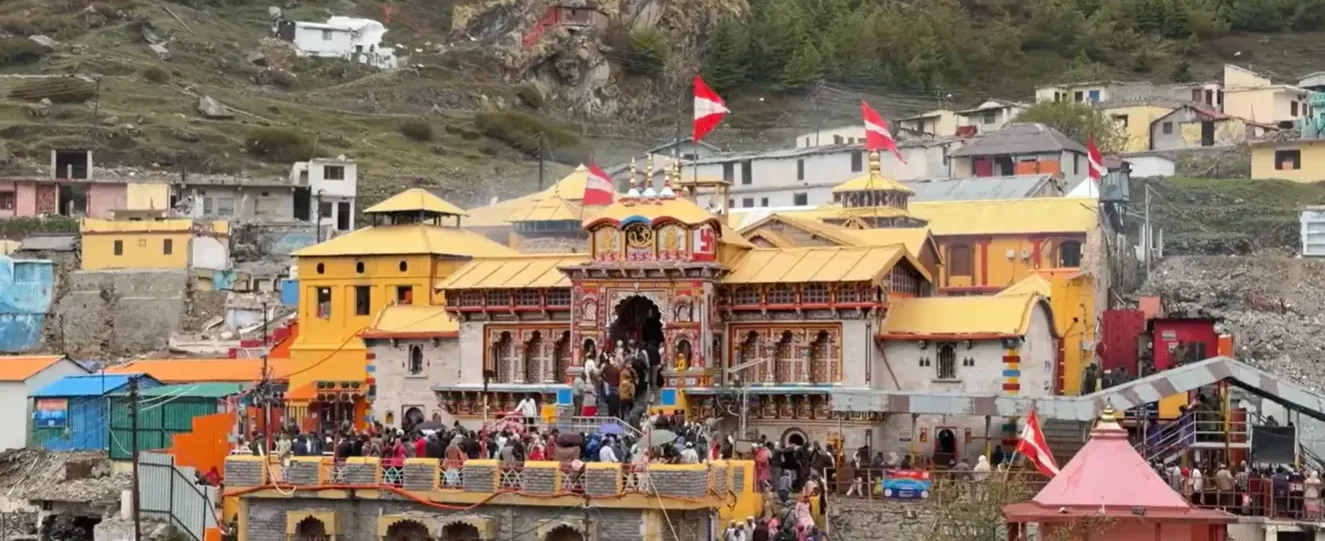
Badrinath Temple History
The history of Badrinath Temple spans from ancient mythological roots to its revival in the 8th century, making it the sacred pilgrimage site it is today.
According to the Skanda Purana and other ancient texts, the shrine dates back to the Vedic period.
The word “Badrinath” originates from the local Badari (a wild berry tree). A legend states that Lord Vishnu sat here in the mountains to perform penance for the well-being.
His wife, Goddess Laxmi, took the form of a Badri tree to protect Lord Vishnu from the harsh climate, leading to the name “Badrikashram” and “Vishnu” as “Badrinath“.
As per the Vishnu Purana, the idol of Lord Badrinarayan was discovered by the great sage Adi Shankaracharya, who found it near the Narad Kund and enshrined it in a cave. Formally establishing it as a Hindu Shrine in the 8th century.
For centuries, the site has also served as a major hub for meditation and inner reflection; sages like Kapil Muni, Gautam, and Adi Shankaracharya performed penance here, and Lord Krishna loved this region, making it a sacred Mukti Sthala for devotees in the modern pilgrimage era.
Badrinath Temple Architecture
Due to extreme weather and high altitude, the temple faced numerous avalanches and was reconstructed multiple times. The current temple was constructed in the 16th century by the Garhwal King.
It is an approximately 15-foot-tall temple with a colourful stone facade and a gold cliff roof. The main entrance is known as Singhdwara. After the entry gate, you can go directly to the 1-meter-tall idol of Badrinarayana in a meditating pose, seated on the bird “Garud” (vehicle of Vishnu).
The current structure of the Badrinath Temple is divided into three sections:
- Garbhgriha (Main Sanctum): The innermost chamber housing the idol of Lord Badrinath and completely covered in a gold-gilded sheet.
- Darshan Mandap: A designated prayer area where devotees worship and view the main deity.
- Sabha Mandap: Outer convention area where devotees assemble.
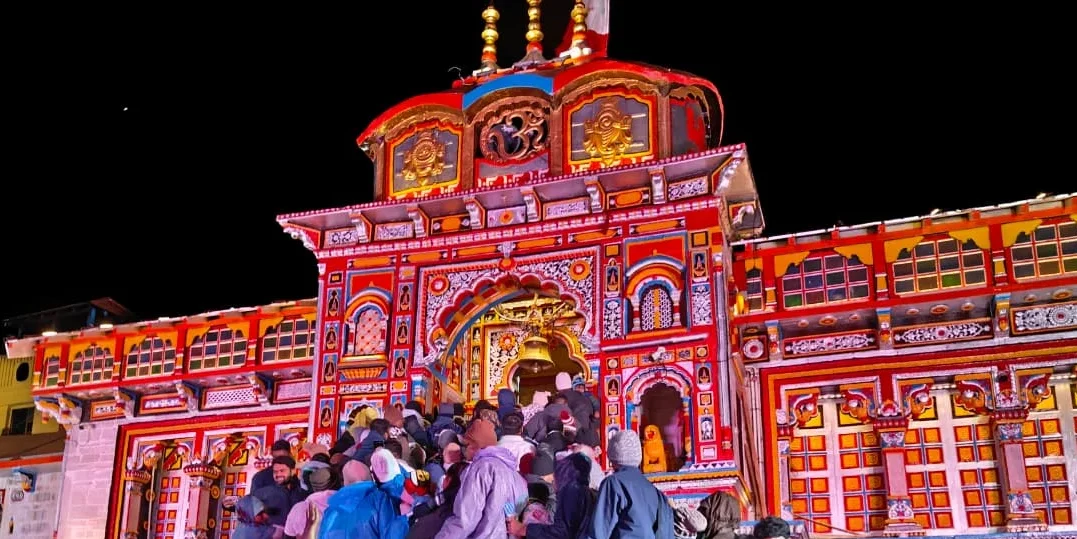
Importance of Badrinath Temple
Badrinath Dham is one of the most sacred shrines in Hinduism. It stands as the divine pillar of India’s cultural unity and spiritual and scriptural heritage.
As part of the many pilgrimage circuits, such as Char Dham, Panch Badri, and 108 Divya Desams, it is a prominent site of Moksha. It is believed that visiting Badrinath is considered highly auspicious, as it washes away sins and purifies one’s soul.
The site holds great importance among pilgrims visiting this holy shrine dedicated to Lord Vishnu, with a scenic atmosphere and divine graces of Badrinarayan, making it a vital pilgrimage in India.
Which month is best to visit Badrinath?
The best months to visit Badrinath Uttarakhand, are from May to June in summer and from September to October in autumn, offering beautiful views, pleasant weather, clear skies, and clear roads, making it easily accessible.
Avoid the monsoon months from July to August, as travelling is hectic due to heavy rainfall, slippery roads, possible landslides, and bad weather and road conditions.
Badrinath Temple Timings
For Daily rituals and daily darshan, the temple follows a strict schedule set by the Badri-Kedar temple committee.
Below is a table of Badrinath temple timings for darshan, aarti, and more:
| Timing | Darshan |
| Opening | 4:30 AM |
| Morning Aarti | 4:30 AM to 5:00 AM |
| Morning Darshan | 4:30 AM to 1:00 PM |
| Afternoon Break | 1:00 PM to 4:00 PM |
| Evening Darshan | 4:00 PM to 9:00 PM |
| Evening Aarti | 6:30 PM to 7:00 PM |
| Closing | 9:00 PM |
What is the timing of Darshan in Badrinath?
The daily darshan timings of Badrinath Dham are from 4:30 AM to 9:00 PM, with an afternoon break from 1:00 PM to 4:00 PM.
- Morning Darshan: 4:30 AM to 1:00 PM
- Evening Darshan: 4:00 PM to 9:00 PM
Accessbility & Logistics
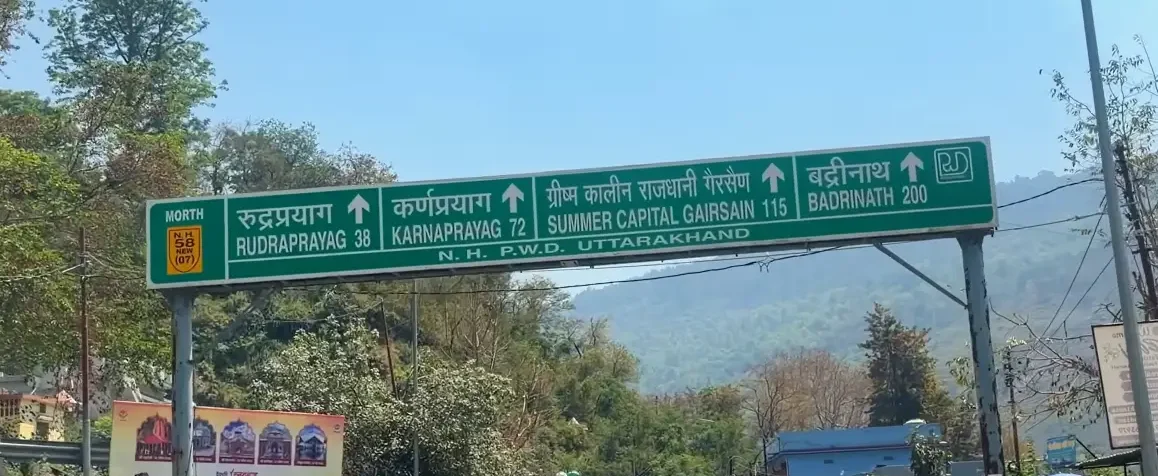
Unlike many temples in the Himalayas, the Badrinath Mandir does not require any trek; it is easily accessible by road, the NH-7. There is no direct air or train connectivity.
The closest railhead and airport are located in Haridwar (Dev Bhumi), Rishikesh (Yoga Capital of India), and Dehradun. Follow the routes:
- Nearest Railhead: Rishikesh Railway Station (YRNK) is around 295 km & Haridwar Station (HW) is around 311 km away.
- Nearest Airport: Jolly Grant Airport in Dehradun is the nearest airport, around 300 km away.
Onward Travel: From either the airport or railway station, take a bus or hire a private taxi to reach the Badrinath Temple.
Check: How to reach Badrinath by flight, train, and road, and Badrinath Distance Chart 2026 from Major Cities and Towns in Uttarakhand.
Badrinath Nearby Attractions
- Tapt Kund: A sacred hot water spring in Badrinath, just to the right side of the main temple, where devotees often take a holy dip before proceeding to Darshan. Holds importance for its healing properties.
- Charan Paduka: A sacred rock located just a few meters away from the Badrinath Temple Uttarakhand. Believed to be the footprints of Lord Vishnu. Accessible by a short 3 km uphill trek from the main temple.
- Narad Kund & Shilla: Another hot spring just adjacent to Tapt Kund. Narad Shilla is a sacred place where the sage Narad Muni did intense penance.
- Mana Village: A picturesque village sits on the Indo-Tibetan border, famous as the first Indian village, just around 3 km from the Shri Badrinath temple. Famous for its diverse culture and rare flora and fauna.
- Vyas Gufa & Ganesh Gufa: Vyas and Ganesh Gufa are two ancient caves in the Mana Village near Badrinath, believed to be the places where the epic Mahabharata was composed
- Bheem Pul: A revered and historic bridge on the Saraswati River near Mana. holds importance as believed to have been built by the Pandavas of the Mahabharata.
- Vasudhara Falls: A spectacular waterfall around 9 km from Badrinath Dham. Vasudhara Waterfall is known for its great natural beauty and mystery.
Note: Check out our blog on the best places to visit in Badrinath to know more in detail
Travel Tips For Visitors
- Pre-plan: Choose the right time and mode of travel. Avoid planning at the last minute, as it’s a seasonal site.
- Check weather & road: Before planning your trip, ensure trails are safe and accessible, and that the weather is suitable, as it can change rapidly in the mountains.
- Pack Essentials: Carry warm clothes even in summer, rain gear, basic medicines, and other miscellaneous items for hassle-free travel.
- Mandatory Registration: Complete your Badrinath registration online or offline; it is necessary to travel in this region.
- Keep ID proof & Cash in hand: During your journey, carry your ID proof and sufficient cash for your trip. Do not depend on digital payments.
- Respect the Site: It is a sacred site; do not litter anywhere or behave disrespectfully towards the locals. Follow the rules and guidelines.
Conclusion
Today, Badrinath Temple Uttarakhand is a powerful symbol of faith, devotion, and spiritual peace in the majestic Himalayas. In the Nar-Narayan ranges, the temple embodies a deep connection between spirituality and nature, making it a perfect setting for a soulful experience.
From its existence in the ancient Vedic era to its great importance as a sacred pilgrimage site, Shri Badrinath Dham is a living heritage site.
If you are planning to visit this sacred shrine in 2026, this comprehensive information about Badrinath Temple will help you plan a better, more meaningful pilgrimage.
FAQs
What is special about Badrinath Temple?
The speciality of the Badrinath temple lies in its significance as India’s most sacred pilgrimage site, its colourful architecture, its nearby attractions, and its peaceful surroundings. Sacred hot springs, a self-manifested idol of Lord Badri (Vishnu), and Himalayan views are key highlights.
Which god exists in Badrinath?
Badrinath is associated with Lord Vishnu, who is worshipped here as Badrinarayana, originating from the Badri tree, and with the Goddess Laxmi in the form of the Badri tree.
Is the Badrinath yatra difficult?
No, the Badrinath yatra is not difficult, but it just requires preparation for handling logistics like Registration and hotel booking in the high Himalayas.
Can senior citizens visit Badrinath?
Yes, senior citizens can visit Badrinath, as it is easily accessible by road; still, they will need to take extra care to protect themselves from the unpredictable Himalayan weather to complete the pilgrimage successfully.
Is Badrinath Jyotirlinga?
No, Badrinath is not a Jyotirlinga; it is a highly auspicious shrine of Lord Vishnu, part of the Char Dham pilgrimage, and one of the 108 Divya Desam. While 12 Jyoitrilinga are strictly representations of Lord Shiva, spanning across India.
How many days are required for a Badrinath trip?
Generally, 3-4 days are enough for the Badrinath trip, along with travel time, en route sightseeing, necessary halts, and Darshan. The duration can extend to 5-6 days if you combine it with the Do Dham Yatra (Kedarnath and Badrinath).
What are the rituals of Badrinath Temple?
The rituals at the Badrinath temple blend ancient Vedic traditions and customs established by Adi Shankaracharya. Key rituals of the Badrinath pilgrimage include a holy dip in nearby ponds, morning and evening Aarti, Abhishek, and special Pujas on occasions.

Partiksha is a dedicated travel content writer with over 5 years of experience in exploring various destinations in India. From mountains, beaches, treks, to spiritual sites, she believes in sharing experiences through creative storytelling, publishing travel guides, and engaging blogs.
She holds the technique to embrace cultures, stories, mythologies, and various experiences to engage with travellers. With an eye for aesthetics, Partiksha has crafted content that motivates travellers to explore beyond the ordinary itineraries. She doesn’t just write content, but makes it relate to the audience and helps them find what they are looking for.
Her expertise is not limited to writing content, but she also does travel blogging, destination reviews, SEO-friendly travel writing, and creative storytelling that reflects both value and authenticity. She believes that every travel destination has a story worth sharing, which helps to connect people with a place. To make your every visit memorable, she continues to do it through her expertise.



Comments (32)