Do you know which is the first village of India? Mana Village, the first Indian village, is in the Garhwal Himalayan region of Uttarakhand. This small village is full of mythological stories and significance.
Mana Village near Badrinath serves as a major attraction, offering serene views of the Himalayas and panoramic surroundings. Visiting Mana Village feels like witnessing the start of Indian villages. This is our major sightseeing spot in the Do Dham Yatra package.
Many pilgrims visit this significant village during their journey to Badrinath Dham, along with some beautiful nearby attractions. If you are also planning to visit Badrinath, then Mana must be on your list.
Quick Facts About Mana Village
- Location: Near Badrinath, Chamoli District, Uttarakhand
- Altitude/Height: 3,200 meters (10,500 feet)
- Significance: First village of India near the Indo-Tibetan border
- Highlights: Bhim Pul, Saraswati River, Vyas Gufa, and Ganesh Gufa
- Best Time: May to June and September to October
- Nearest Airport: Jolly Grant Airport in Dehradun
- Nearest Railway Station: Haridwar & Rishikesh railway stations
- Mobile Connectivity: 4G networks (Jio & BSNL)
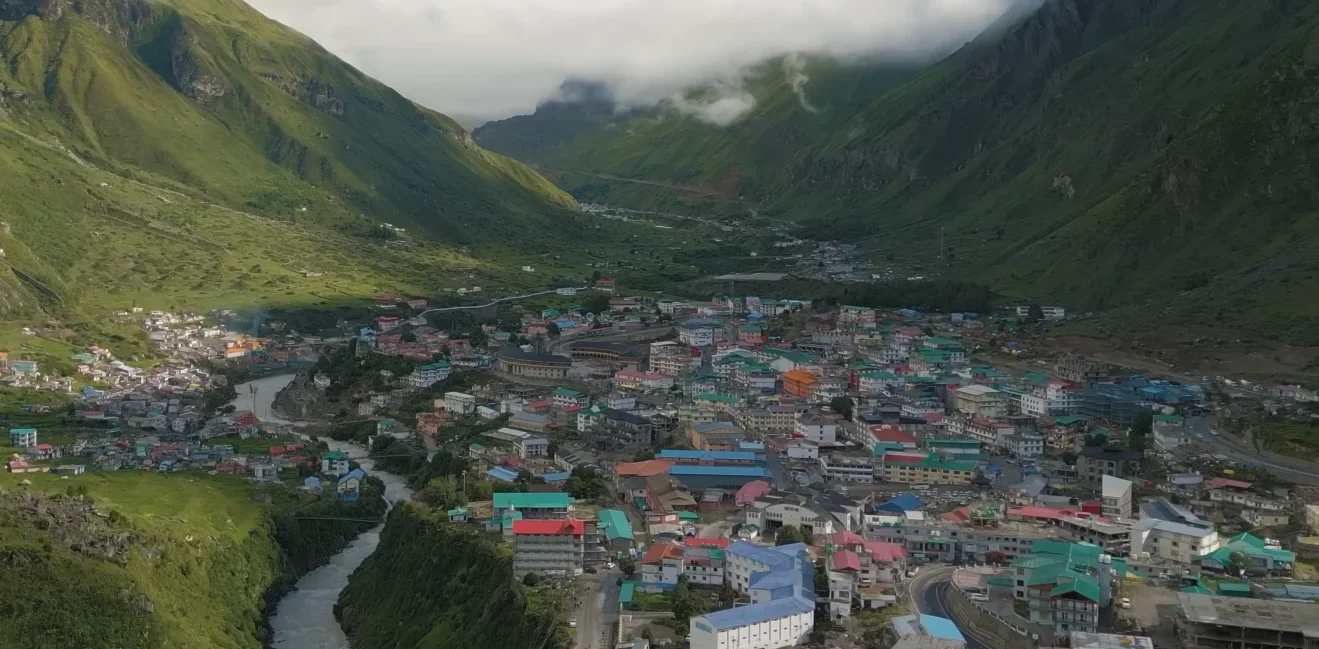
Table of Content
- Quick Facts About Mana Village
- Where is Mana Village?
- What is Mana Village Famous for?
- Why is Mana Called the First Village of India?
- Is Mana Village last or first?
- Mana Village History
- How to reach Mana Village
- Best time to visit Mana Village
- Places to see in Mana Village
- Things to do in Mana Village
- Hotels in Mana Village Uttarakhand
- Practical tips for Mana Village
- FAQs
Where is Mana Village?
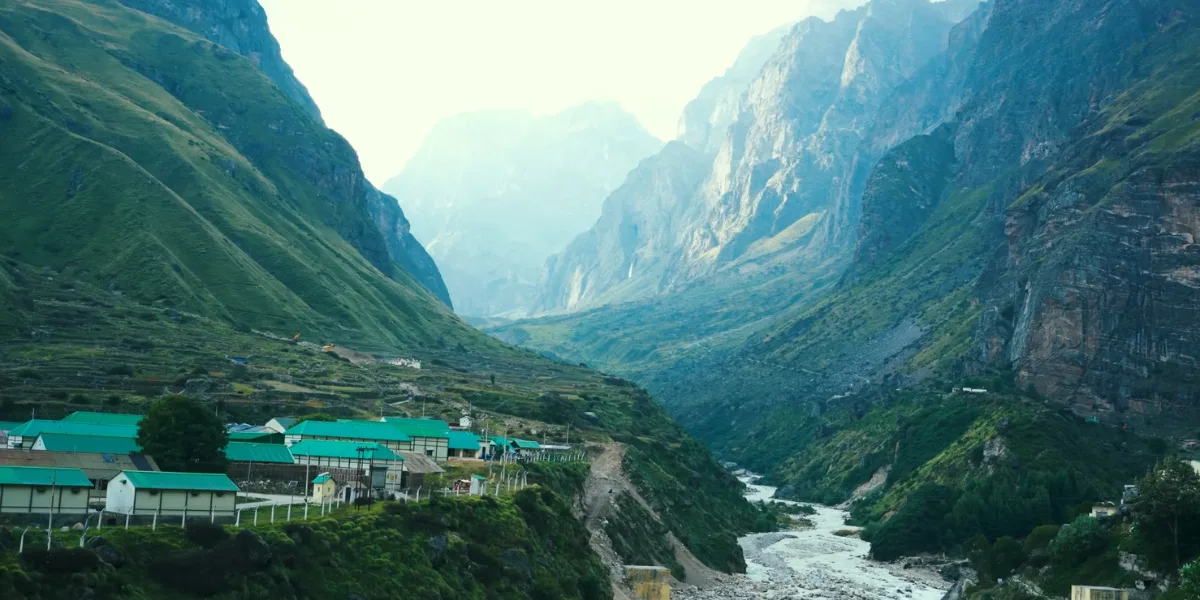
Mana Village is located in the Chamoli district of Uttarakhand, about 4.3 km from Badrinath. The village is situated at an altitude of 3,200 meters (10,500 feet) near the Indo-Tibetan border, making it the first Indian village from the border.
The tranquil location offers a serene view and panoramic surroundings of the Himalayan ranges in Uttarakhand, with ancient caves, a bridge, rivers, and more.
What is Mana Village Famous for?
Mana Village is famous for its rich ancient roots, natural landscape, and traditional handicrafts. The village is the first village of India near the Indo-Tibetan border, known for its Tibetan culture, woollen clothes, and farming of potatoes and kidney beans.
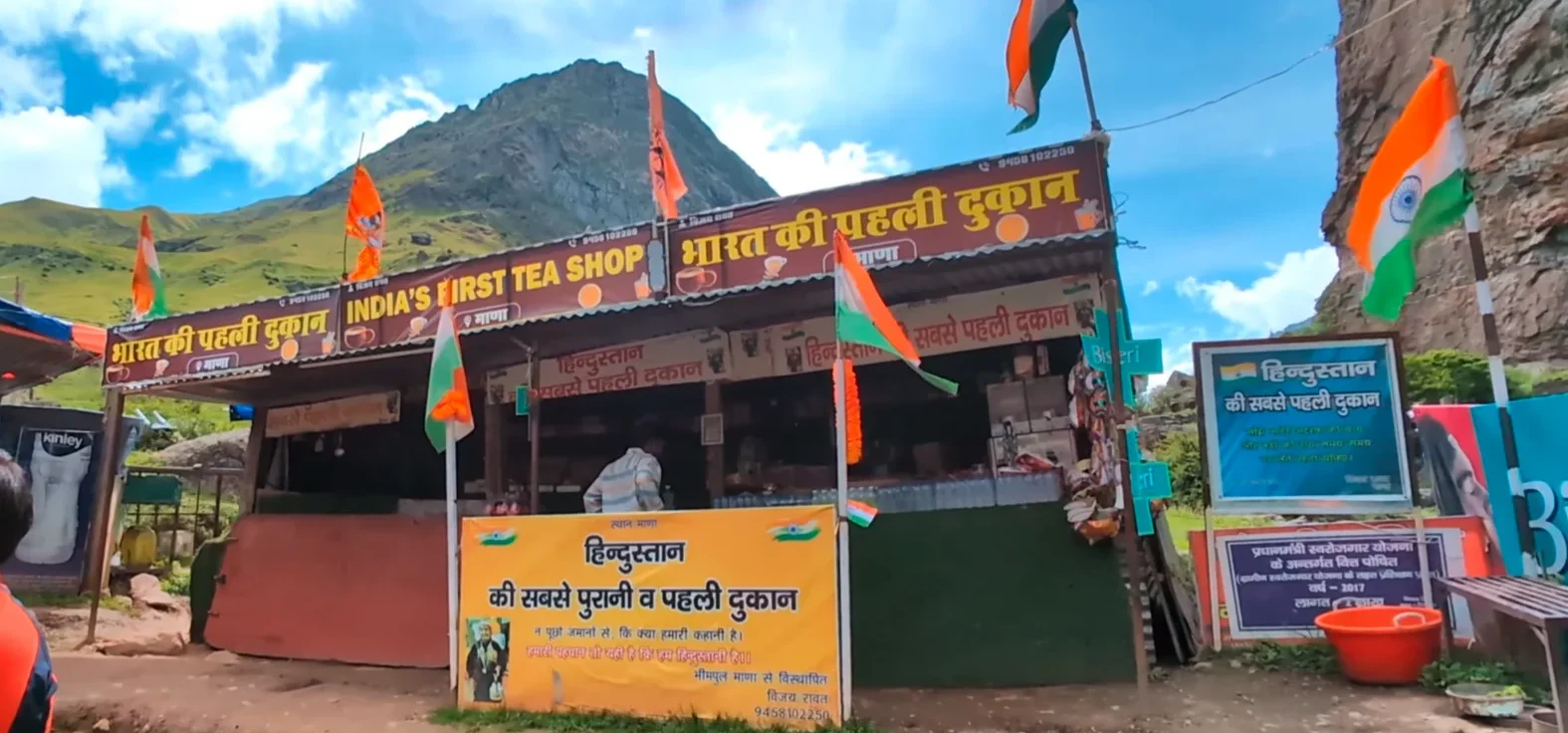
The place offers the roaring Saraswati River, giant Bheem Pul, sacred Vyas and Ganesh caves, the first tea shop of India, and also serves as a base camp for the Vasudhara Falls trek, making it one of the popular places to visit near Badrinath. Moreover, it is also believed that the Pandavas visited here along their journey to heaven.
Why is Mana Called the First Village of India?
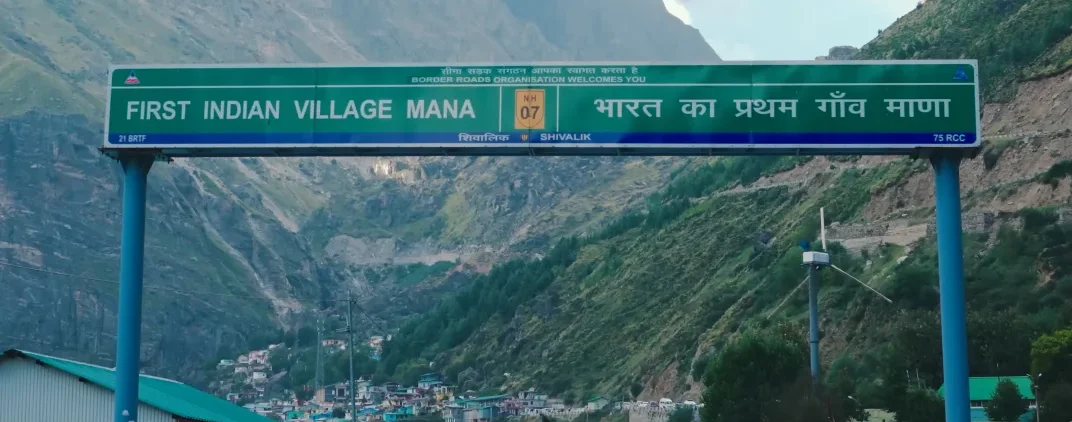
Mana Gaon is located near the border of India and Tibet, as the village is the first to be located from the border, making it the first village of India from the Indo-Tibetan border. After Mana Village, the next country is China, as the border is a Tibetan Autonomous region of China.
Is Mana Village last or first?
Mana Village is now known as the first Indian Village. For many years, Mana has been known as the “Last Village of India”, but now it is officially renowned as the “First Indian Village” by the Border Road Organisation (BRO) in 2023, after the designation of Prime Minister Narendra Modi on 21st of October, 2022. You will get to see the very first shop of India in Mana.
Mana Village History
India’s first Village, Mana Village Uttarakhand, is an ancient settlement, famous for its rich mythological history and its crucial role as a traditional trade hub between India and Tibet. The Mana First Village of India was once known as the last village, but later, on October 21, 2022, Prime Minister Narendra Modi designated it as the first village of India.
Mana Village history is a blend of Mythological and Economic trade History and modern evolution. Let’s discuss both aspects of the history of Mana village.
Mythological Significance & Story of Mana Village
Mana Uttarakhand is renowned for its rich mythological legends, making it a living museum for Hindu scriptures, with historical landmarks from the time of the epic Mahabharata.
Vyas Gufa and Ganesh Gufa are two sacred caves where the text Mahabharata and the 18 Puranas were composed by Rishi Ved Vyas with the help of Lord Ganesha.
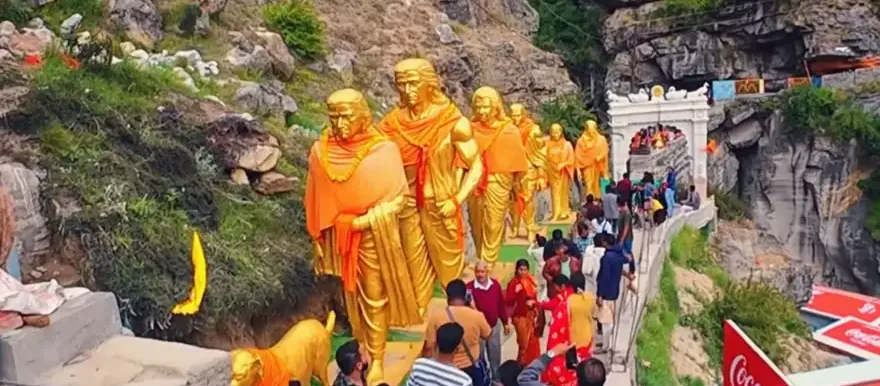
Mana Gaon is the primary starting point (Mahaprashthanam) for the Pandavas’ final journey to heaven (swarg yatra), leading to its popularity as Swarg Dwar Mana Village. Also, there is a life-size Pandavas statue in Mana Village with a dog statue near the Saraswati River, along the Swaragrohini Path.
It is also one of the rare places where the Saraswati River is visible, despite the Saraswati River curse of flowing underground, making it seamless at most of the places. It is also believed that there is a giant nature stone bridge, known as Bheem Pul, made by Bheem (Pandava brother) during their Swarg Yatra.
Historical Evolution & Modern Significance
Beyond its mythological history, Mana has a deep geopolitical and tribal history. For centuries, Mana was a commercial gateway between India and Tibet. Local Indian merchants trade indian textiles and grains for Tibetan wool and rock salt.
Now, the village is exclusively inhabited by the Bhutiya community, who preserve and spread indigenous local practices.
How To Reach Mana Village
To reach Mana Village, you must reach Badrinath, as all roads to this village are connected to Badrinath. The distance from Badrinath to Mana Village is about 3-4 km, which you can cover by hiring a local vehicle or walking to access the site.
Note: Know how to go Badrinath in this complete guide.
Step 1: Reach Badrinath
- Air Connectivity: Jolly Grant Airport in Dehradun is the nearest airport with great connectivity to all major cities. From the airport, continue by road to reach Badrinath.
- Rail Connectivity: Haridwar and Rishikesh are the nearest railway stations to Mana Village. From either of these, take a bus or taxi to reach the site.
Haridwar to Mana Village Distance: 310 km
Rishikesh to Mana Village Distance: 284 km
- Road Connectivity: Badrinath is accessible by road via the NH-7 route passing via Haridwar, Rishikesh, and Joshimath.
Step 2: Badrinath to Mana Village
Once you reach Badrinath, it is easy to reach Mana village by covering a short distance on foot or by a local transport option.
- Badrinath to Mana Village Distance: 4.3 km
- Travel Options: Private cab, shuttle taxi, or walking
- Travel Time: 15-30 minutes by car & 30-45 minutes for a walk
Best Time To Visit Mana Village
Mana village is a highly seasonal site due to its high-altitude location and unpredictable weather. It is accessible only from May to October and becomes inaccessible during winter due to heavy snowfall. The best time for Mana Village coincides with the best time for Badrinath.
Short overview of Mana village weather by season, with accessibility information.
- Summer (May to June): A pleasurable time to explore Mana, which offers pleasant weather and mild temperatures. Trails are accessible, and views are clear after winter closure, ideal for cultural walks.
- Monsoon (July to August): The monsoon receives heavy rain, making trails slippery. High humidity and landslide risk mean travel is not safe during this period.
- Autumn (September to October): Another opening window after the wet monsoon. It experiences great visibility of surroundings and accessible trails, ideal for sightseeing and travelling.
- Winter (November to April): Winter in Mana is extremely harsh, with heavy snowfall, making this region completely inaccessible. This period has become the reason for short-term migration for local villagers who vacate Mana and live in lower-altitude areas of the Chamoli district.
Note: The Mana Village temperature gets too low, so locals have to move to the lower areas during the winter months.
Note: There are no particular timings to visit Mana Village; it is accessible throughout the day from May to October.
Places To See In Mana Village
Mana Village is a seamless blend of breathtaking Himalayan scenery, rich cultural heritage, and great mythology, attracting spiritual seekers, curious travellers, and cultural enthusiasts alike. Here are some of the famous Mana tourist places:
India’s First Tea Shop
A must-visit place in the village, as it is the first Indian Village, featuring the very first tea stall of India, located near the hoarding of “I Love Mana”. A better place to interact with locals while having great tea and snacks.
Vyas Gufa
One of the primary attractions of the site, Vyas Gufa, where Maharishi Ved Vyasa composed the Mahabharata and divided the Vedas into four parts (Rig, Sama, Yajur, and Atharva). Located just 500 meters walking distance from Managaon. It is a small shrine dedicated to him, featuring a palm-leaf manuscript roof.
Ganesh Gufa
Ganesh Gufa is located a short walk from Vyas Gufa, where Lord Ganesha sat and transcribed the text (Mahabharata), which was dictated by sage Vyasa. A very peaceful place that holds an idol of Lord Ganesha.
Bheem Pul
Bhim Pul is located in the Mana Village, around 1.4 km from staring point of the village. A massive rock bridge was built over the Saraswati River. It is believed to have been built by Bheema when his wife struggled to cross the fierce river during their final journey to heaven. Surrounded by snow-capped peaks, it provides massive views of Mt. Chaukhamba.
Saraswati Mandir & River Origin
Mana is one of the rare places on earth where the Saraswati River is visible. You can witness its origin by standing at the Bheem pul, before it merges with Alaknanda (a major tributary of the Panch Prayag confluence). Also, there is the Saraswati Mandir, located just near the Bheem pul.
Vasudhara Falls
A majestic waterfall just 6 km away from Mana village. Vasudhara waterfall is a popular tourist destination in this region. Widely famous for its stunning natural beauty and the mythological significance of not touching sinners.
Mata Murti Temple
Located on the banks of the Alaknanda River, just a few meters from Mana, it’s a sacred temple dedicated to the mother of Lord Vishnu.
A famous nearby place from Mana Village is Badrinath Temple, featuring major attractions such as Tapt Kund, Brahma Kapal, Charan Paduka, Narad Kund, and Surya Kund.
Things To Do In Mana Village
Cultural Exploration: Mana is the home of the indigenous Bhotia community (local tribes), and their culture is a blend of Indo-Tibetan heritage and centuries-old Himalayan customs. Local houses are crafted from stone and timber, ideal for cultural walks.
India’s first tea shop: Visiting Mana is incomplete without taking a sip of hot tea at the famous first tea shop of India, run by residents. It also provides a glimpse of nature at the edge of the Tibetan border.
Traditional Local food: Try some popular local cuisine, such as Aloo ke Gutke, Rajma chawal with a Garhwali touch, and sathoo (a traditional roasted barley).
Shopping: Mana’s local villagers, especially women, are famous for exceptional handloom skills and craft items such as shawls, caps, mufflers, and carpets, which you can buy.
Photography: Traditional houses, historic landmarks, and surrounding beauty provide fantastic photo opportunities.
Hotels In Mana Village Uttarakhand
There are limited stay options in Mana Village, but if you love to stay in a serene, tranquil atmosphere, here are some hotel options:
- Buddyhikers Stay Badrinath
- Badri Resort Mana
- Mud Stay
- Nilaaya Hotel
- Hotel SNR Grand
Note: Facilities in Mana Village are limited due to its distinct location near the border.
Practical Tips for Mana Village Visitors
- Choose to stay in Badrinath for comfort and convenience; also, there are limited hotels in Mana Village.
- Bring Cash, as there are no ATMs and digital payments don’t work due to a poor network in Mana Gaon.
- Follow etiquette; ask for permission before capturing locals
- Wear heavy woollen clothes even in summer as the temperature drops significantly.
- Most sites require walking, so wear comfortable shoes.
- Avoid littering and follow local customs.
FAQs
What is the mystery of Mana Village?
The mystery of Mana Village is deeply tied to the legend of the Mahabharata, which is said to have been composed by Rishi Ved Vyasa and Lord Ganesha at this sacred site, marked by Vyas Gufa and Ganesh Gufa. There is no dark mystery of Mana Gaon, but it is the very first village of India. Famous as the origin place of the Saraswati River and the gateway to heaven, the Swargrohini Path.
Can we stay in Mana Village?
Yes, you can stay in Mana village. There are some basic homestays run by local communities, providing good hospitality to travellers. Him Kim homestay, Mud stay, and hotel Radha Krishna are popular options, offering good amenities at basic fares.
How far is Mana from Badrinath?
Mana is around 4.3 km from Badrinath and lies on the Indo-Tibetan border at an altitude of 10,500 feet above sea level. From Badrinath, you can easily travel by shared taxi or walk to reach Mana village; it takes around 15-30 minutes.
What was the first village in India?
Mana is the first village in India, formally known as the last Indian village. But now the Border Road Organisation of India (BRO) has officially changed its status as the first village of India to shift geographical and cultural perspectives.
How to visit Mana Village?
To visit Mana village, you must first travel to the Badrinath temple, as all the routes to this village are tied to Badrinath, and it is just a few km from there. To reach Badrinath, you can take a flight to the nearest airport, which is Jolly Grant Airport, or take a train to Haridwar or Rishikesh from your city. From there, take a bus or taxi to reach Badrinath. From Badrinath, take a local vehicle to reach Mana village.
Key details are:
- Nearest Airport: Jolly Grant Airport in Dehradun
- Nearest Railheads: Haridwar (HW) & Rishikesh (YRNK)
- Road Distance: 300-315 km from Haridwar
- Travel Time: 8-10 hours
- Road Route: Haridwar → Rishikesh → Devprayag → Rudraprayag → Joshimath → Pandukeshwar → Badrinath → Mana Village

Partiksha is a dedicated travel content writer with over 5 years of experience in exploring various destinations in India. From mountains, beaches, treks, to spiritual sites, she believes in sharing experiences through creative storytelling, publishing travel guides, and engaging blogs.
She holds the technique to embrace cultures, stories, mythologies, and various experiences to engage with travellers. With an eye for aesthetics, Partiksha has crafted content that motivates travellers to explore beyond the ordinary itineraries. She doesn’t just write content, but makes it relate to the audience and helps them find what they are looking for.
Her expertise is not limited to writing content, but she also does travel blogging, destination reviews, SEO-friendly travel writing, and creative storytelling that reflects both value and authenticity. She believes that every travel destination has a story worth sharing, which helps to connect people with a place. To make your every visit memorable, she continues to do it through her expertise.



Comments (11)