
Introduction
Vasudhara Falls is a majestic glacial waterfall near Badrinath. It is one of the most prominent natural attractions, surrounded by snow-capped peaks and breathtaking landscapes.
Attracts many nature lovers, peace seekers, trekkers, Photographers, and travellers alike who visit to experience Vasudhara’s magic and mystery.
Beyond its natural beauty, the waterfall holds great mythological significance tied to the Pandavas. Accessible via a trek, the Vasudhara fall trek is itself a prominent experience and offers mesmerising views of the Himalayan peaks.
Pilgrims who visit Badrinath often add this waterfall as a sightseeing stop to their Badrinath or Do Dham Yatra Package. In this guide, we will explore all about Vasudhara waterfall near Badrinath Dham, its location, story, mythology, and trek guide.
Quick Facts About Vasudhara Waterfall
- Location: Chamoli district, Uttarakhand
- Altitude: 12,000 feet (3,600 meters)
- Distance from Badrinath: 9 km
- Waterfall Height: 122 meters (400 feet)
- Trek Distance: 6 km one way from Mana village
- Best time to visit: May to June & September to October
- Famous for: Scenic beauty & mystery
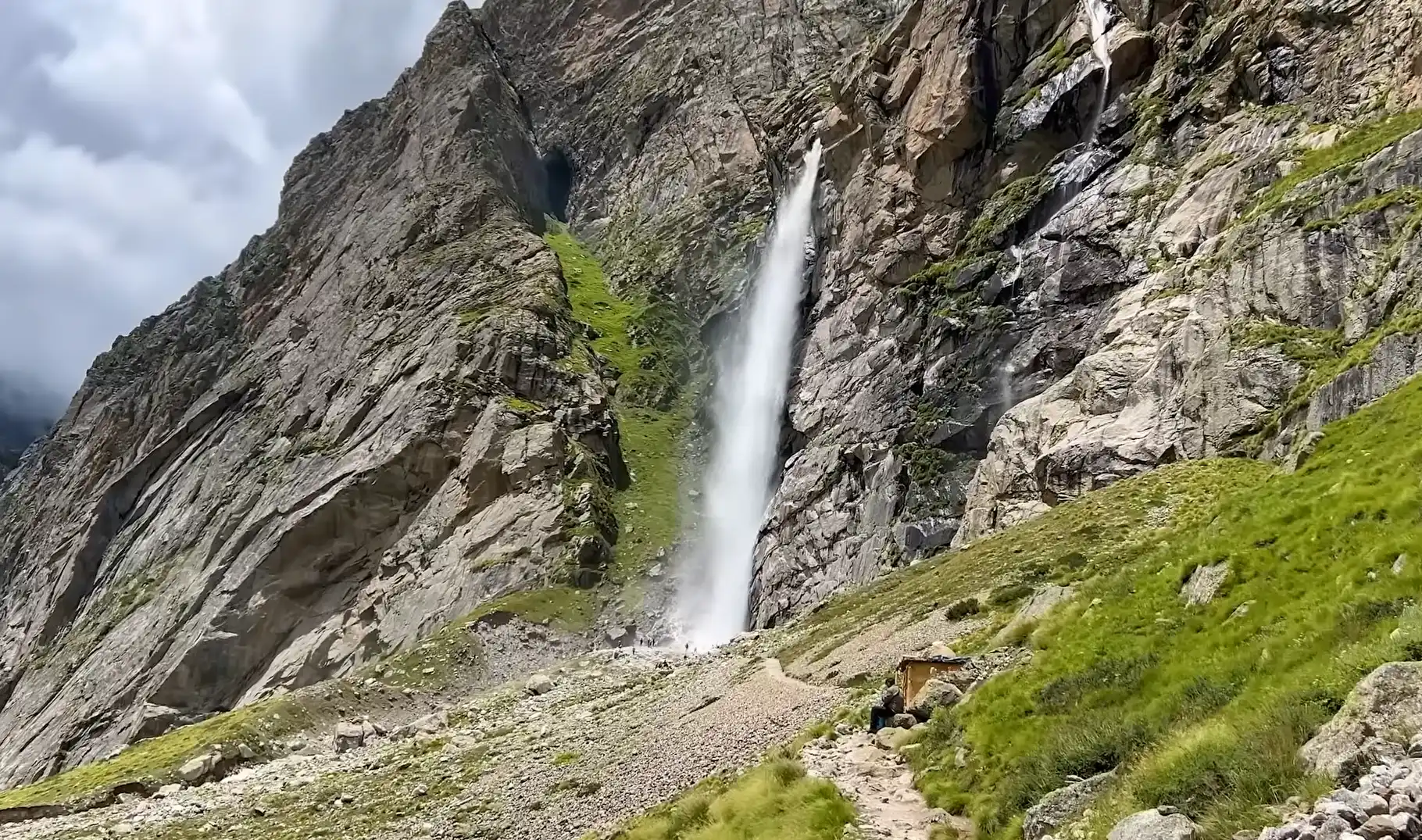
Where is Vasudhara Falls?
Vasudhara waterfall is located in the Chamoli district of Uttarakhand within the Garhwal Himalayas. It originates from the Nar-Narayan mountain ranges and the Alaknanda river valley, located at an altitude of 12,000 feet (3,600 meters), making it the highest waterfall of Uttarakhand.
- Proximity sites: Mana village, around 6 km away, and Badrinath, around 9 km away.
- Travel route: Following the NH-7 route, passing via—
Hardiwar → Rishikesh → Joshimath → Badrinath → Mana Village → trek to Vasudhara falls
Mythological Significance of Vasudhara Fall
Vasudhara Fall, Uttarakhand, holds great mythological significance in Hindu Mythology and is linked with the epic Mahabharata. This waterfall is primarily celebrated as a purity-testing divine tool and is deeply connected with stories of the Pandavas, Lord Vishnu, and sages.
Pandavas’ Final Journey to Heaven
According to the legend of the Mahabharata, the five Pandava brothers and their wife Draupadi passed through the Mana village, and Vasudhara falls during their final journey to heaven, the Swargrohini Yatra.
- Sahadeva’s resting place: Legend states that Sahadeva, the youngest Pandava, left his mortal body at this site while crossing the arduous Saraswati River.
Legend of Curse: Ashta Vasu
The name of the site is “Vasudhara,” which is to assist with the Asht vasus (the eight elemental gods) after being cursed; they came to earth. They performed intense penance at the exact spot to appease Lord Vishnu and regain their celestial status.
Legend of Lord Vishnu & Sage Vyasa
Some interpretations link the name “Vasudhara” with Lord Vishnu, which translates as “ the path of Lord Vishnu.” Serves as a vital gateway to Nar Narayan peak, a divine place of Lord Vishnu meditation.
Spiritual Significance
The word “Vasudhara” derives from the Sanskrit word vasu, which means Wealth (Prosperity), and “dhara” means stream or flow; together it translates as “Flow of Wealth.” It symbolises the continuous flow of blessings of spiritual purity and wealth from Goddess Laxmi.
Source of Spiritual Healing: Beyond its mythological significance, the waterfall is highly revered for its therapeutic benefits, passing through Ayurvedic herbs and medicinal properties. It is believed that bathing in it or drinking it is infused with natural essences.
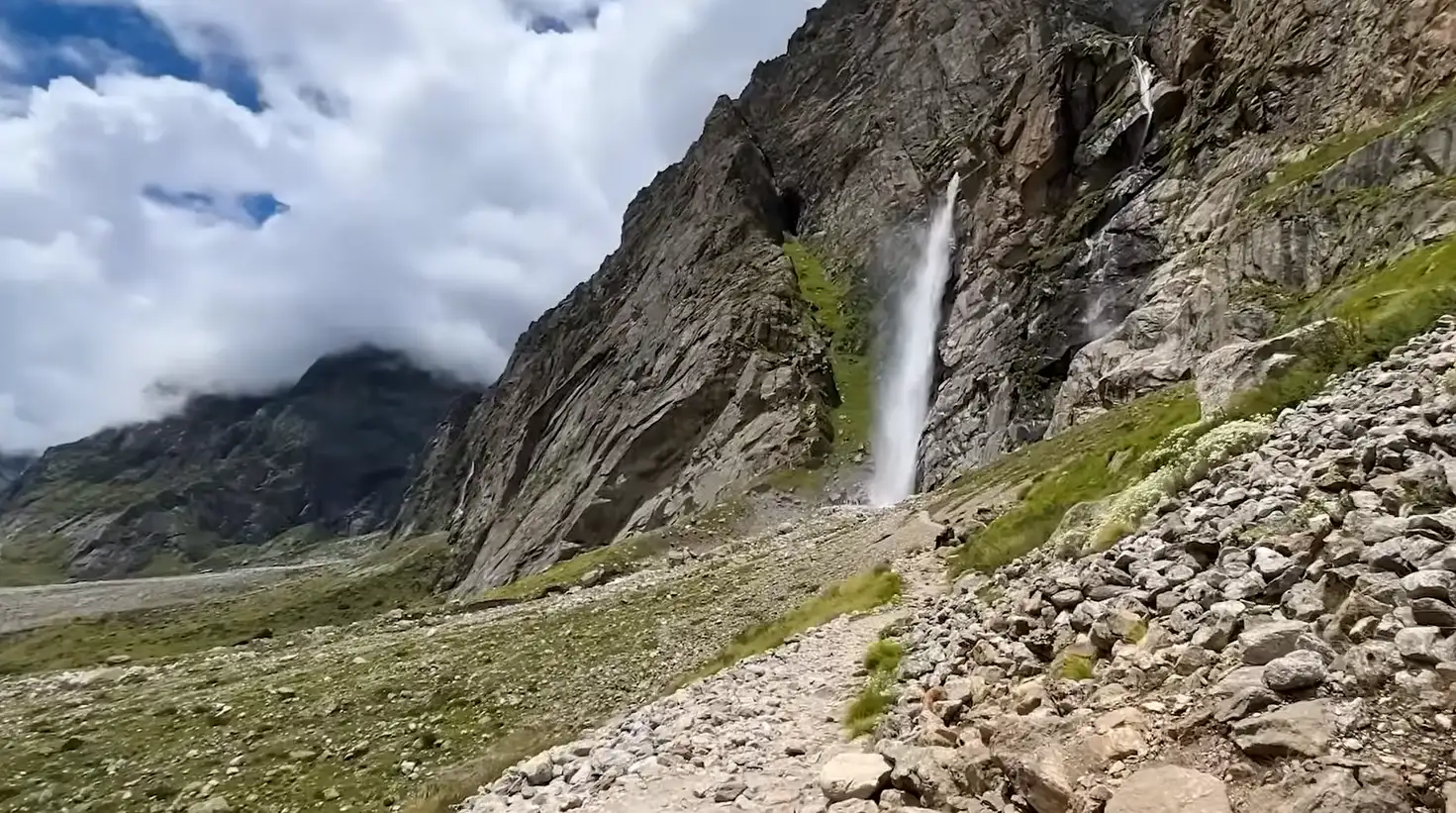
What is the story of Vasudhara Falls?
Vasudhara Falls story is famed for its unique legend or myth about the test of purity and salvation. According to local folklore or myth, the water from Vasudhara’s cascade does not allow its droplets to fall on sinners or on people with bad intentions standing beneath it.
Instead, if you are a virtuous soul with a pure heart, the water falls directly on you and acts as a divine blessing.
This mystical phenomenon centres on Vasudhara, making it a site for testing Karma for visitors, who often come to this destination to test their spiritual purity and receive the blessings of Salvation.
Vasudhara Falls: Magic Is Real or Fake?
Vasudhara waterfall is a real majestic waterfall known for its prominent myth that the water of the fall does not touch sinners or people with impure hearts.
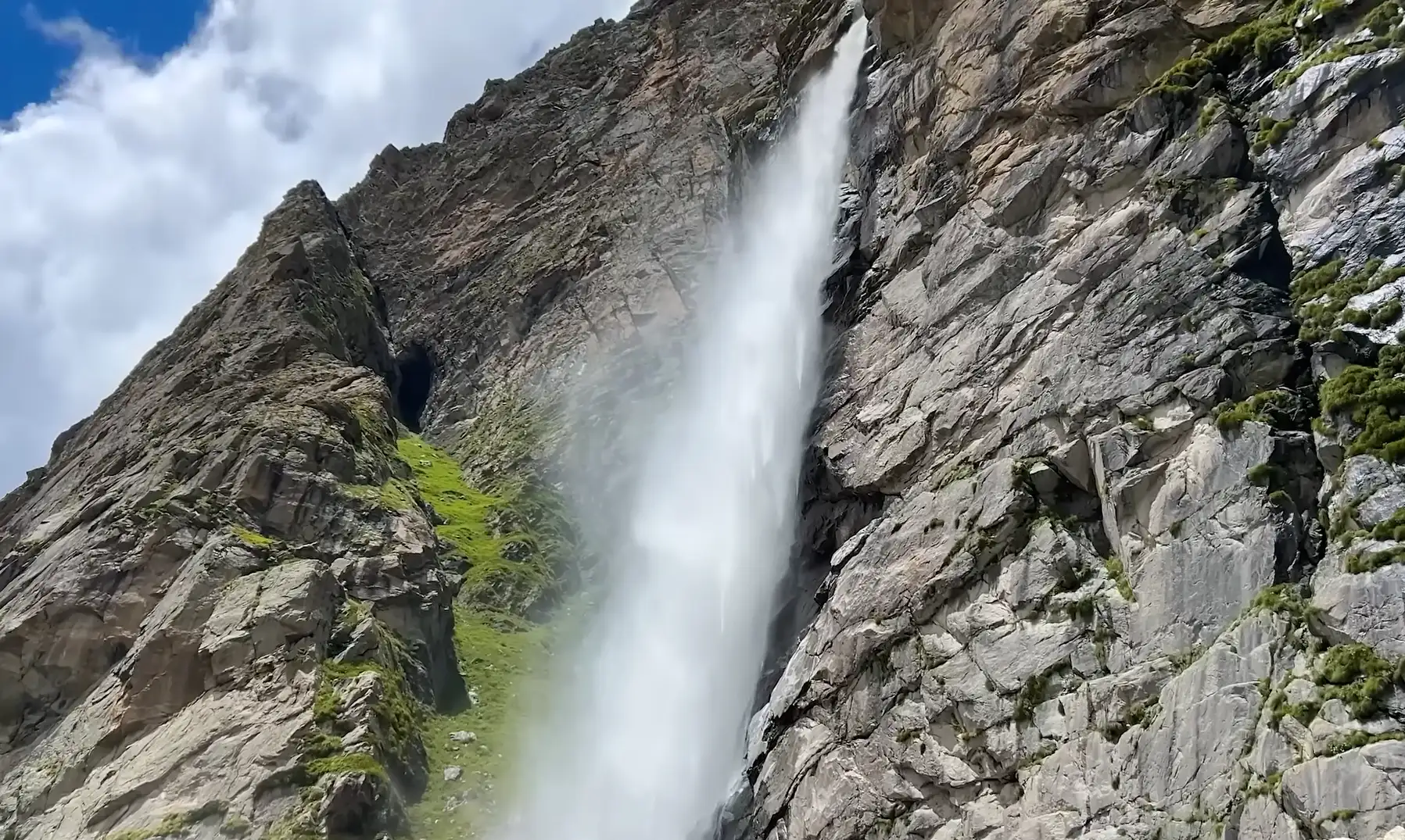
Beyond its spiritual legend, there is a geographical explanation for the Vasudhara Falls myth, which talks about why the water seems to choose where to touch: the water drops from a massive height of 400 feet in high-altitude mountains, and it gains incredible speed and experiences powerful crosswinds.
It leads to the spray randomly shifting sideways, soaking one person while leaving someone who is just standing right next to them completely soaked.
How To Reach Vasudhara Falls?
To reach Vasudhara Falls, you must reach Badrinath, which is fully accessible by road, and then proceed to Mana village. From there, complete the final stretch, a 6 km trek along the Alaknanda River to reach the site.
Step 1: Reaching Haridwar, Rishikesh, Dehradun
These cities are the closest cities to Vasudhara with great connectivity to all transport modes (air, train, road).
- Nearest Airport: Jolly Grant Airport in Dehradun is the nearest airport to Vasudhara Falls, around 305 km by road. It operates regular flights from major cities like Delhi, Mumbai, etc.
- Nearest Railhead: Haridwar (HW) and Rishikesh Railway Station (YRNK) are the nearest railheads and well-connected to all major indian cities.
- By Road: You can reach Haridwar or Rishikesh by driving your own vehicle, or you can also take a bus from ISBT Kashmiri Gate in Delhi to Haridwar.
Step 2: Travel to Badrinath & Mana Village
After reaching gateway cities, you can take a bus or a private taxi to Badrinath. From there, continue to Mana village via shared taxi. This segment from Haridwar to Mana village covers around 305 km and takes around 10 to 12 hours.
Note: Check out our complete blog on how to reach Badrinath Dham.
The following route is the NH-7 route:
Haridwar → Rishikesh → Devprayag → Rudraprayag → Joshimath → Badrinath → Mana village → trek to Vasudhara falls
Step 3: Trek from Mana village to Vasudhara Falls
After reaching Mana village, your ultimate road journey ends here. From there, you must head on a 5-6 km one-way trip, taking around 2-3 hours to complete. It is an easy-to-moderate trek; you will pass the iconic Bheem Pul and witness the Saraswati River along with scenic views of the peaks.
Vasudhara Falls Trek Guide
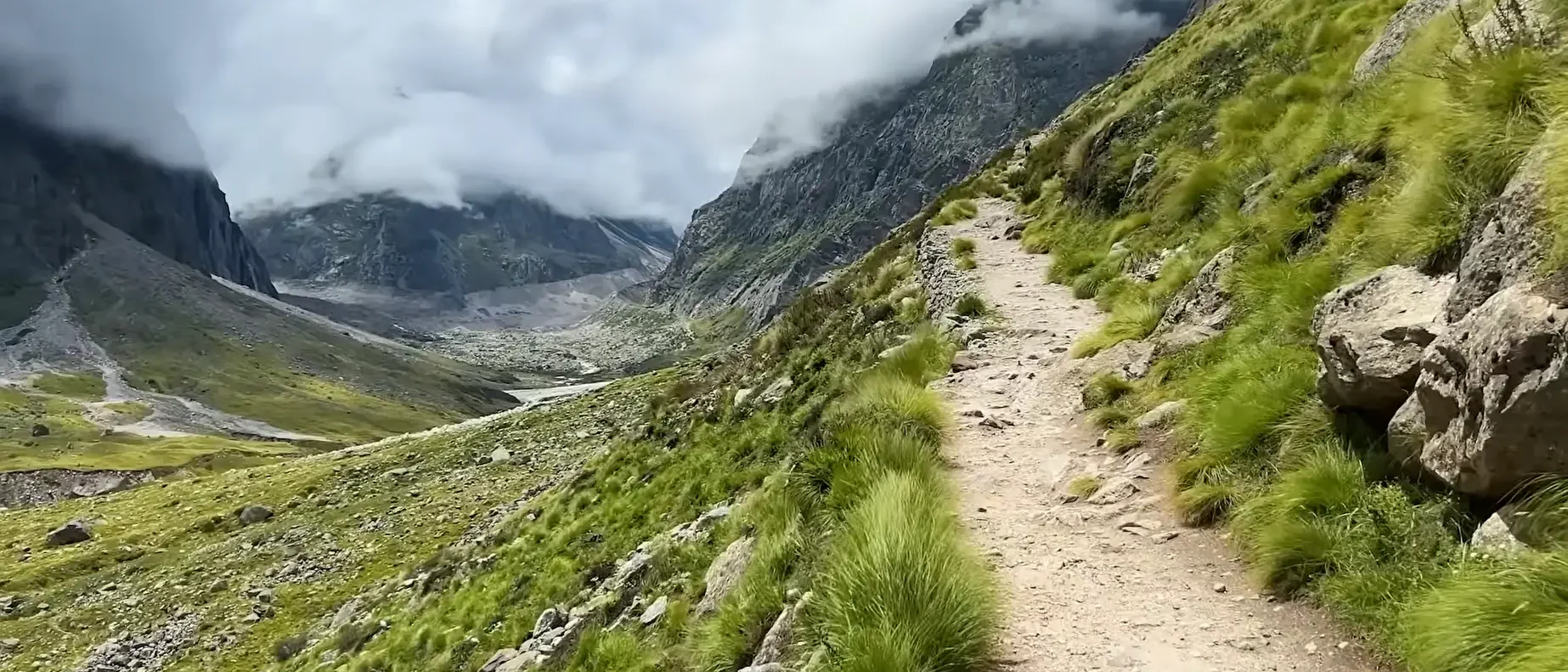
The trek to Vasudhara waterfall is a 6 km high-altitude trail starting from Mana village. Known for its breathtaking natural beauty and mystical mythology, it takes you through a 400-foot spectacular waterfall.
Key details of the Vasudhara Falls trek
- Starting point: Mana village
- Leading point: Vasudhara Waterfall
- Trek distance: 6 km one-way
- Time taken: 2-3 hours
- Difficulty level: Easy to moderate; the first 2 km stretch up to Saraswati Mandir is relatively flat and easy. From there, the trails become steeper and more rugged, demanding stamina.
- Route highlights: The trek passes over the Alaknada River, the Saraswati River Bridge, and a dense oak forest, providing great views of the surrounding peaks.
Pro tip: There is no shop for water and food after leaving Mana village, so be sure that you carry a reusable water bottle and energy snacks.
Best Time To Visit Vasudhara Falls
Due to the high-altitude location and unpredictable weather conditions of the region, Vasudhara is accessible only for a few months from May to October and remains closed in winter due to heavy snowfall.
The visiting window for this site is tied to the best time to visit the Badrinath temple, which is May to June and September to October/early November.
Overview of Vasudhara Falls’ seasonal accessibility:
| Season | Weather & Temperature | Travel suitability |
| Summer (May to June) | Pleasant with clear skies and a 10°C to 20°C temperature range | Ideal for trekking & sightseeing |
| Monsoon (July to August) | Heavy snowfall, slippery and muddy trails. | Not recommended due to the risk and slippery trails |
| Autumn (September to October) | Clear skies, pleasurable weather with excellent views, and an 8°C to 15°C temperature range. | Moderately suitable for trekking and exploration |
| Winter (November to February) | Harsh and chilly with heavy snowfall | Inaccessible due to heavy snowfall |
Places To Visit Near Vasudhara Falls
- Badrinath Temple: Located just 9 km beyond, Badrinath is a major attraction of this region. Dedicated to Lord Vishnu and a key part of the Do Dham and Char Dham pilgrimages, featuring Tapt Kund hot water spring, Charan Paduka, and more.
- Mana Village: The fist indian village, Mana, is a primary base for the Vasudhara Falls trek. The village sits at an altitude of 10,500 feet above sea level, known for its unique culture, flora, and fauna.
- Vyas Gufa & Ganesh Gufa: Vyas and Ganesh Gufa are the two ancient caves within Mana village, known for their mythology, a place where the sage Vyasa composed the epic Mahabharata with the help of Lord Ganesha.
- Bheem Pul: A sacred, rocky bridge over the Saraswati River, Bheem Pul was believed to have been built by Bheem, the strongest among the Pandavas.
- Pandukeshwar: Pandukeshwar Village is an ancient and picturesque village near Badrinath town, known for its ancient temples like Yog Dhyan Badri Temple and Lord Vasudev Temple.
Essential Tips for Vasudhara Falls visitors
- Weather Consideration: Even on summer days, the weather can turn breezy and chilly at high altitudes of around 12000 feet, so dress in layers and wear sturdy trekking shoes.
- Start trek early: Early morning trekking is highly recommended, as it ensures that you have ample time to complete the trek and return before late afternoon.
- Acclimatise properly: Give your body proper rest at a lower altitude, like in Mana Village, before heading on the trek.
- Stay Hydrated: Be cautious about hydration; drink plenty of water to avoid dehydration.
- Avoid overpacing yourself: Do not overpace yourself at high altitudes, as it leads to unnecessary fatigue.
- Trekking Shoes: Wear sturdy trekking shoes for rugged terrain and steep inclines. They help to protect feet and maintain balance.
- Aware of cliff edges: Do not gamble too close to wet, mossy cliff edges; they can be highly slippery.
Conclusion
We conclude that Vasudhara waterfalls is a truly mystical destination near Badrinath in the Garhwal Himalayas of Uttarakhand, renowned for its stunning natural beauty and mysteries, such as water touching only people with pure hearts and turning away from sinners.
The surrounding beauty offers breathtaking views of the massive Chaukhamba and Trishul peaks, and the therapeutic property of the waterfall attracts devotees, nature lovers, trekkers, and travellers alike.
FAQs
What is the mystery of Vasudhara Falls?
The Mystery of Vasudhara Falls lies in its prominent legend, which states that the water of this waterfall touches only those who have pure hearts and turns away from sinners. This makes it a highly revered destination for devotees and travellers who often visit here to test their spiritual purity.
Is the Vasudhara Falls Trek difficult?
No, the Vasudhara Falls trek is an easy-to-moderate trek with a starting 2 km phase up to the Saraswati River, and from there it becomes steeper and more rugged, but can be manageable with proper fitness and tips like hydration and acclimatisation.
How long is the Vasudhara trek?
The Vasudhara Falls trek is a 6 km high-altitude trail starting from the Mana village and leading to a cascading 400-foot waterfall. This waterfall passes through dense oak forest and river valleys, offering stunning views of the Himalayas.
How high is Vasudhara waterfall from sea level?
Vasudhara Falls is situated at an altitude of 3,658 meters (1,200 feet) above sea level. In comparison, the waterfall cascades from a height of 400 feet (122 meters).
Which mysterious waterfall in India, where water doesn’t touch bad people?
Vasudhara Falls is a mysterious waterfall in India associated with the legend that its water doesn’t touch bad people or sinners but only falls on those with pure hearts.




Comments (7)