
Introduction
Badrinath is a revered shrine of Lord Vishnu, located in the Chamoli district of Uttarakhand. It holds immense importance as part of the Char Dham and Do Dham Yatra, attracting many devotees across India.
But many of the pilgrims often wonder about how to reach Badrinath Temple; to resolve this problem, we have prepared a complete guide about the Badrinath route, available transport, and practical travel tips, which help to plan a smooth and safe journey.
Let’s start with an answer to a simple question: how to reach Badrinath Dham. Shri Badrinath Dham is well-connected by flight, train, or road to all the major Indian cities.
However, there is no direct connectivity by flight or train to the shrine. Pilgrims must complete their journey by road via the nearest airport (Jolly Grant Airport in Dehradun) or nearest railway station (Haridwar & Rishikesh) to reach the temple.
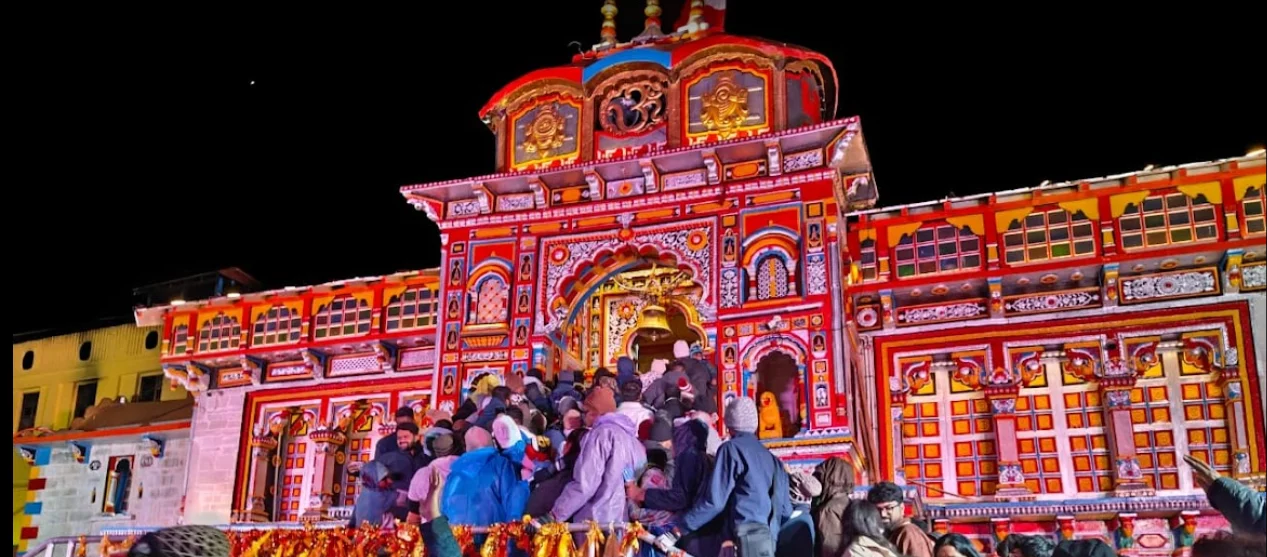
Where Is Badrinath Temple Located?
The Badrinath Temple is located in the Chamoli district of Uttarakhand within the town of Badrinath. Situated in the Garhwal Himalayas along the banks of the Alaknanda River and surrounded by the Nar-Narayan peaks.
Overview of Badrinath Yatra
- Badrinath Location: Chamoli district of Uttarakhand, within the Garhwal Himalayas
- Badrinath Height: 3,133 meters (10,279 feet)
- Travel Option: By road, train, & flight
- Common Route: Your city → Dehradun/Haridwar → Rishikesh → Devprayag → Rudraprayag → Joshimath → Pandukeshwar → Badrinath
- Duration: 2-3 days, depending on departure point, travel mode, and route.
- Nearest Airport to Badrinath: Jolly Grant Airport in Dehradun
- Nearest Railway station to Badrinath: Haridwar (HW) & Rishikesh (YRNK)
- Best time to visit Badrinath: May to June & September to October
How To Go Badrinath?
You can reach Badrinath via air, train, road, or a combination of those, as it is situated deep in the Garhwal Himalayas. There is no direct flight or train connectivity to the site itself.
Devotees must travel to major transit hubs of Uttarakhand, which are Haridwar, Rishikesh, and Dehradun, having great connectivity to all major cities and all transport options.
Detailed overview of how to reach Badrinath by flight, train, or road:
By Flight: No direct connectivity by flight to Badrinath. Jolly Grant Airport (Dehradun) is the nearest airport to Badrinath. From there, you can take a bus or private taxi directly to Badrinath.
By Train: Take a train from the nearest railheads, Haridwar Junction or Rishikesh Railway Station, both of which have excellent connectivity to the rest of India. From there, you must continue by road. You can take a shared jeep, private taxi, or local state-run buses
By Road: Badrinath is well-connected via the NH-7 road, which connects to Delhi, Haridwar, or Dehradun. It passes through scenic towns, including Panch Prayag Sangam, Pipalkoti, and Joshimath. You can reach it by self-driving or taking a bus from cities like Delhi (ISBT Kashmiri Gate) to Haridwar or Rishikesh. From there, heading on another bus to reach Badrinath.
How To Reach Badrinath By Flight
Since there is no direct flight connectivity to Badrinath, you must take a flight to Dehradun’s Jolly Grant Airport, which is around 317 km away.
It has great connectivity to all the major cities in India, like Delhi, Mumbai, and Bangalore. From the airport, you can take a taxi or bus to reach Badrinath.
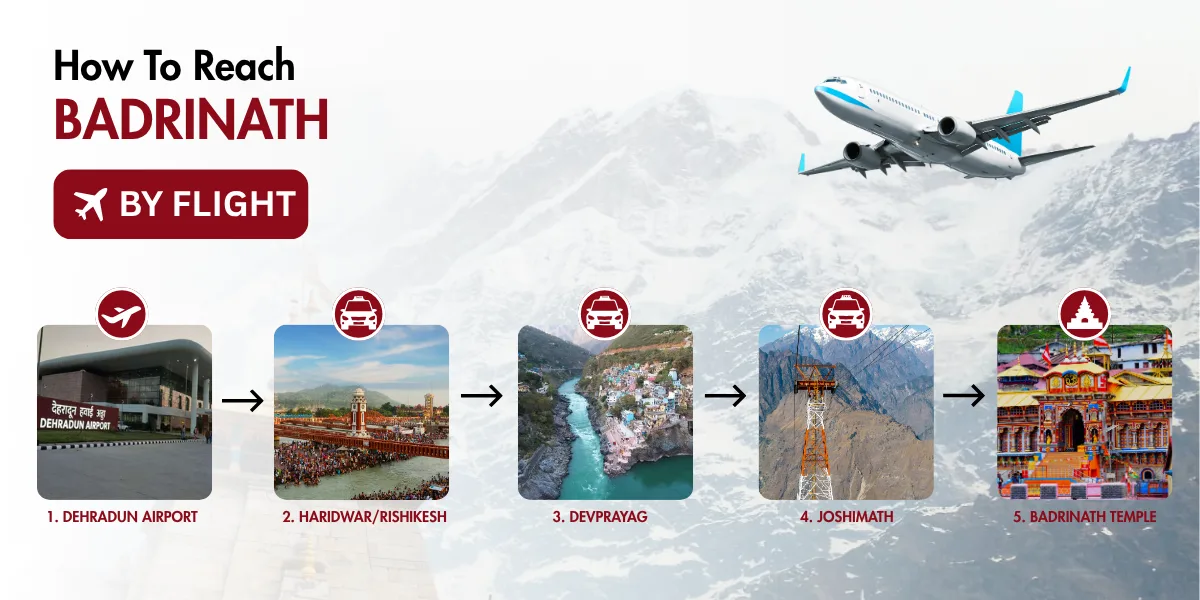
Key details and steps of travelling to Badrinath by flight:
Step 1: Fly to Dehradun Airport
Book a flight from your city or Delhi to Jolly Grant Airport in Dehradun. The flight may take around 2-2.5 hours. Air India and Indigo are major airlines that offer daily flights to Dehradun Airport.
Step 2: Dehradun to Badrinath
From the airport, take a private taxi or bus from ISBT Dehradun to reach the Badrinath Temple.
- Dehradun Airport to Badrinath Distance: 301 km by road
- Travel Time: 10-11 hours
- Travel Options from Airport: Taxi, Car, or Bus
- Route: Your city → Jolly Grant Airport in Dehradun (by flight) → road travel to Rishikesh → Devprayag → Rudraprayag → Joshimath → Badrinath Temple
How To Reach Badrinath By Train
Like the airport, Badrinath doesn’t have its own railway station. Devotees must take a train from the nearest railheads, which are Haridwar (310 km away) and Rishikesh (284 km), having great connectivity to all major cities.
From either of these stations, you can take a bus or hire a private taxi to reach Badrinath.
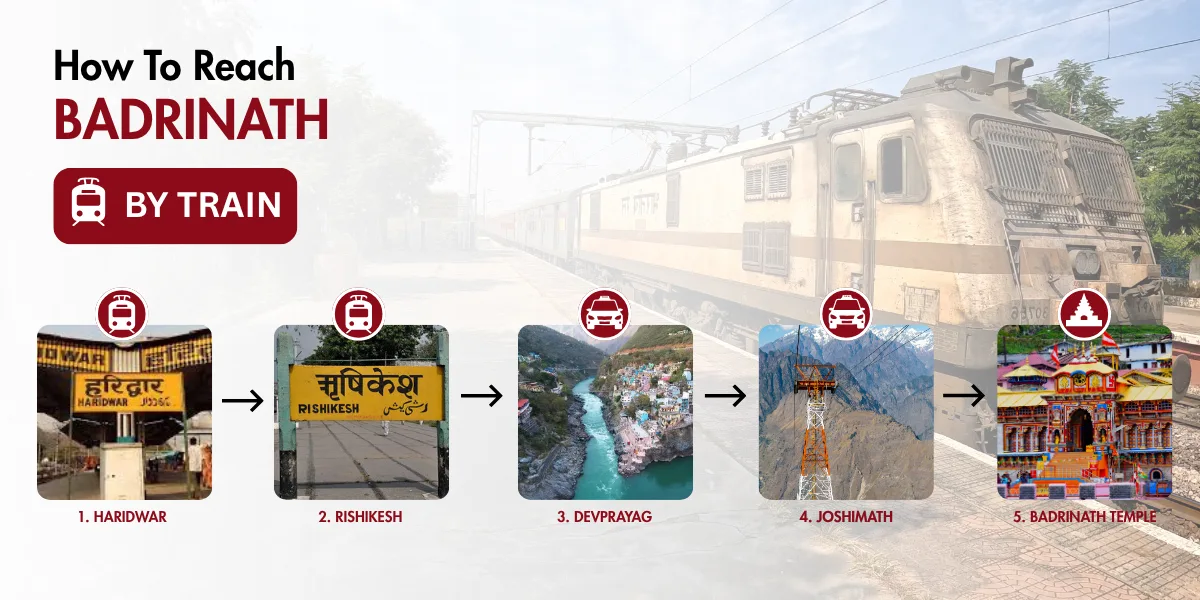
Step 1: Reach Haridwar/Rishikesh Railway Station
Reaching Badrinath by train is the most economical and practical way to travel. You can book a train from your city to Haridwar Junction or Yog Nagri Rishikesh, which handles the maximum number of daily trains from across India.
Step 2: Reach Badrinath Temple
Once you reach Haridwar or Rishikesh, from there, you must cover the remaining stretch by road travel.
- Travel Distance: Around 310 km from Haridwar and 285 km from Rishikesh.
- Travel Time: 10-12 hours
- Transport Options: Government-run and private buses, private taxis, and shared jeeps are readily available.
- Travel Route: Follows the NH-7 route: Haridwar/Rishikesh → Devprayag → Rudraprayag → Joshimath → Pandukeshwar → Badrinath Temple
How To Reach Badrinath By Road
Reaching Badrinath by road is the most popular option, as it has great road connectivity to all major routes. You can easily reach Badrinath by driving your own car or by hiring a taxi, taking a bus from Delhi, Haridwar, Rishikesh, or Dehradun.
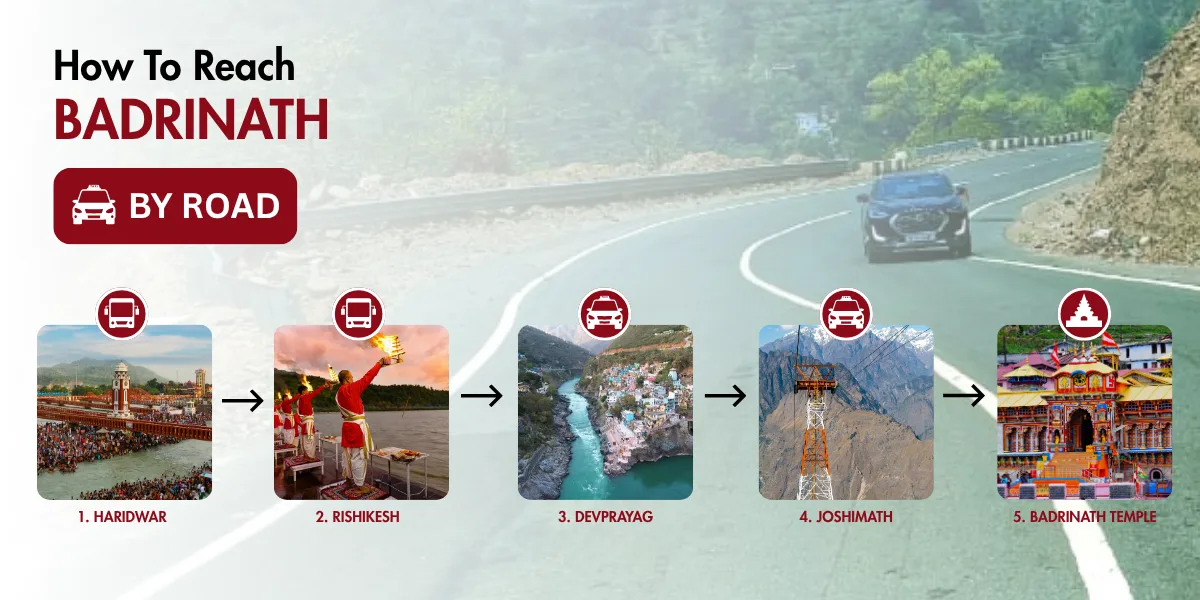
Key details about road travel to the Badrinath Temple.
- Standard Badrinath Route: The journey to Shri Badrinath Temple follows the one primary route, the NH-7 route, known as the Rishikesh-Badrinath Highway, passing via–
Haridwar → Rishikesh → Devprayag → Srinagar → Rudraprayag → Karnaprayag → Chamoli → Pipalkoti → Joshimath → Badrinath
- Road Distance: Approx. 300-320 km from Haridwar/Rishikesh
- Travel Time: 10-12 hours, depending on road conditions and traffic
- Key Travel Options: Private vehicles, shared taxis, and Local buses operate from early morning, starting around 5:30 AM.
- Road Conditions: Roads up to Joshimath (the primary gateway to Badrinath) are good and well-defined. But beyond this, the Badrinath route becomes steeper and narrower.
Safety tip: Night driving is strictly restricted on mountain roads, so avoid it and check road alerts from local authorities for safe travel.
Major Stops Along The Route To Badrinath
- Rishikesh: Rishikesh is the primary starting point of the Badrinath yatra. Known for its divine ghat and peaceful surroundings, it is known as the “Yoga Capital of India.”
- Devprayag: A first major stop, famous for its confluence of Alaknanda and Bhagirathi at the Sangam. Pilgrims usually halt here for a frequent break for tea and lunch.
- Rudraprayag: A major town and sacred confluence of the Alaknanda and Bhagirathi rivers.
- Karnaprayag: Another major tributary of the Panch Prayag sangam and a major stop point on the Badrinath route. Renowned as the meeting point of the Alaknanda and Pindar rivers.
- Nandaprayag: A scenic halt point along the Alaknanda valley. Famous for its sacred confluence of the Alaknanda and Nadakini rivers and peaceful surroundings.
- Joshimath: Joshimath is a revered town on the Badrinath route and serves as a primary base for Badrinath. Famous for its ancient Narsingh Temple (winter seat of Badrinath).
- Pipalkoti: A very close point hub to the temple, where devotees usually stay before heading to the final stretch to the shrine.
What Is The Best Way To Reach Badrinath?
The best way to reach Badrinath depends on your travel style, budget, and how much time you have. Well, Badrinath is accessible by flight, train, or road, but devotees must travel by road to reach the temple, due to its high-altitude location in the Himalayas.
By Flight + Road
Take a flight from your city to Jolly Grant Airport in Dehradun (the nearest airport to Badrinath), having regular flights from Delhi, Mumbai, etc. IndiGo and Air India are major airlines that operate regular flights on this route.
Onward Travel: From the airport, continue by road via car or taxi to reach Kedarnath.
By Train + Road
Travelling by train is the most economical way to reach; you can take a train to Haridwar or Rishikesh, the nearest railheads to Badrinath. Both offer great connections across the country.
From the railway station, you can easily catch local state-run buses or shared taxis to reach Badrinath. It requires travelling over 300 km by road and takes around 10-11 hours to complete.
By Road
Badrinath by road is a flexible and popular way to reach it. You can simply take a regular bus from cities like Delhi to Haridwar/Rishikesh. From there, take another vehicle to travel towards the Badrinath Temple.
Route: Follows the NH-7 route, passing via Rishikesh, Devprayag, Rudraprayag, Joshimath, and Badrinath.
Travel Tips For Badrinath Travellers
- Mandatory Registration: Badrinath Yatra Registration is a mandatory thing to travel to the Badrinath Temple. Without registration, you are not allowed to proceed beyond checkpoints.
- Weather Consideration: Weather can change quickly in remote areas, so always check before planning your trip.
- Fuel Strategy: Joshimath is a reliable hub for fuel stations and ATMs, so fuel up your vehicle here if you’re self-driving.
- Connectivity: Mobile networks in the Badrinath area are reliable, but they can fluctuate in remote areas. JIO & BSNL SIMs work best.
- Mountain driving consideration: Follow all road alerts issued by local authorities for safe travel. Take frequent breaks during long mountain travel to reduce fatigue.
Conclusion
Reaching Badrinath is not as difficult as it seems, but it can be overwhelming for first-timers, senior citizens, and families with young children. That’s why having the best knowledge about the Badrinath route is crucial to planning safe and convenient travel.
Badrinath has great connectivity to major Indian cities and major transit hubs of Uttarakhand. Anyone can reach it by taking a flight to Dehradun Airport or the Haridwar/Rishikesh station. From there, one must complete the journey by road travel via local bus or private car to reach the shrine.
Follow this segment, check roads, take breaks, and follow local safety rules for safe and comfortable travel.
FAQs
Is it difficult to reach Badrinath?
No, reaching Badrinath is not difficult, but it could be overwhelming for many pilgrims due to the long road travel and routes. Unlike the other shrines like Kedarnath, Badrinath is a zero-trekking-required site. It has good connectivity via the NH-7 road and can be reached by bus, car, or taxi from Haridwar or Rishikesh.
Which railway station is closest to Badrinath?
Rishikesh is the closest railway station to Badrinath, around 285 km away, and has better direct connectivity across India. While Haridwar is another reliable option with more options, around 310 km away. You can take a train to any of these stations and, from there, take a local bus or taxi to reach Badrinath.
Is Badrinath accessible by car?
Yes, you can reach Badrinath by car, following the NH_7 route, passing via Haridwar, Rishikesh, Devprayag, Rudraprayag, Joshimath, and Badrinath. Check roads before travel and avoid driving after sunset, as it is not safe on mountainous roads.
Can we go to Badrinath without trekking?
Yes, you can go to Badrinath without trekking, as it’s a zero-trekking requirement site. Offers great road connections to major cities and towns, such as Delhi, Rishikesh, and Devprayag. You can take a bus or a private vehicle, which will drop you at the Badrinath entrance gate.
Which airport is closest to Badrinath?
Dehradun Airport in Dehradun is the nearest airport to Badrinath, around 320 km away. It has regular flights from cities like Delhi, Mumbai, and Kolkata. From there, you can take a private taxi to reach Badrinath directly. It will take almost 10-12 hours.
How is the Badrinath route?
The route to Badrinath Temple is known as the Rishikesh-Badrinath Highway (NH-7), which is a mix of well-paved, multi-lane Highways and narrow mountain stretches, passing via major towns/cities such as Haridwar, Rishikesh, Devprayag, Rudraprayag, and Joshimath.
Is the route to Badrinath open now?
Yes, the route to the Badrinath Temple is open now for the 2026 season. It generally opens in summer from April/May to October and is closed during winter (November to March) due to harsh weather and heavy snowfall.

Partiksha is a dedicated travel content writer with over 5 years of experience in exploring various destinations in India. From mountains, beaches, treks, to spiritual sites, she believes in sharing experiences through creative storytelling, publishing travel guides, and engaging blogs.
She holds the technique to embrace cultures, stories, mythologies, and various experiences to engage with travellers. With an eye for aesthetics, Partiksha has crafted content that motivates travellers to explore beyond the ordinary itineraries. She doesn’t just write content, but makes it relate to the audience and helps them find what they are looking for.
Her expertise is not limited to writing content, but she also does travel blogging, destination reviews, SEO-friendly travel writing, and creative storytelling that reflects both value and authenticity. She believes that every travel destination has a story worth sharing, which helps to connect people with a place. To make your every visit memorable, she continues to do it through her expertise.



Comments (5)