
Chorabari Lake
Chorabari Lake, widely known as Gandhi Sarovar, is a high-altitude glacial lake in the Garhwal region of Uttarakhand, originating from the Chorabari Glacier.
Situated at the edge of Chorabari lake in the Rudraprayag district of Uttarakhand, near the Kedarnath temple. It holds immense spiritual, historical, and adventure importance among travellers across the country.
Now, it’s gaining popularity as an adventurous trekking destination deeply intertwined with dramatic ecological shifts, given its location at the foot of the Kedarnath peaks.
The trek to this alpine lake offers the bold views of the Kedar valley and snow-capped peaks. Many travellers visit this site as part of their Kedarnath yatra.
In this guide, you will explore everything you need to know about Chorabari Lake in Kedarnath, including its location, history, trek details, safety, and tips.
Quick Facts about Chorabari Lake
- Location: Rudraprayag district, Uttarakhand
- Also known as: Gandhi Sarovar
- Altitude: 13,800 feet (3,900 meters)
- Kedarnath to Chorabari Tal distance: 2-3 km
- Accessibility: Via trek from the Kedarnath Temple
- Best time: May-June & September-October
- Ideal for: Trekkers, nature lovers, & adventure seekers
- Base Camp: Kedarnath Temple
- Highlights: Dramatic views of the valley and Himalayan peaks
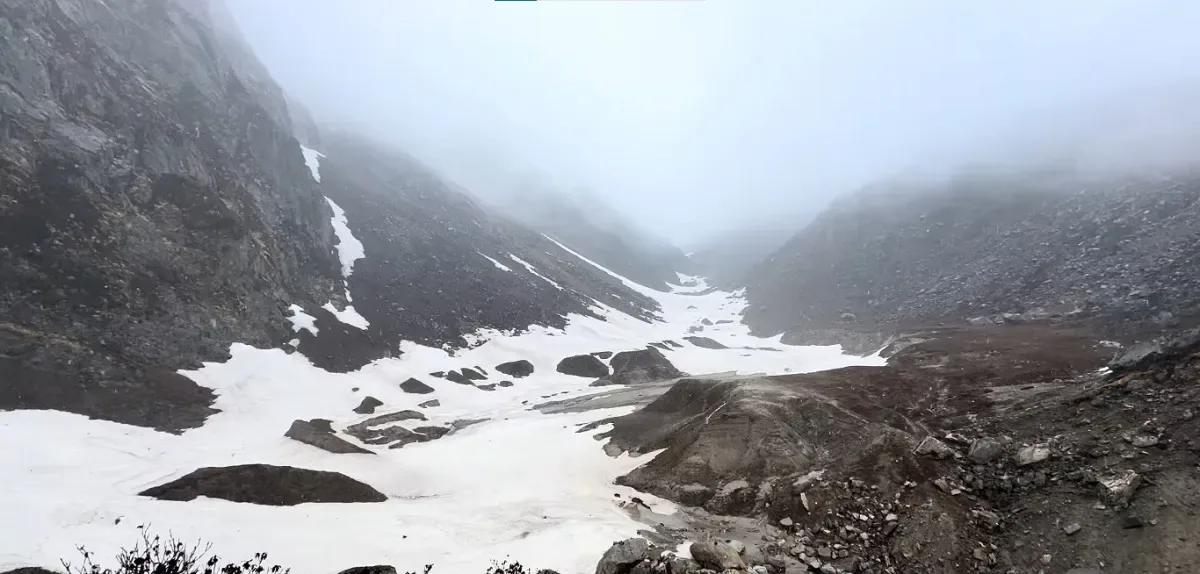
Table of Content
- Chorabari Lake (Gandhi Sarovar)
- Where is Chorabari Glacier Located?
- History of Chorabari Lake
- Chorabari Lake Before 2013
- Chorabari Lake during 2013 Flood
- Chorabari Lake after 2013
- What is the Story of Chorabari Lake?
- Why is Chorabari Lake known as Gandhi Sarovar?
- How do I go to Chorabari Tal?
- Chorabari Tal Trek
- Why is Chorabari Lake gaining popularity as a trekking site?
- Best time to visit Chorabari Glacier
- Places to visit near Chorabari Tal
- Safety Tips for Trekkers
- Things to carry for Chorabari Tal Trek
- Conclusion
- FAQs
Where is Chorabari Glacier Located?
The Chorabari Glacier is located in the Rudraprayag district of Uttarakhand within the Garhwal Himalayas, near the Kedarnath temple. The glacier spans an altitude of 13,800 feet (3,900 meters) to about 19,680 feet (6,000 meters) above sea level, the source of the Mandakini River and the origin of Chorabari Tal.
History of Chorabari Lake
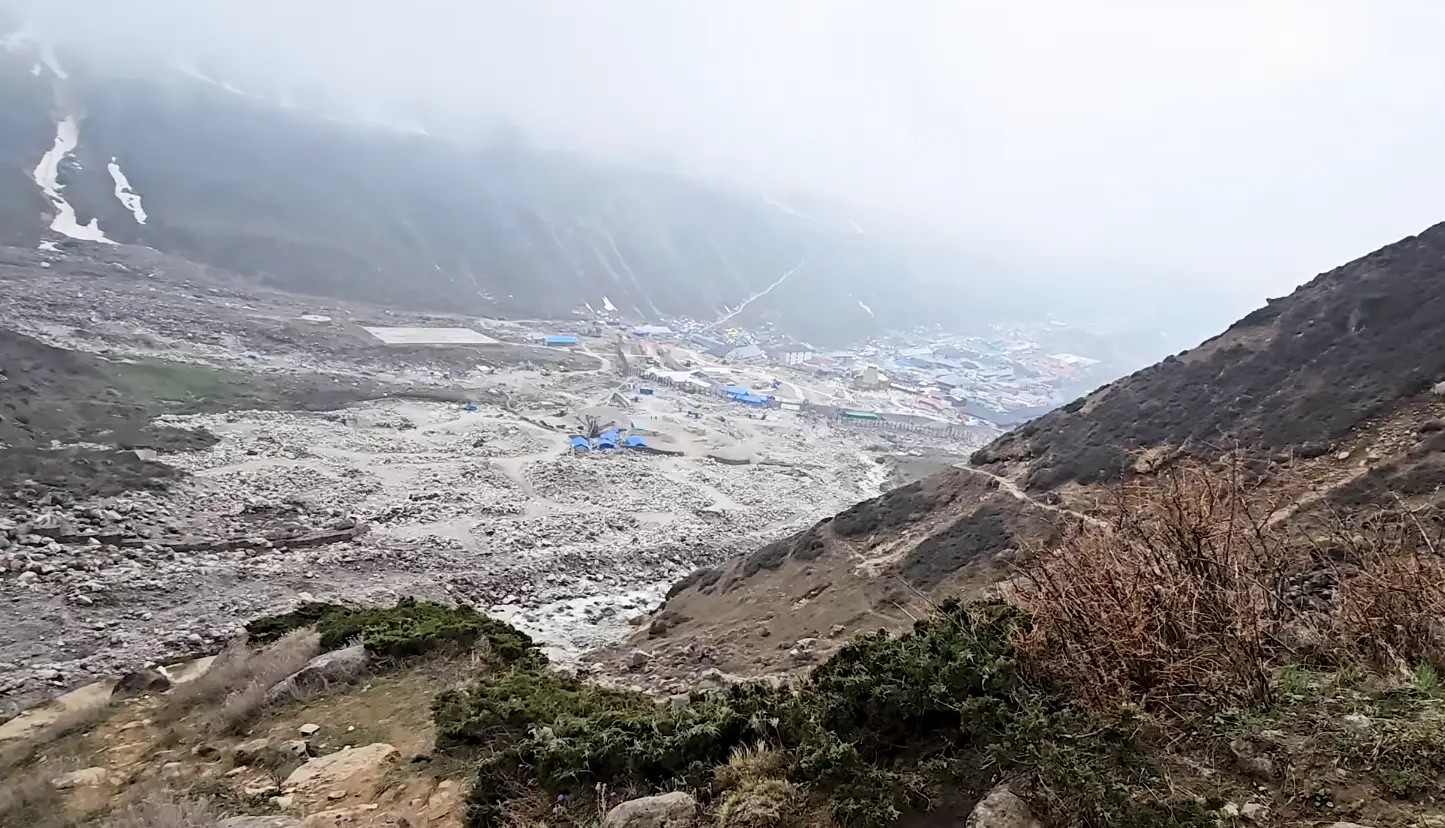
Located roughly 2-3 km upstream from the Kedarnath temple, the history of Chorabari Lake is a blend of ancient Hindu mythology linked to Lord Shiva and major historical milestones, such as the renaming of the site as Gandhi Sarovar and the outburst of the glacial lake that caused a flood.
Let’s take a look at some interesting chapters of Chorabari Lake history one by one.
Chorabari Lake Before 2013
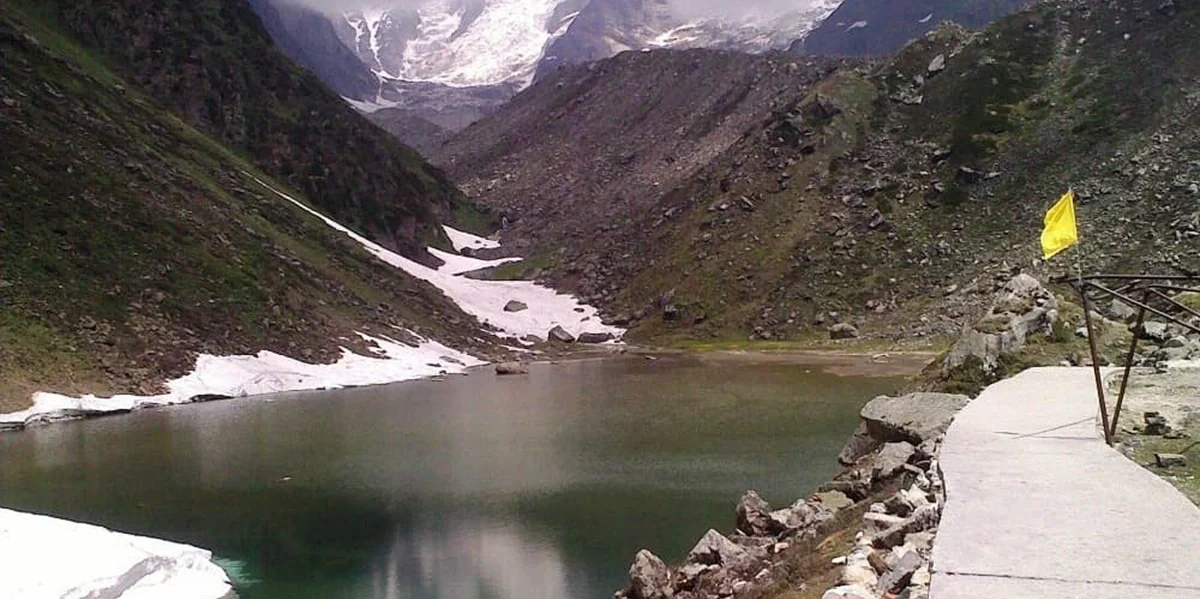
Before 2013, Chorabari Lake was a pristine snow-melted glacial lake, originating from the Chorabari Glacier. It used to be one of the most popular and scenic lake treks in Uttarakhand near Kedarnath Temple.
This lake is considered the origin of the Mandakini River. For many years, Chorabari Lake has remained full, and its water level often changes significantly.
With the constant weather changes, the lake retreated by more than 200 meters, expanding the catchment area and allowing more water to be stored in the lake. This continuous rise in the water level put pressure on the moraine embankments.
Chorabari Lake During 2013 Flood
The most strategic event in Chorabari Lake’s history occurred in June 2013 during the North India flood. Between June 15, 2013, and July 15, 2013, the region faced unpredictable cloudbursts, recording over 355 mm of rainfall.
This caused a massive avalanche and broke the natural dam, leading to thousands of massive walls of water and boulders rushing directly down into the Kedarnath town (Mandakini River basin)
In this natural disaster, thousands of people and animals lost their lives, but surprisingly, the historic Kedarnath temple survived.
Chorabari Lake After 2013
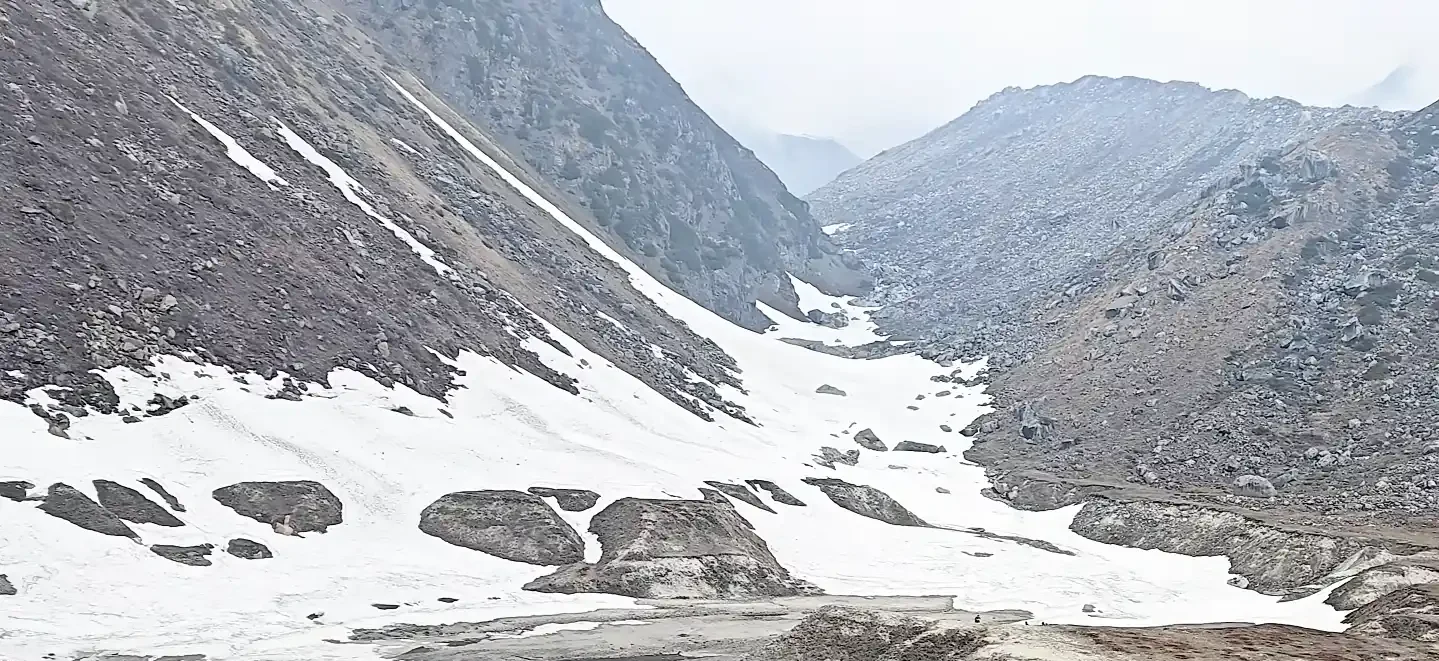
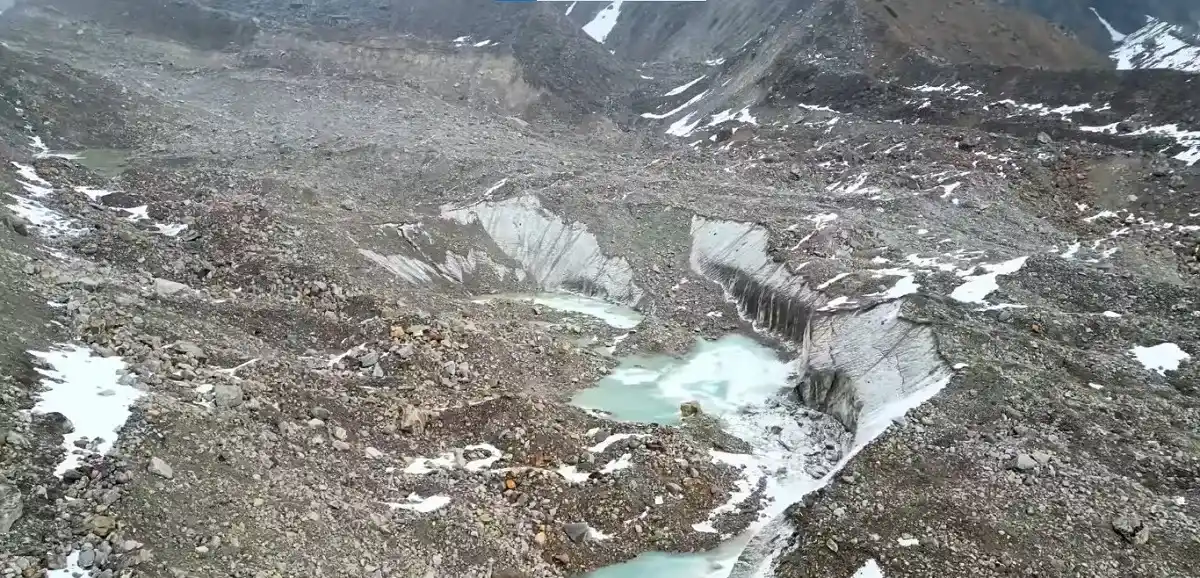
Now, the Chorabari lake no longer exists in its original form because the natural burst washed away most of the natural glacial moraine. Today, the site is a dry boulder-flat basin with a small stream of water flowing through it.
Many trekkers still embark on this trek to witness the bird’s-eye views of Kedar Valley and its tranquil beauty.
What is the Story of Chorabari Lake?
According to Hindu Mythology, Chorabari Lake was originally known as Kanti Sarovar, and it is believed to be the exact spot where Lord Shiva taught the knowledge of Yoga to the Sapta Rishis. Then these cosmic sages spread this knowledge across the world.
Why is Chorabari Lake known as Gandhi Sarovar?
Chorabari Lake is also known as Gandhi Sarovar, because in 1948, a portion of Mahatma Gandhi’s ashes was immersed in the lake, giving it the name “Gandhi Sarovar”.
How Do I Go To Chorabari Tal?
The lake is around 2-3 km upstream from the main Kedarnath temple. To reach Chorabari tal, travellers must first reach Kedarnath, which is accessible by trek from Gaurikund.
Read more: How to reach Kedarnath temple.
Firstly, reach Haridwar/Dehradun/Rishikesh via air, train, or road. From either of these cities, a road journey of around 230-240 km follows to reach the base camp (Gaurikund).
From there, head for a 16 km trek to Kedarnath Temple. For this stretch, you can hire the Kedaranath Pony/Palki service that runs between the designated route from Gaurikund to the Kedarnath base camp.
Then, complete the final stretch of a 2-3 km uphill trek towards Chorabari Glacier.
Chorabari Tal Trek
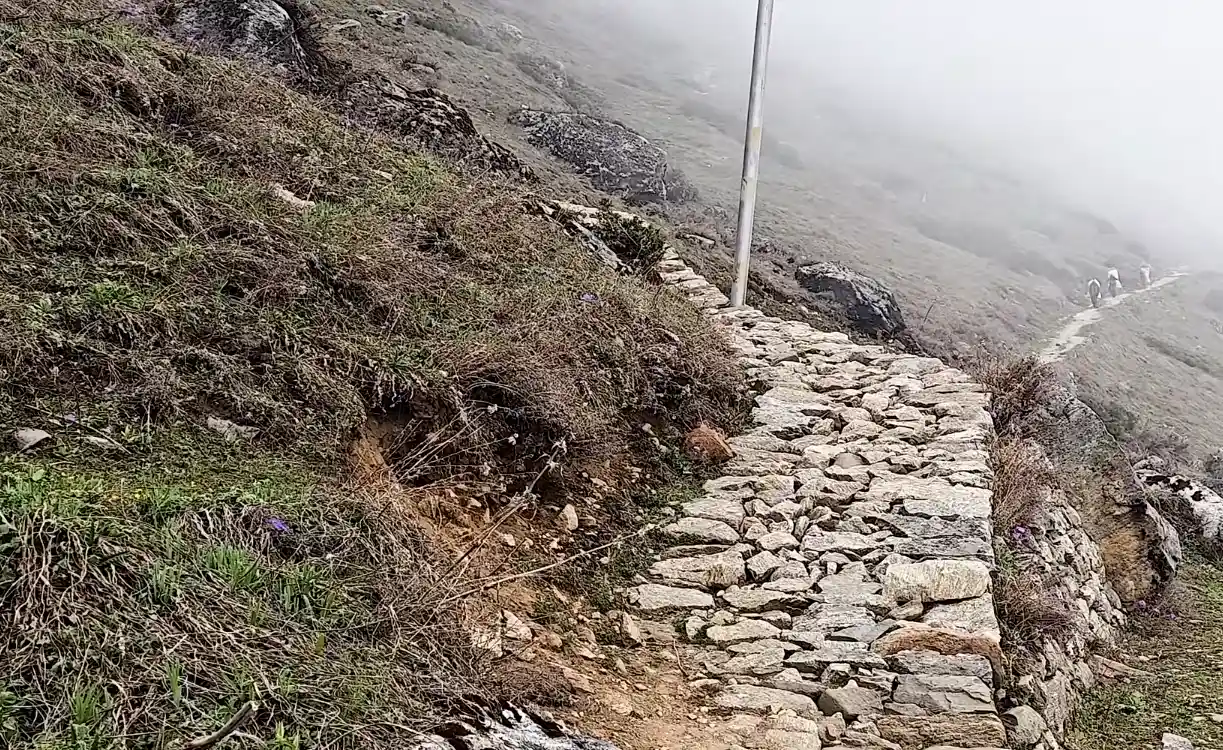
The trek to Chorabari Lake from Kedarnath Temple is a 2-3 km uphill glacial walk that starts from the iron bridge behind the main Kedarnath temple area and leads toward a scenic glacial site.
The trek is short but physically demanding due to rapid altitude gain and uneven terrain. Also, the route passes through a cascading waterfall, Madhuganga Falls, a refreshing spot for trekkers.
Key details about the trek:
- Starting point: Iron Bridge behind the Kedarnath temple
- Leading point: Chorabari basin area
- Altitude: 13,800 feet (3,900 meters)
- Distance: 3 km one way
- Duration: 2-3 hours
- Difficulty level: Moderate
- Permit: No fee required except the Kedarnath registration
- Highlights: Uphill glacial walk & panoramas of alpine meadows and valleys
Note: There are no facilities for food or stay after Kedarnath, so make sure to carry snacks and start early to return to Kedarnath before sunset. Also, camping is strictly prohibited at Chorabari Tal, so follow the guidelines.
Why is Chorabari Lake gaining popularity as a trekking site?
Despite the absence of the original lake, the surge of trekking to the Chorabari glacier gains popularity day by day among modern adventure seekers.
Due to its location near the Kedarnath temple, it makes a perfect extension for trekkers or fit pilgrims who are looking for a peaceful escape from the crowded temple complex.
It is surrounded by alpine meadows, river valleys, and mountain peaks, offering close-up views of pristine Himalayan peaks, which make it a highly rewarding site.
Best Time To Visit Chorabari Glacier
The best time to visit Chorabari Lake is linked with the best time to visit Kedarnath: May-June & September-October for a safe and pleasurable trekking experience.
During these months, the weather is pleasant, visibility is good, and trails are accessible, which makes it a good time for exploration and trekking.
Avoid the monsoon (July-August) as it experiences heavy rain, which leads to landslides and flash floods, making travel difficult. During winter, the region receives heavy snowfall, making the entire site highly inaccessible.
Places To Visit Near Chorabari Tal (Gandhi Sarovar)
Kedarnath Temple: One of the 12 Jyotirlinga in India and the Panch Kedar Temples, Kedarnath Temple is a sacred abode of Lord Shiva and the heart of the region. It’s a main shrine that passes via the Chorabari Lake trek and serves as a primary base for the site.
Bhairavnath Temple: Located roughly 800 meters from the Kedarnath temple on a cliff, Bhairavnath Temple honors Lord Bhairava, who is believed to be the protective deity of Kedarnath Valley. Easily reachable via a short walk.
Bhim Shila: A massive boulder named Bhim Shila sits behind the main Kedarnath temple and holds immense importance in the survival of the Kedarnath temple from the devastating flood of 2013.
Vasuki Tal: Located about 11 km from Chorabari Lake, Vasuki Tal is a famous trekking destination, renowned for its dramatic views and blooming alpine flowers like the rare Brahma kamal.
Adi Shankaracharya Samadhi: A memorial site of sage Adi Shankaracharya (a great philosopher) located just behind the Kedarnath temple. You can spot this during your trekking journey, offering a peaceful and calm atmosphere.
Rudra Cave: Just near a lake site, Rudra Cave is a prominent meditation hub. It is gaining popularity after the meditation of PM Modi in this sacred cave. It provides a serene environment for meditation and mindfulness activities.
Safety Tips for Trekkers
- Acclimatization: Do not rush into travel. Give your body time to adjust to the altitude. At least spend a night in Kedarnath before the trek to Chorabari Tal.
- Book your stay in advance: Hotels in Kedarnath get full quickly, so book your stay well in advance to avoid any hassle.
- Weather awareness: Weather in the Himalayas changes quickly, so check the live weather forecast before starting the trek and follow the safety rules by the local authorities.
- Hydration: Drink plenty of water and carry sachets of ORS and glucose during the trek to maintain hydration during the trek.
- Dress in layers: Wear proper warm clothes like thermal wear and fleece jackets to protect from the cold.
- Start early in the morning: Start your trek early in the morning for peaceful and great views.
Things To Carry For Chorabari Tal Trek
Packing should be crucial if you plan to visit Chrabari tal along with the Kedarnath yatra. Since the Kedarnath temple is the main hub for food, accommodations, and basic facilities, pack wisely. Include items such as:
- Warm clothes like jackets, gloves, woolen caps, etc.
- High-ankled trekking shoes
- Basic first aid kit with AMS prevent tablets
- Food like energy bars & dry fruits
- Reusable water bottle
- Trekking pole
- Powerbank, headlamp, or flashlight
Conclusion
Chorabari Lake (Gandhi Sarovar) or Chorabari Glacier no longer exists in its original form after the devastating flood. Located in the Rudraprayag district of Uttarakhand, Chorabari Lake is now just a small water stream, although very famous for its scenic and serene environment.
Surrounded by snow-covered peaks and glacial views, it attracts many adventure enthusiasts seeking a wilder experience in the deep Himalayas. It’s renowned as a popular stretch to the revered Kedarnath temple.
FAQs
How far is Chorabari Lake from Kedarnath?
The distance to Chorabari Lake from Kedarnath is approximately 2-3 km, accessible by an uphill trek through the deep valleys and dense oak forest area.
What is the view of Chorabari Lake?
Chorabari Lake offers dramatic views of the Mt. Kedarnath peak, deep valleys, and Chorabari glaciers, making it a perfect place for photographers and nature lovers.
Which River comes from Chorabari Glacier?
Chorabari Lake is a main source of the Mandakini River, which flows near the Kedarnath Temple and is a major tributary of Panch Prayag. The Chorabari Lake sits at the edge of the Chorabari glacier.
What precautions should be taken while trekking to Chorabari Lake?
Common precautions taken while trekking to the Chorabari Lake trek included maintaining hydration, checking the weather, physical preparation, proper clothing in layers, etc., for a safe trek experience.
Is Chorabari Lake still there?
No, after the devastating flood of 2013, no lake exists as a water body at the Chorabari tal site. Today, it’s a dry & boulder-strewn flat area where a small stream of water flows through it.

Muskan is a skilled travel content writer, specializing in crafting engaging, informative, and helpful content that connects with readers. She has been writing content for over 4 years for Musafir Resort. She understands the strategies and techniques to deliver the best travel guides, destination reviews, and creative stories that showcase destinations at their best.
From the beautiful Himalayas to vibrant cities, she has crafted multiple experiences that reflect the reality and authenticity of the places. Muskan focuses on writing content that not just engages, but is valuable and helps travellers to plan a memorable experience.


Comment (0)