
Introduction
Vyas Gufa and Ganesh Gufa are two ancient and revered caves in the Village of Mana in Uttarakhand, near the sacred Badrinath Temple. These sacred sites are believed to be the place where the epic Mahabharata was composed by Maharishi Ved Vyasa and written down by Lord Ganesha, fascinating pilgrims, saints, and history lovers for centuries.
Pilgrims often add these caves to their itinerary in the Kedarnath Badrinath Tour Package of the Do Dham journey, due to the quiet atmosphere, ancient rock formation, and divine energy of the Himalayas, creating a sense of serenity and timelessness.
Whether you are a traveller exploring the hidden gems of Uttarakhand or a devotee seeking blessings in nearby Badrinath Dham, these caves will be the best extension to your trip.
Learn all about Vyas Gufa and Ganesh Gufa in Badrinath, including their location, mythology, history, significance, and travel information, to help ensure a peaceful visit to these historical landmarks.
Quick Information About Vyas Gufa & Ganesh Gufa Mana
- Location: Chamoli district of Uttarakhand, within the Mana Village
- Altitude: 10,500 feet above sea level
- Proximity town: Badrinath & Mana village
- Best time to visit: May to June & September to October
- Accessibility: A short walk from Mana Village
- Entry Info: Free
- Exploration time: 1 to 1.5 hours
- Nearest Airport: Jolly Grant Airport in Dehradun
- Nearest railway station: Haridwar (HW) & Rishikesh (YRNK)
Where is Vyas Gufa located?
Vyas Gufa near Badrinath is an ancient cave in the First Indian Village, Mana, in Uttarakhand. Situated on the banks of the Alaknanda River and surrounded by towering Himalayan peaks. It is just a very short distance of 200 meters from Mana village.
About Vyas Gufa
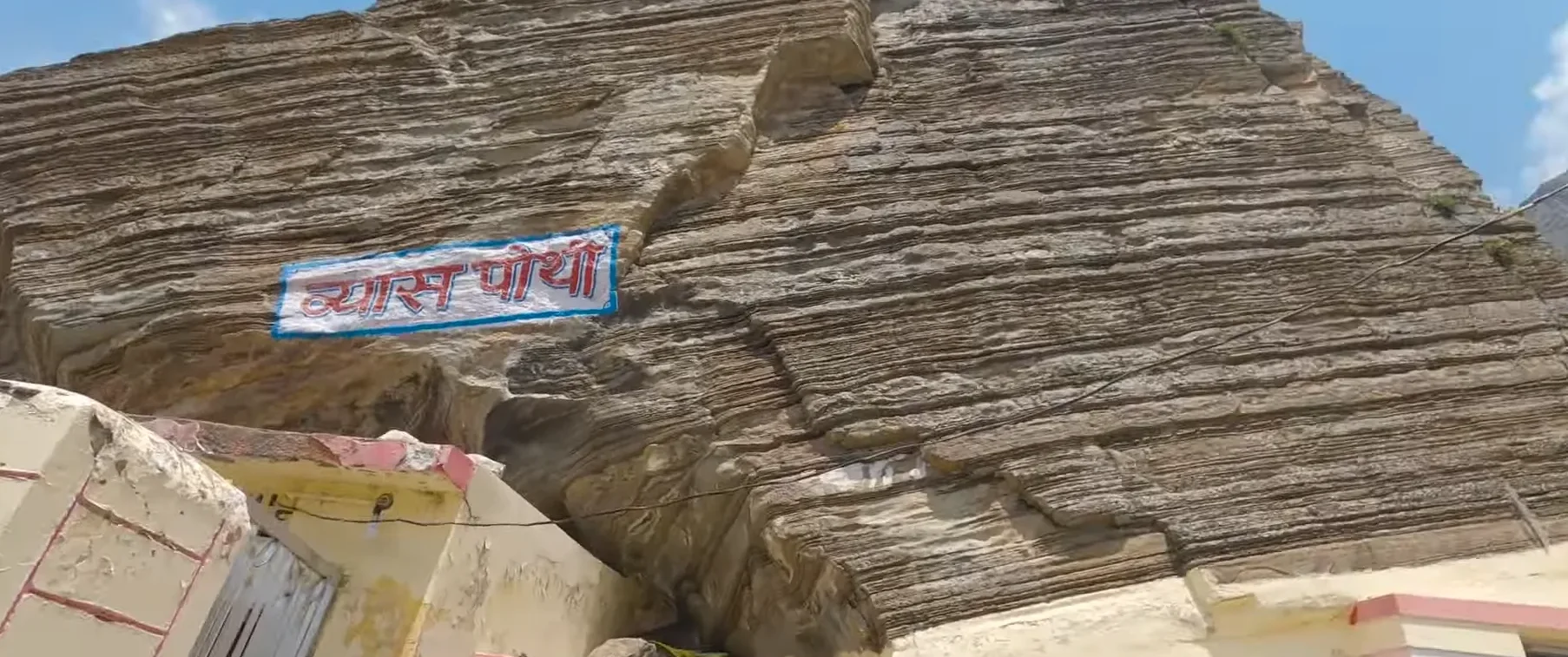
Vyas Gufa is an ancient cave, believed to be over 5,000 years old. According to Hindu legend, it is the residence place of Maharishi Ved Vyas, who lived and meditated there, giving the site its name. It is a unique stone-roofed cave that holds great importance in Hindu scriptures.
Significance: Vyas Gufa is tied to a great legend; it is highly revered as the historic place where sage Vyasa composed the epic Mahabharata and the 18 Puranas.
He also compiled the Vedas into four parts: Rig, Yajur, Sama, and Atharva. This legend makes it a highly revered site for devotees who visit here to feel the divine energy.
What is Inside the Vyas Cave?
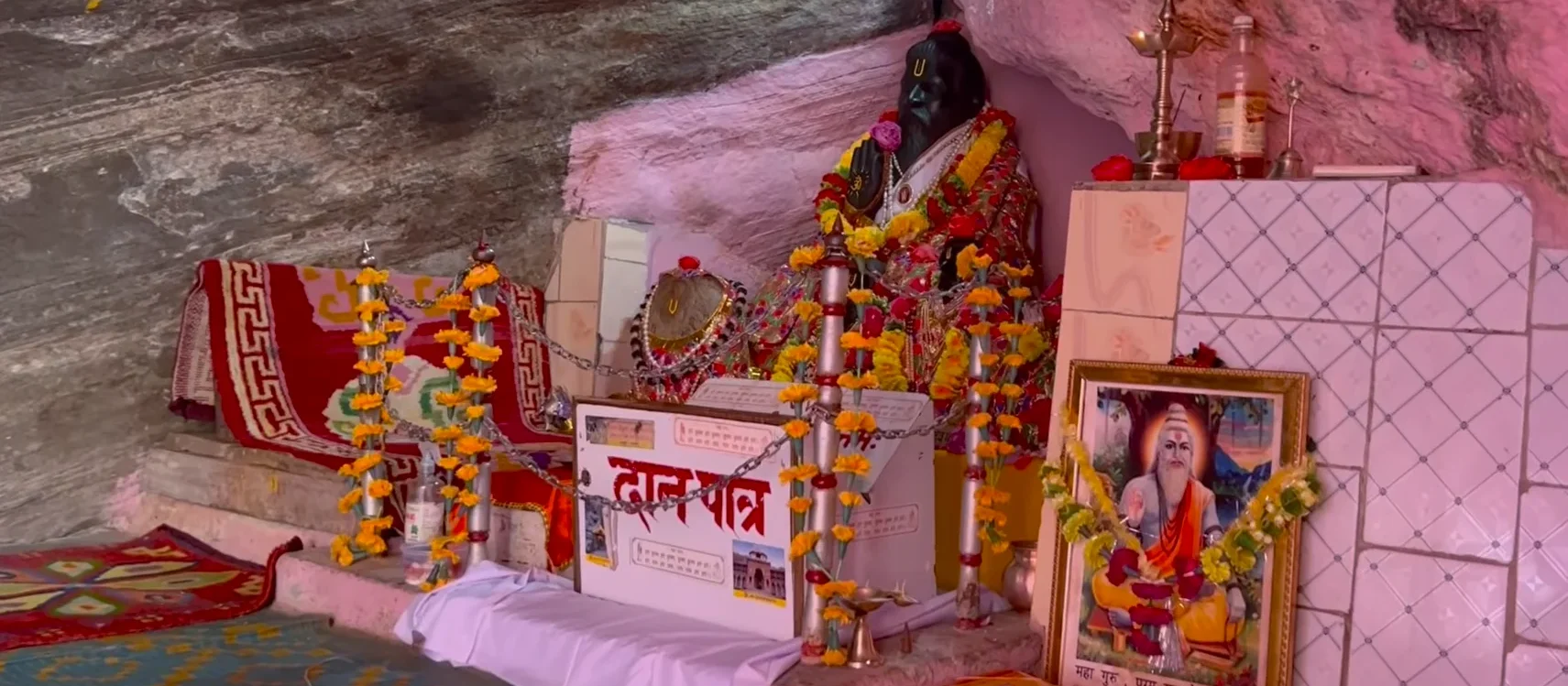
Vyas Gufa features a unique natural stone ceiling, resembling the stack of palm-leaf manuscript pages. Some local folklore suggests that these are the same pages that Rishi Vyas kept hidden from the world.
Inside the cave of Ved Vyasa, you can see an ancient stone idol of the Sage Ved Vyas, along with statues of his two sons (Muni Sukhdev and Balabh Acharya) and Lord Vishnu. Today, it has become a small but significant holy place where local priests conduct daily prayers and narrate the epic story to visitors.
Where is Ganesh Gufa?
Ganesh Gufa is another naturally formed cave located just below the Vyas Gufa (100-150 meters) in Mana Village, near Badrinath in Uttarakhand. Associated with Lord Ganesha (the son of Lord Shiva and Goddess Parvati). It is accessible by a very short hike from the entrance of Mana Village.
About Ganesh Gufa
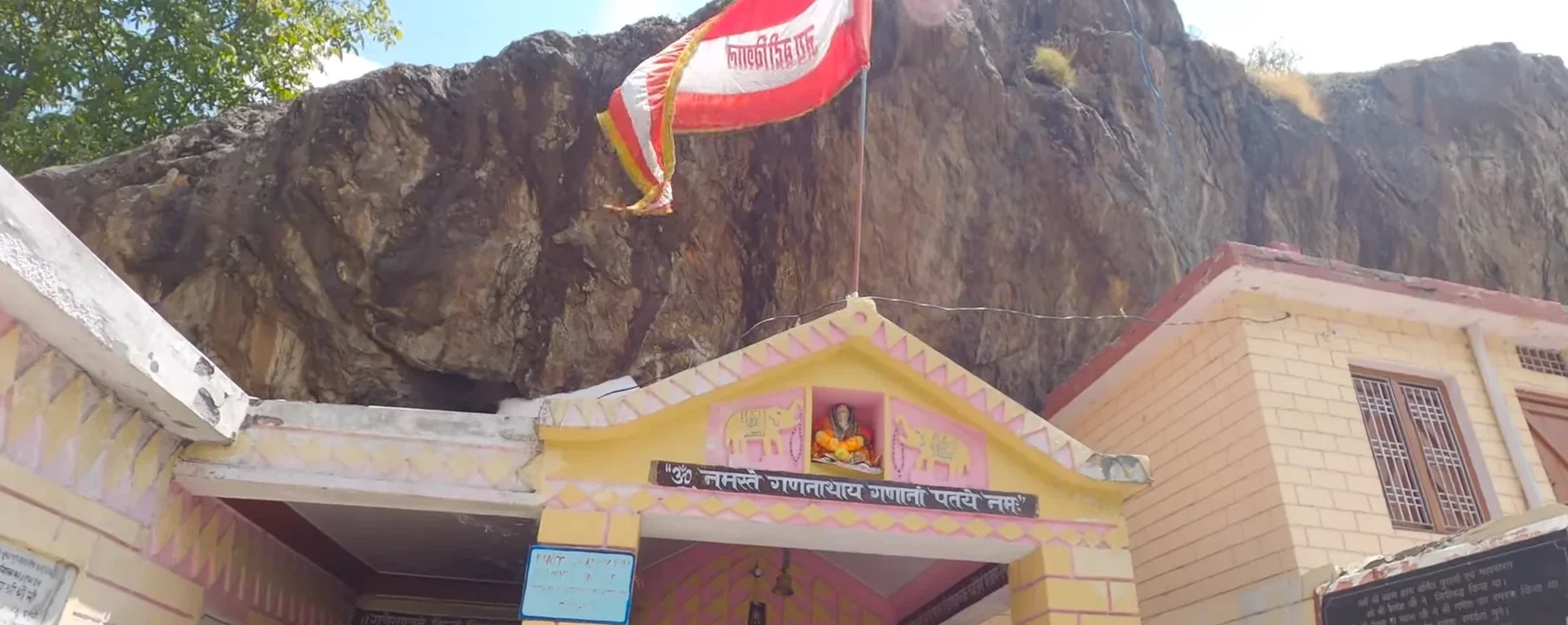
Vyas Gufa is a sacred rock cave dedicated to Lord Ganesha (the god of wisdom). It is a 5,000-year-old cave that holds immense spiritual significance, believed to be a place where Lord Ganesha transcribed the epic Mahabharata.
Significance: Ganesh Gufa is renowned as the place where Lord Ganesha wrote the text Mahabharata, which sage Vyas dictated to him from nearby Vyas Gufa.
What is Inside the Ganesh Gufa?
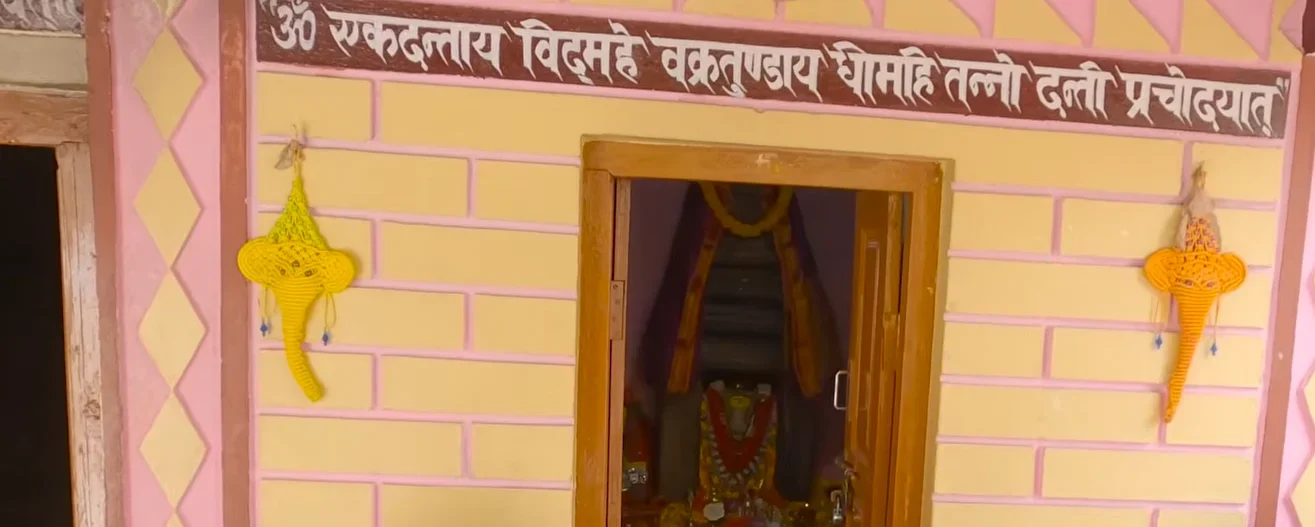
Ganesh Gufa is a small cave that houses a small idol of Lord Ganesha, which devotees adorn, and it has a quiet, meditative atmosphere inside, surrounded by picturesque Himalayan peaks and offering a scenic environment near the quiet Saraswati River, great for meditation and inner reflection.
Story & Significance of Ved Vyas And Ganesh Gufa
The stories of Ved Vyas and Ganesh Gufa are interconnected and deeply intertwined. Many visitors are curious about what happened in Vyas Gufa and Ganesh Gufa. Here is the answer, which is tied to a divine story of the Mahabharata.
The Legend of the Mahabharata
According to a famous legend, Sage Vyasa wanted to compose the massive Mahabharata and was looking for an intelligent scribe who could match his intellectual pace. Upon the advice of Lord Brahma, he chose Lord Ganesha, who is praised for his wisdom.
Ganesha agreed on one condition: that Rishi Vyasa dictate verses continuously without any pause. He agreed, but with one countercondition that Ganesha first understand the meaning of every phrase before writing it down.
During the writing process, Lord Ganesha’s writing instrument (Kalam/Pen) broke, but due to his vow not to stop, he broke his own tusk and completed the task without any interruption. This is the form of Ganesha with one tusk known as “Ekdanta”.
Curse of Saraswati River
Another legend holds that during the composition of the Mahabharata, Lord Ganesha and Ved Vyas were getting disturbed and unable to hear or focus, due to the roaring, thunderous sound of the Saraswati River.
Ved Vyasa pleaded with the river to slow down and flow gently so they could focus, but the river ignored him. After the continuous disruption, Lord Ganesha cursed the Saraswati River to vanish from the surface of the earth and flow underground.
How To Reach Vyas Gufa and Ganesh Gufa Badrinath
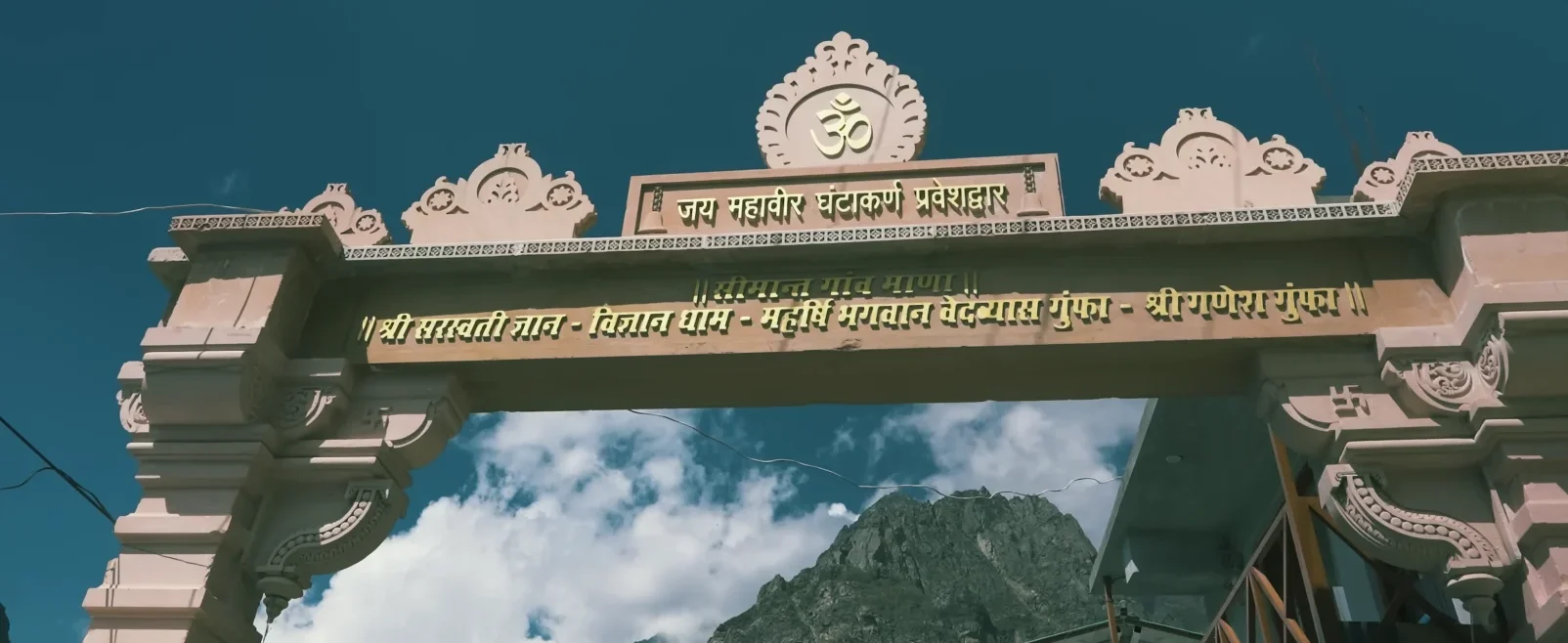
Both caves are easily reachable from Badrinath, as Mana village is around 4.3 km from Badrinath.
Read our guide on How to reach Badrinath for a detailed guide on how to get there.
1st Step: Reach Badrinath First
By Flight: Jolly Grant Airport in Dehradun is the nearest airport to these caves, offering great connectivity to major Indian cities. From the airport, you can take a bus or a private taxi to Badrinath.
By Train: Take a train to the nearest railway station, which is Haridwar or Rishikesh. Both offer great connectivity to all major Indian cities. From either of these stations, you can take a bus to reach Badrinath.
By Road: You can reach Badrinath by driving or by taking a local bus from Haridwar/Rishikesh.
2nd Step: Badrinath to Mana Village
Once you reach Badrinath, head on a short drive of around 3-4 km to reach Mana Village. You can hire a local shared taxi to reach Mana Village.
- Badrinath to Vyas Gufa distance: 4.5 km
3rd Step: Trek/Walk to Vyas Gufa & Ganesh Gufa
After reaching Mana Village, from the parking area of Mana, you can easily access both caves by a short walk of around 10-15 minutes. When walking up from Mana, the Ganesh Gufa appears first on the right-hand side of the pathways.
- Mana Village to Vyas Gufa distance: 220 m
Distance Between Ganesh Gufa and Vyas Gufa
The distance between Ganesh Gufa and Vyas Gufa is roughly around 100-120 meters; they are just located next to each other. From Ganesh Gufa, you must continue walking uphill to reach Vyas Gufa, which is located slightly higher on a cliff.
Key Things To Know For Visitors
The key information about the caves that travellers must know before visiting is as follows:
- Accessible: The caves align with the operational cycle of the Badrinath temple, which is open during the summer months (May to October) and closed in winter (November to April).
- Entry Timings: Caves are open between 6:00 AM and 6:00 PM during the wee hours.
- Entry type/fee: Free for both caves. Pilgrims/travellers can donate themselves.
- Exploration timing: 1 hour to 1.5 hours
- Best time to visit: Coincide with the best time to visit Badrinath. Caves are accessible during the summer months (from late April/May to October) and are closed in winter (from November to March) due to heavy snow.
Pro tip: Visiting during the early morning hours from 7:00 AM to 10:00 AM allows one to witness the early morning rituals. Avoid after sunset, as it is not safe in high-altitude terrain.
Nearby Attractions To Explore
While visiting these caves, you can explore scenic and sacred attractions in this region for an enriching, soulful experience.
Badrinath Temple
The main attraction of the region, Badrinath Temple, is a revered temple of Lord Vishnu, part of the Panch Badri circuit, and an integral part of the Do Dham and Char Dham. Surrounded by Nar-Narayan peaks and featuring the natural hot springs Tapt Kund and Narad Kund, it attracts devotees.
Mana Village
The first Indian Village, Mana, is home to these two sacred caves, Vyas Gufa and Ganesh Gufa. Famous for its rare flora and fauna, and surrounded by lush green peaks. Ideal for cultural walks and local exploration.
Bheem Pul
A natural massive rock bridge on the Saraswati riverbank near Mana village. Believed to have been built by Bheem (one of the Pandavas) during their final journey to heaven (Swargrohini Yatra). When his wife Draupadi faced difficulty crossing the river. The site offers breathtaking views of Mt. Chaukhamba and Trisul peaks.
Vasudhara Falls
Located just 6 km away from Mana Village, Vasudhara Falls is a majestic waterfall in the Chamoli district of Uttarakhand, at an altitude of 12,000 feet. It is renowned for its picturesque beauty and legend, believed to be the only waterfall whose water does not touch the sinners and falls only on pure-hearted people.
Saraswati River
Vyas Gufa and Ganesh Gufa in Mana, the historic site considered the origin of the Saraswati River, flow near these sites. It offers great views of the surroundings, including peaks and the entire village.
Keshavprayag
A hidden but most scenic river confluence of the Alaknanda and Saraswati rivers, located just below the Mana Village. Holds great importance in Hinduism, believed to be a place where the Saraswati River flows slightly, being cursed by Rishi Vyasa during the composition of the Mahabharata.
Charan Paduka
A sacred site located around 3 km uphill from the Badrinath Temple. It resembles the stone imprints, believed to be the divine footprints of Lord Vishnu. Accessible by an uphill trek from the temple, the site offers great views and a calm atmosphere.
Travel Tips For Visitors
- Avoid overpacing yourself, as your walk to these caves involves a steep climb.
- Dress modestly and pack layers for cold weather conditions
- Remove your shoes before entering the sites to maintain the sanctity.
- Respect the site, maintain silence, and ask for permission before taking photographs.
- Avoid peak afternoon hours, from 10:00 AM to 1:00 PM, and visit early in the morning.
- Stay hydrated; carry a reusable water bottle and light snacks, as food availability may be limited in this region.
Conclusion
Located in the Mana village within the Garhwal Himalayas are Vyas Gufa and Ganesh Gufa, which are the great landmarks of the historic legend of the Mahabharata. Associated with Lord Ganesha and Ved Vyasa, these caves are major attractions for peace seekers, travellers, and devotees alike.
While visiting these sites, check the operational timings, explore them before sunset, and follow local rules and guidelines for a safe and memorable experience.
FAQs
What is the significance of Vyas Gufa?
The significance of Vyas Gufa is tied to Hindu Mythology, as it is believed to be the residence of the sage Ved Vyas, who meditated here and composed the epic Mahabharata along with the 18 Puranas and the Vedas. Today, Vyas Gufa has become a core site for local exploration, along with Badrinath Yatra and Mana Village.
Where is Vyas Gufa in Mana?
Vyas Gufa is located in Mana village, about 220 meters from the parking area or the village entry gate. From there, you can easily reach Vyas Gufa by an uphill shuttle walk.
Where is Ganesha Gufa in Mana Gaon?
Ganesha Gufa is inside Mana village, situated just around 110 meters uphill from the Mana village parking area. Along the pathways, travellers first visit Ganesh Gufa, then access the Vyas Gufa with a slight further uphill walk of around 100 meters.
What is the story of Ganesh Gufa?
The story of Ganesh Gufa is associated with Lord Ganesha and is believed to be the place where he wrote the Mahabharata, which was transcribed by the sage Ved Vyasa. During the writing process, his pen broke. But due to his vow not to stop, he broke his own tusks and continued writing it down. This has even become a mark of Lord Ganesh’s dedication and is leading to his name, “Ekdanta”.
Who wrote the Mahabharata, Ganesha or Vyasa?
Lord Ganesh wrote the Mahabharata, and the Rishi Ved Vyasa dictated the verses. The credit for the composition of the Mahabharata and Puranas goes to both Lord Ganesh and Ved Vyas, symbolised by the historic remarks Ganesh Guga and Vyas Gufa in Mana Village.

Partiksha is a dedicated travel content writer with over 5 years of experience in exploring various destinations in India. From mountains, beaches, treks, to spiritual sites, she believes in sharing experiences through creative storytelling, publishing travel guides, and engaging blogs.
She holds the technique to embrace cultures, stories, mythologies, and various experiences to engage with travellers. With an eye for aesthetics, Partiksha has crafted content that motivates travellers to explore beyond the ordinary itineraries. She doesn’t just write content, but makes it relate to the audience and helps them find what they are looking for.
Her expertise is not limited to writing content, but she also does travel blogging, destination reviews, SEO-friendly travel writing, and creative storytelling that reflects both value and authenticity. She believes that every travel destination has a story worth sharing, which helps to connect people with a place. To make your every visit memorable, she continues to do it through her expertise.



Comments (5)