
About Kedarnath Temple History
Have you ever heard about the sacred Kedarnath Temple history and wondered about the mysteries behind it?
If “Yes” then, you would definitely not regret reading it further.
The mysterious and holy Kedarnath Temple stands as a powerful symbol of timeless history, legends, and faiths. Dedicated to Lord Shiva, Kedarnath is one of the most revered pilgrimage sites in Hinduism.
Every year, thousands of devotees undertake the challenging but highly spiritual Kedarnath yatra. The story of Kedarnath Temple is beyond ancient beliefs, which holds deep importance in legends and mythologies.
In this blog, I will take you through the fascinating Kedarnath history, mythology, and legends, along with the mystical Kedarnath flood story that makes the shrine truly divine.
Note: Check out our Kedarnath tour package price and details to explore this divine shrine while knowing its significance and legends through our professional guides.
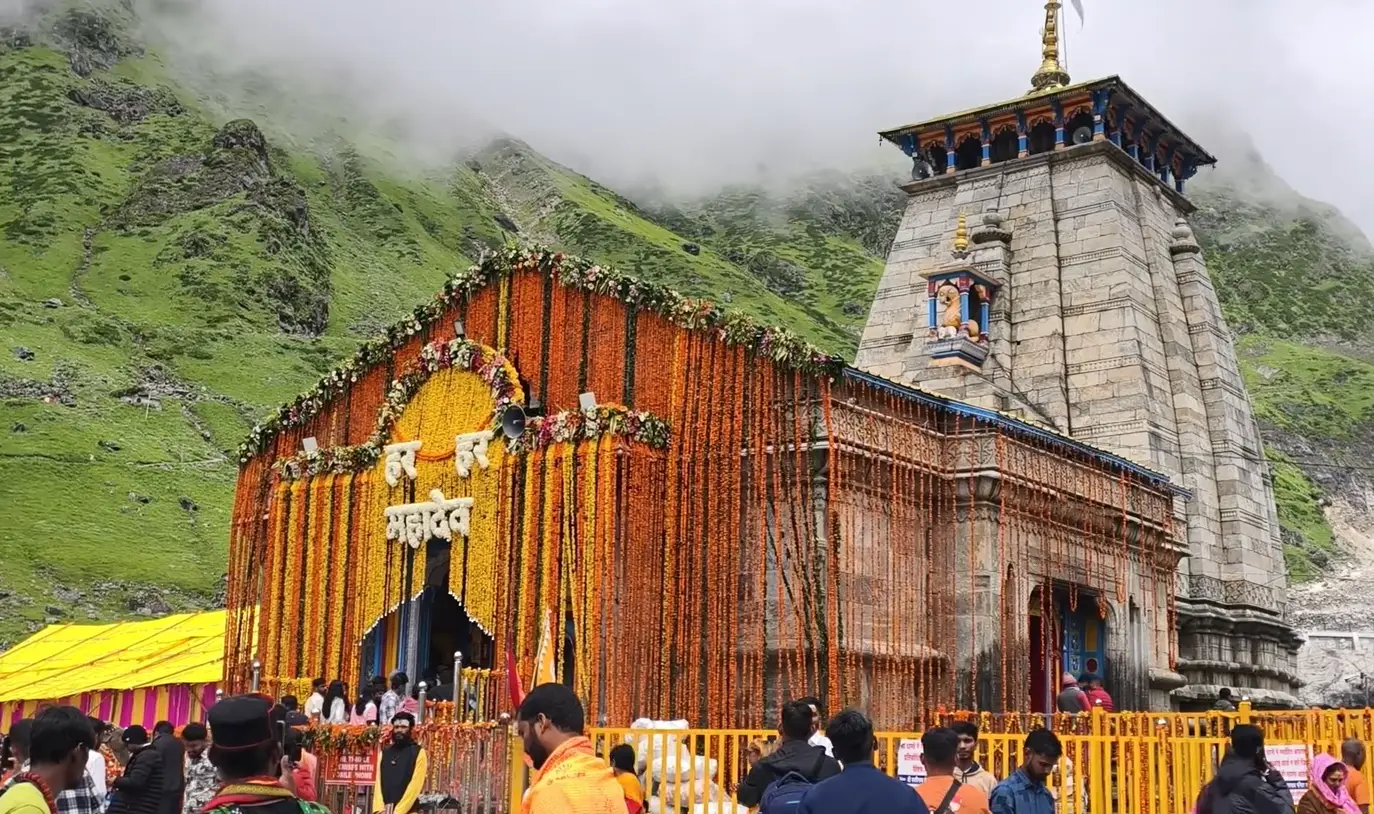
Kedarnath History: Timeline & Revival
According to the research and local sources, the Kedarnath Temple is over 1200 years old, with the current structure credited to Sage Adi Shankaracharya in the 8th century. The exact origin date is still a mystery.
Who built the Kedarnath Temple?
Below are the key timelines about the history of Kedarnath Temple:
- Mythological origin: As per Hindu scriptures, the Kedarnath Temple was originally built by the Pandavas from the Mahabharata. When they were seeking atonement by Lord Shiva’s forgiveness.
- Glacial Burial Era (1300-1900 C): As per the scientific study of geologists, the temple was buried under snow for nearly 400 years during the Little Ice Age era.
- 8th-Century Architectural Revival: The present structure of the Shri Kedarnath Temple is attributed to Adi Shankaracharya. He revived and reconstructed this site and established it as a sacred pilgrimage site. After that, He attained a Mahasamadhi behind the temple.
- Medieval Era (11th-12th century): Historical accounts suggest that the temple was renovated by Raja Bhoj by using grey stone slabs. During this time, it gained popularity as a prominent pilgrimage site.
- Modern Era: In modern times, the shrine survived the devastating Uttarakhand 2013 flood, also known as the Kedarnath flood. With its robust architecture and massive boulder (Bhim shila stone), the temple stands still.
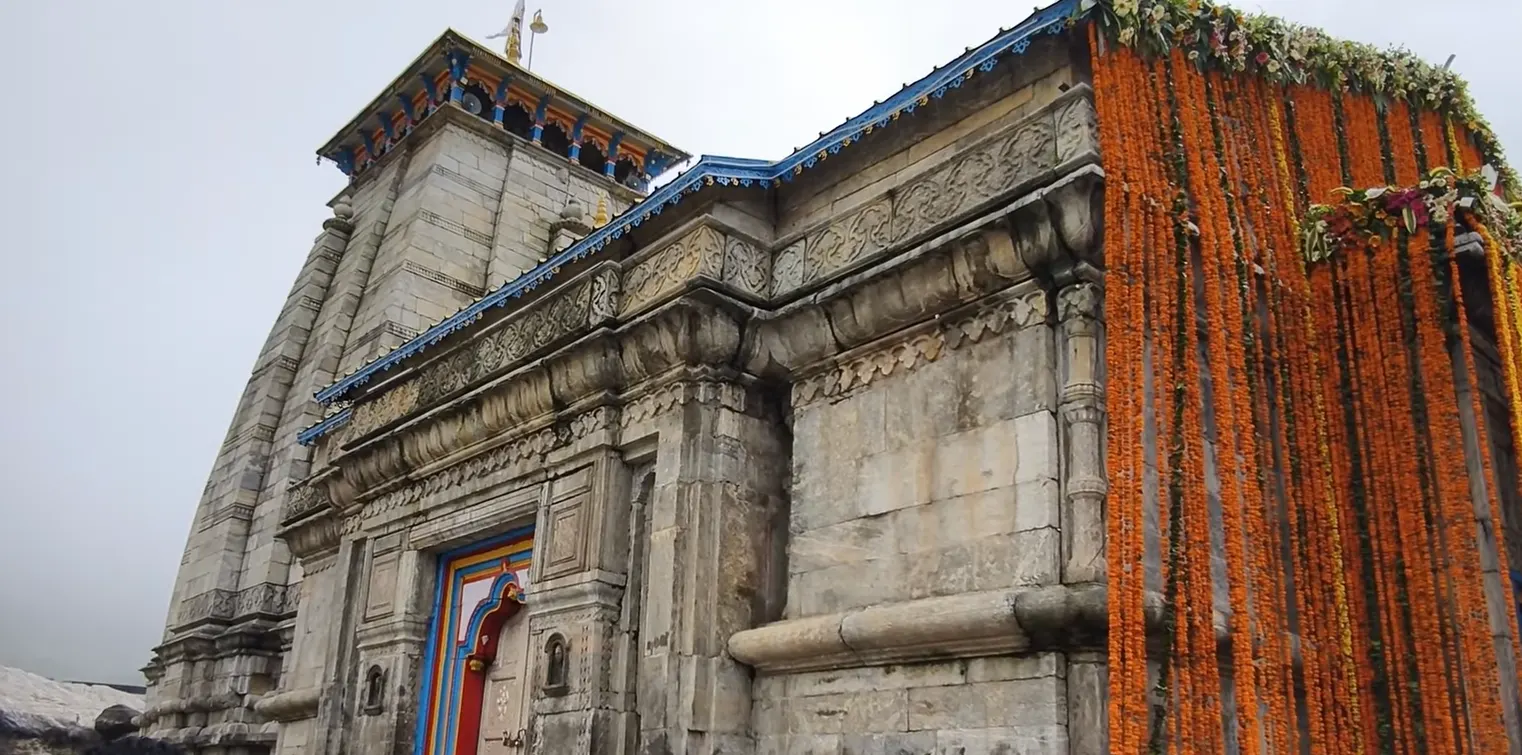
What is the history behind Kedarnath Temple architecture?
The Kedarnath Temple is built in simple stone architecture and resembles ancient Nagara architecture, which prioritises durability and simplicity.
Constructed from massive, heavy grey stone slabs interlocked using iron clamps. This ancient engineering, without a single use of mortar, protects the site from seismic shocks and snow loads.
Was Kedarnath buried for 400 years?
Yes, as per the scientific study of geologists from the Wadia Institute of Himalayan Geology. It says that the Kedarnath Temple was buried under snow for over 400 years between 1300 and 1900 AD, during the Little Ice Age.
The yellow lines on the temple’s outer walls and the polished stones inside the temple indicate that glaciers moved against the temple during the Ice Age era.
Kedarnath Temple Story In Ancient Scriptures
The story of Kedarnath Temple holds great significance in ancient Hindu scriptures, which describe it as a sacred place of divine energy.
Texts such as the Skanda Purana, the Shiva Purana, and the Vyas Smriti highlight the spiritual supremacy of the Kedarnath Temple.
- Skanda Purana: The reference to this ancient text about the Kedarnath Temple suggests that it is the place where Lord Shiva released the holy Ganga from his matted hair. It also emphasises that a visit to this sacred place cleanses the sins of devotees and brings them closer to salvation.
- Kashi Kedar Mahamatya: Define “Kedarnath” as “crop of Liberation” (Lord of the field). Also mention that a visit to Kedarnath can absolve all the sins of a person.
- Tevaram: A Tamil Shaivite literature text that mentions Kedarnath as one of the 275 Padaal Petra Sthals (significant temples of Lord Shiva). Sages like Trigunasamandar and Appar praise this site through singing.
- Vayu Purana: Another significant text in Hinduism recounts that Lord Shiva originally resided in Badrinath Uttarakhand, but, upon the request of Lord Vishnu, Shiva moved to Kedarnath.
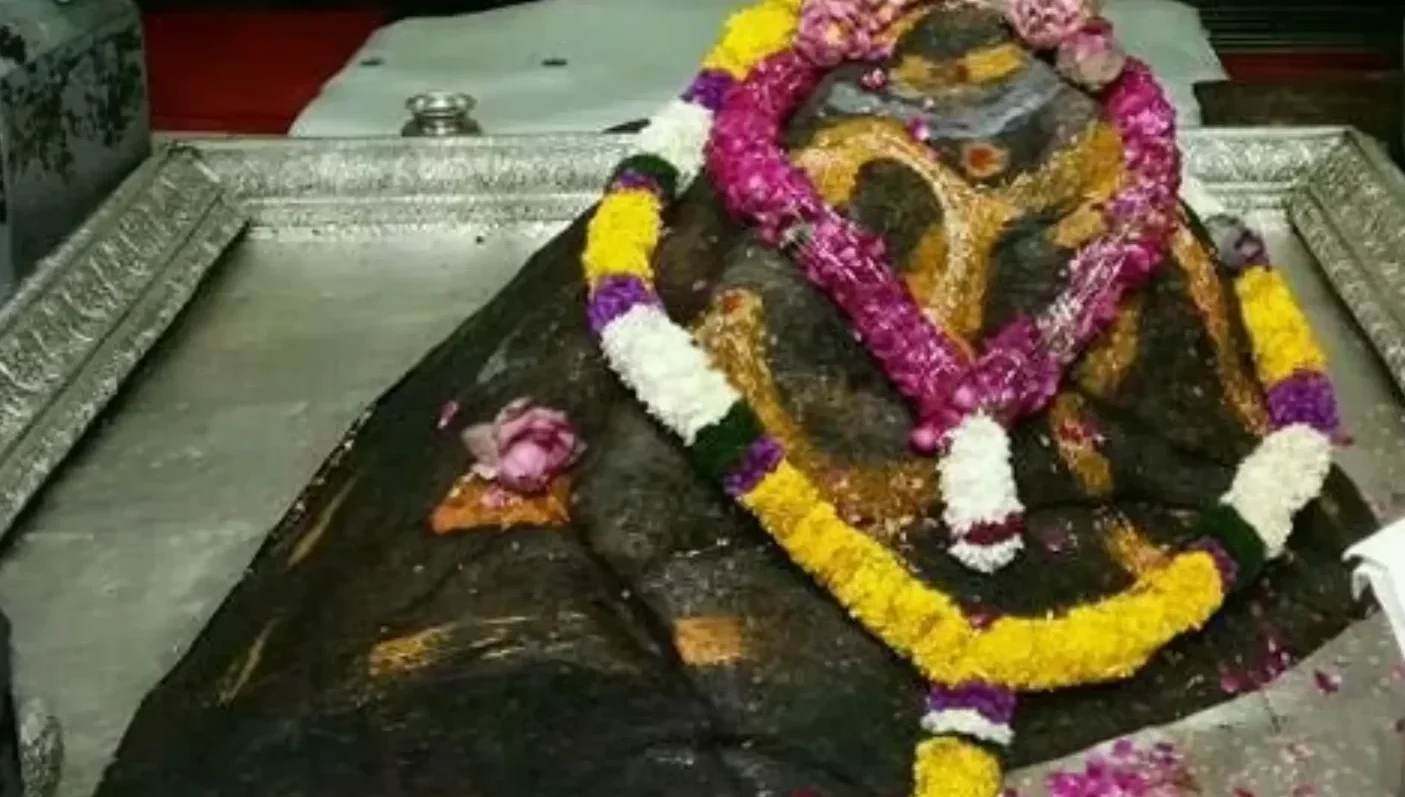
What is the story behind Kedarnath Shivlinga?
The real Kedarnath Shivling story is tied with the legends of the Skanda Purana, which glorify Kedarnath as one of the most powerful Jyotirlingas (a self-manifested pillar of divine light), one of the 12 Jyotirlinga in India.
A land where people worship Lord Shiva in his radiant and formless manifestation, representing the divine nature of Lord Shiv. It is not just a temple but also a cosmic pillar of divine light.
Kedarnath Jyotirlinga Story
The story of Kedarnath Jyotirlinga is centred on two primary legends: Pandavas Penance and Nar-Narayana sages. Let’s discuss each of them one by one.
Pandavas & Origin of Kedarnath
According to Hindu mythology, the Pandavas were searching for Shiva to grant forgiveness for killing their kinsmen in the war of Kurukshetra. But Shiva was not ready to forgive them easily. He took the form of a bull to avoid them and hid in the Himalayas.
One of the strongest five Pandavas, Bhima, recognised Shiva in its disguised form and tried to catch the humo by its hump, but it dived into the earth and left its hump only. The hump lately manifested as a pyramidical Shivlingam.
By pleasing their devotion and persistence, Shiva blessed the Pandavas and freed them from their past sins. Lately, the Pandavas got the credit of building the original temple at Kedarnath, leading to the formation of the Kedarnath Shivlinga Story.
The other part of Bull’s Body appears in five different places, collectively forming the Panch Kedar, including:
- Kedarnath: Representing the Hump
- Tungnath: The arms
- Madhyamaheshwar: The navel and stomach
- Rudranath: Face
- Kalpeshwar: The hair and head
Nar-Narayan Legend
Another prominent legend of the Kedarnath Temple is that the twin sages Nar and Narayana (an incarnation of Lord Vishnu) did intense penance to Lord Shiva at the site.
By pleasing with their devotion, Shiva appeared and granted them a boon and accepted the request to reside permanently in the Himalayas. Established himself as a Kedarnath Jyotirlinga to bless all humanity.
Kedarnath Flood Story: A Tale of Destruction & Divine Protection
The Kedarnath real story of the flood is one of the most tragic and catastrophic events that struck Uttarakhand in June 2013. It was one of the deadliest natural calamities in Indian History. But beyond the destruction, it is also a powerful symbol of faith, survival, and divine intervention, as many devotees believe.
Kedarnath Flood Dates & Causes
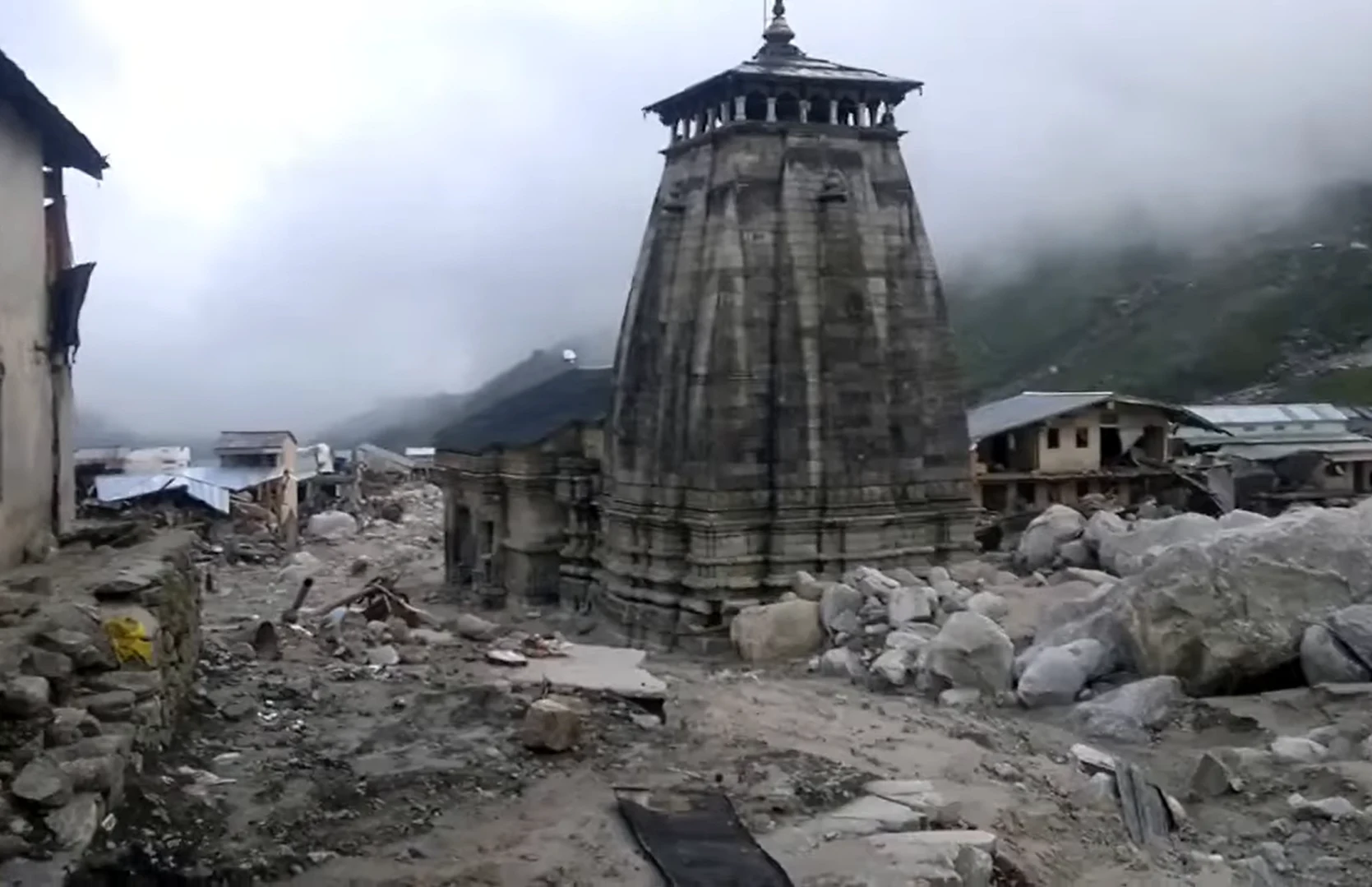
The devastating Kedarnath flood took place between 13 and 17 June. In June 2013, the region received heavy rain of over 385 mm, which combined with the sudden cloudburst near the region.
On June 16-17, the Kedarnath flood date, the Chorabari lake, located around 6 km away from the temple. Burst at its bank, which released over 260 million litres of water, mud, and massive boulders into the Mandakini river. Turning the entire valley into a scene of devastation within hours.
As per the arguments of experts, the Kedarnath flood was caused by the unplanned constructions on dry riverbeds, deforestation for commercial activity, and a lack of an early warning system.
There is a belief that the flood occurred because someone replaced the idol of Maa Dhari Devi from her place due to some construction. And it led to this devastating flood.
Bhim Shila: Kedarnath Temple Stone
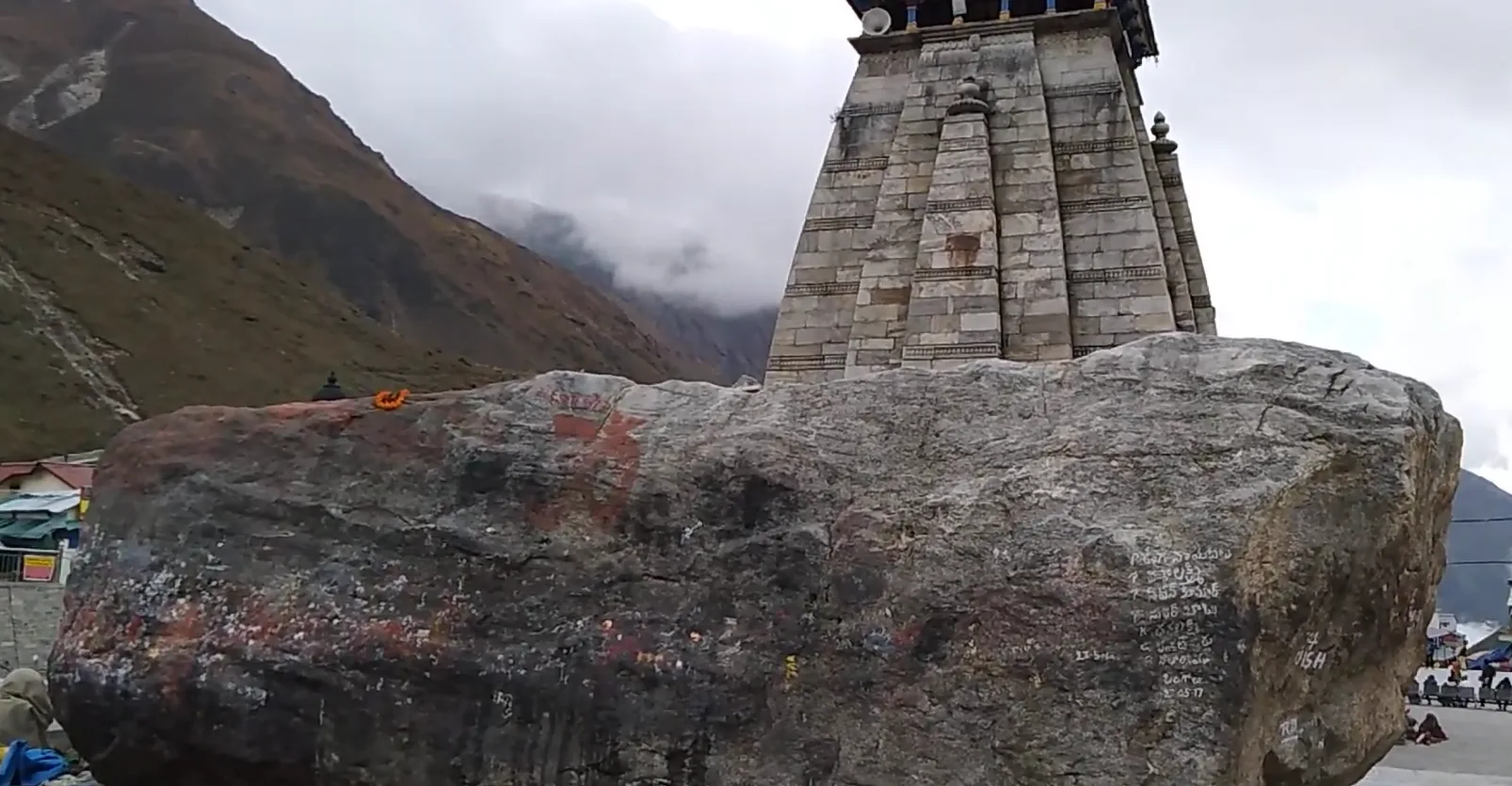
While the surrounding towns were entirely flattened, the 8th-century Kedarnath Temple survived and remained standing strongly.
A massive stone, known as Bhim Shila, rolled down during the flood and landed exactly behind the temple. This rock diverted the flow of water and debris away from the shrine. This rock acts as a natural barrier that protects the shrine from direct impact.
Rescue & Relief Operations
After these calamities, a major rescue operation led by the Indian Army Service and Air Force evacuated over 1,10,000 people using helicopters and foot rescue operations.
Conclusion
The Kedarnath Temple history is more than just about the ancient shrine. It is a timeless story of Kedarnath Temple mythology, faith, and belief. The mystery of this temple makes it popular and significant among devotees.
It is deeply rooted in sacred texts, such as the Skanda Purana and the Mahabharata, which emphasise the site as the crop of Liberation, attracting millions of devotees from all over the world.
Today, Kedarnath is a truly divine destination where history meets devotion, connecting devotees’ spirituality with inner peace and salvation.
FAQs
Why is Kedarnath Shivling a triangle?
The Kedarnath Shivling is a triangular-shaped shrine because it resembles the hump of a bull, a form of Lord Shiva. As per the legend, this unique shape os Kedarnath Shivling is self-manifested rather than a man-made sculpture.
Why was the Kedarnath Temple not destroyed?
The Kedarnath Temple survived the devastating flood of 2013 because of the massive builder, known as Bhim Shila, and the ancient engineering that allowed it to withstand extreme conditions over millennia. Even the Kedarnath Temple was buried under snow for over 400 years.
Who found Kedarnath Temple first?
According to Hindu legend, the Kedarnath Temple was initially built by the Pandavas from the Mahabharata era. However, the current structure of the temple is credited to Adi Shankaracharya, who established it as a sacred pilgrimage site.
How did Stone save Kedarnath?
During the flood of Kedarnath in 2013, a massive boulder, known as Bhim shila, rolled down from the mountains and stopped exactly behind the temple. This stone acted as a natural protector, dividing the raging water and debris into two streams, saving the site from huge damage.
How old is Kedarnath?
Kedarnath Temple is believed to be over 1,200 years old and is mentioned in ancient scriptures, such as the Skanda Purana, the Shiv Purana, etc. Built by the Pandavas and later re-established by Adi Shankaracharya in the 8th century.

Partiksha is a dedicated travel content writer with over 5 years of experience in exploring various destinations in India. From mountains, beaches, treks, to spiritual sites, she believes in sharing experiences through creative storytelling, publishing travel guides, and engaging blogs.
She holds the technique to embrace cultures, stories, mythologies, and various experiences to engage with travellers. With an eye for aesthetics, Partiksha has crafted content that motivates travellers to explore beyond the ordinary itineraries. She doesn’t just write content, but makes it relate to the audience and helps them find what they are looking for.
Her expertise is not limited to writing content, but she also does travel blogging, destination reviews, SEO-friendly travel writing, and creative storytelling that reflects both value and authenticity. She believes that every travel destination has a story worth sharing, which helps to connect people with a place. To make your every visit memorable, she continues to do it through her expertise.



Comments (5)