
Introduction
In the lap of the Garhwal Himalayas, Madhyamaheshwar or Madhmaheshwar Temple is a spiritual destination, offering a unique experience filled with devotion, adventure, and inner peace.
The temple is one of the sacred sites of the Panch Kedar circuits, with a peaceful atmosphere, unlike the many crowded pilgrimage circuits, like the Kedarnath Yatra. Because of this, the site holds immense spiritual importance for Shiv devotees or Himalayan trekkers.
So whether you are a traveller searching for a spiritual retreat or a trekker seeking a peaceful escape, the Madhyamaheshwar is all-in-one for you among the 5 Kedar Temples.
About Madhyamaheshwar Temple
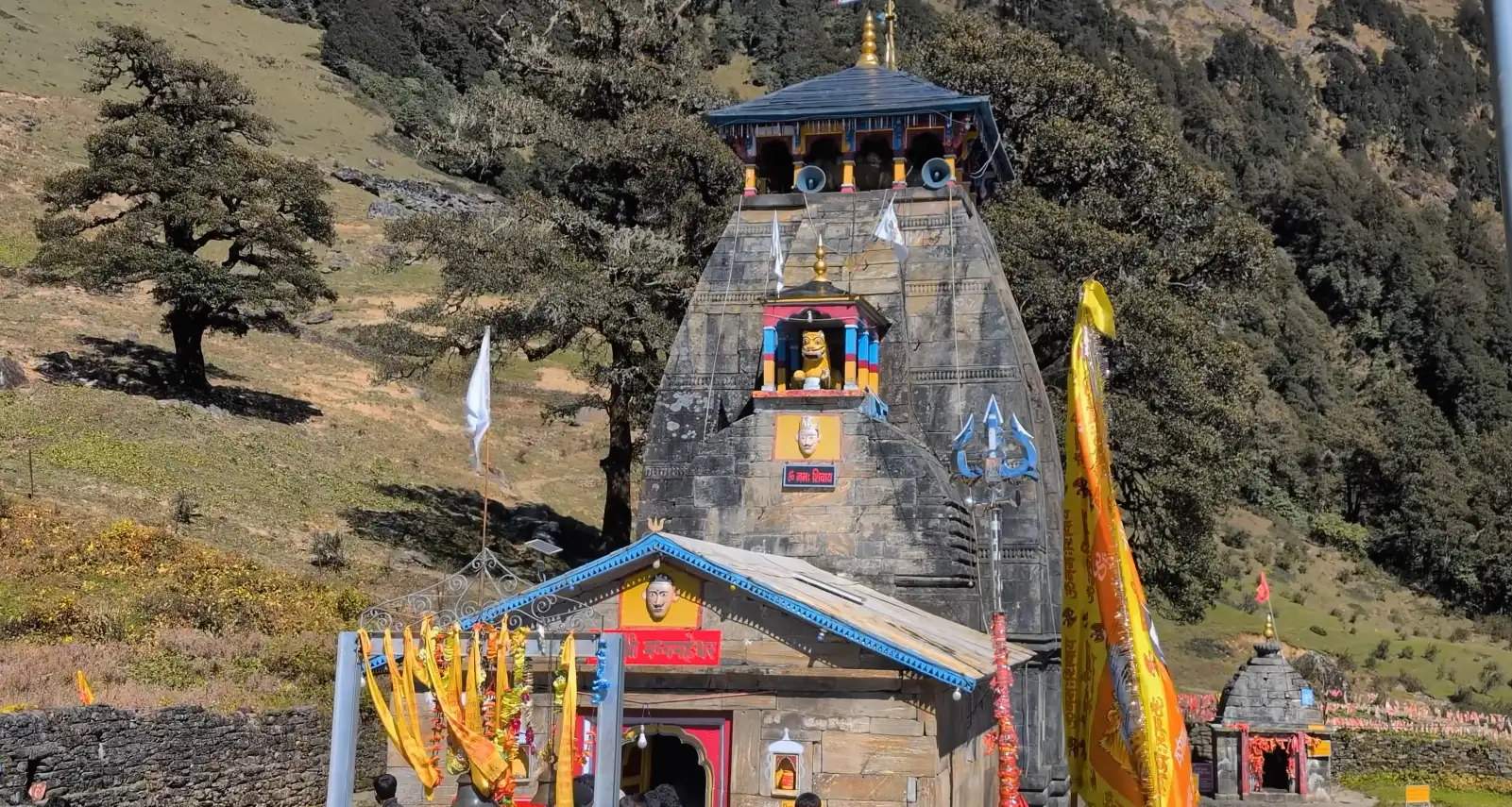
Madhyamaheshwar Uttarakhand is a revered pilgrimage site and a significant part of the Panch Kedar circuits, believed to be a place where the Navel (stomach) of Lord Shiva’s bull form appeared.
Surrounded by snow-capped peaks and lush green meadows, the temple was built in traditional North Indian Nagara architecture. It is accessible by a long trek of around 18 km from the base, Ransi village.
Quick Facts About Madhmaheshwar Temple
- Location: Gaundar Village, Rudraprayag District, Uttarakhand
- Altitude: 3,497 meters (11,473 feet)
- Best time to visit: May to June & September to October
- Temple opening date: 21 May 2026
- Trek distance: 18 km one way
- Base point: Ransi village
- Route: Haridwar → Ukhimath → Ransi village → Madhmaheshwar
- Significance: Part of the Panch Kedar circuit
- Highlights: Calm atmosphere and scenic surroundings
- Nearest Airport: Jolly Grant Airport in Dehradun
- Nearest Railhead: Haridwar (HW) & Rishikesh Railway Station
Where is Madhyamaheshwar located?
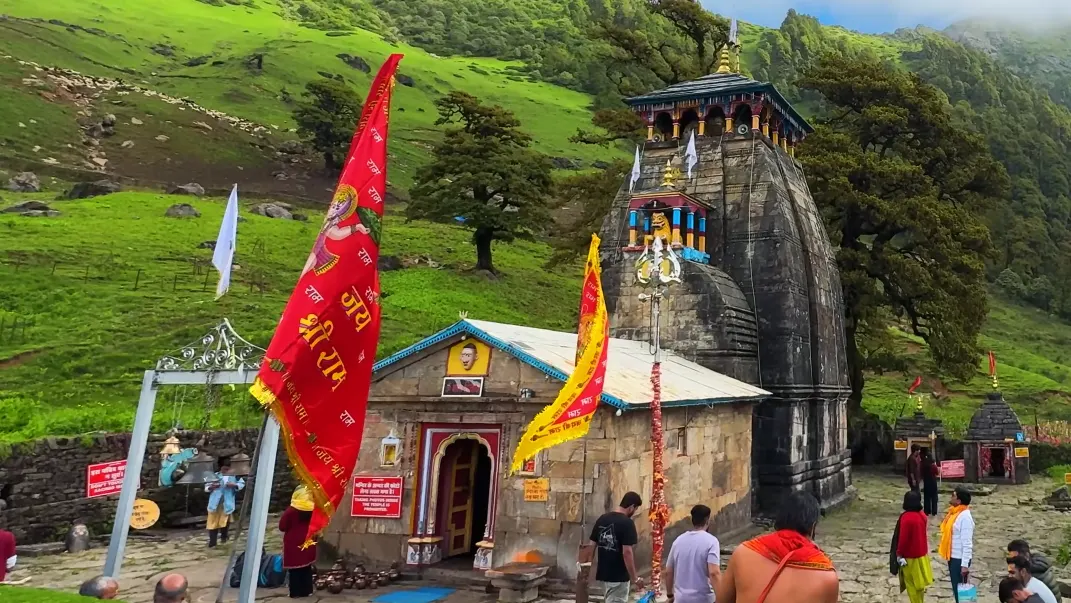
The Madhyamaheshwar is located in the Rudraprayag district of Uttarakhand, within the high ranges of the Garhwal Himalaya near Mansoona village.
The Madhmaheshwar Temple sits at an altitude of 3,497 meters (11,473 feet) above sea level, offering serene and scenic views of the surrounding peaks.
What Is Madhyamaheshwar Famous For?
Madhyamaheshwar is widely famous for its spiritual significance as part of the Panch Kedar yatra and breathtaking surroundings, including the scenic trek to reach the temple, making it one of the best treks of Uttarakhand.
The temple is known for its shrine dedicated to Lord Shiva’s navel, which is popular among devotees and pilgrims. Also, the scenic surroundings attract nature lovers and trekkers.
Madhyamaheshwar History & Significance
The Madhmaheshwar Temple was built by the Pandavas, who were seeking Lord Shiva’s forgiveness after the Mahabharata. According to the legend, Lord Shiva wanted to avoid them, took the form of a bull, and dived into the earth at Kedarnath.
Lately, His body parts manifested at five distinct locations across the Himalayas, leading to the establishment of Panch Kedar shrines, and Madhyamaheshwar is one of them, where the bull’s middle section (Nabhi or Navel) arose.
Spiritual Significance
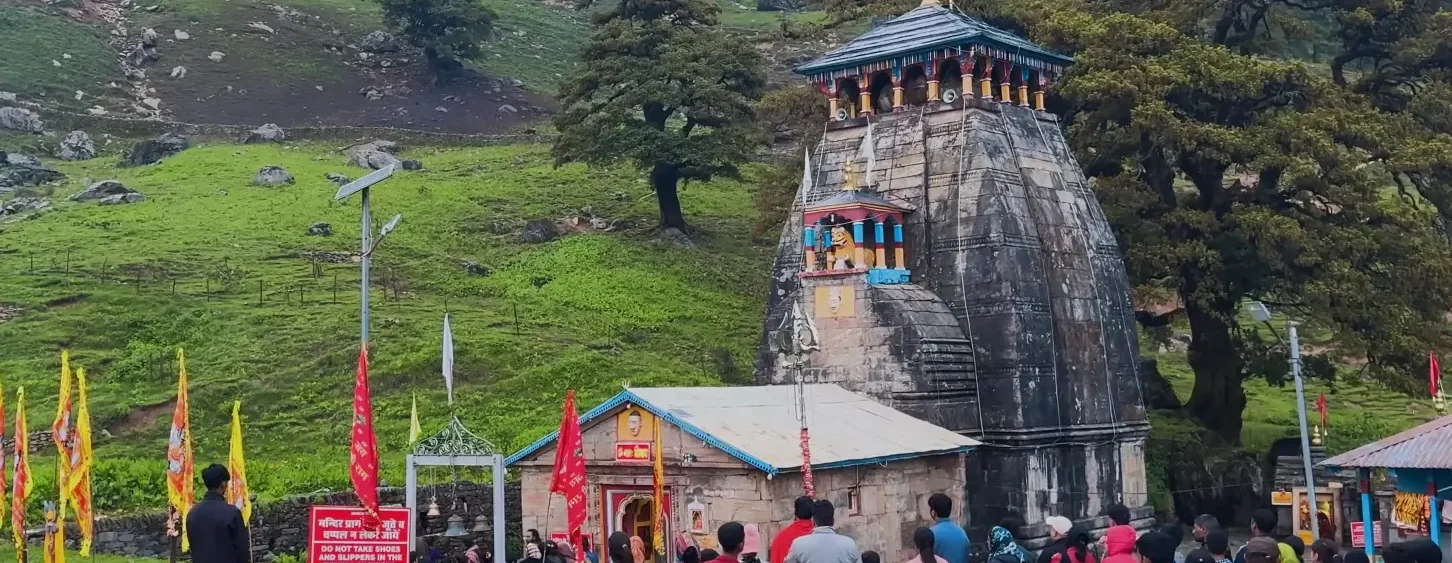
According to Vedic traditions, the navel represents the Manipuraka Chakra, a focal centre of life energy and internal strength.
The inner sanctum of the temple houses a navel-shaped swayambhu shivlinga, sculpted from pure black stone. While there are two smaller shrines adjacent to the complex: one dedicated to Goddess Parvati (consort of Lord Shiva) and the other to Ardhanarishvara, representing both Shiva and Parvati, making it a truly sacred site for devotees.
How To Reach Madhyamaheshwar Temple
To reach Madhmaheshwar Temple, pilgrims must travel by road to Ransi village (the last motorable point) via Haridwar/Rishikesh. From the base point, followed by an 18 km trek. There are no motorable roads to go to the temple.
Step-by-step guide on how to reach Madhmaheshwar:
Step 1: Travel to Haridwar/Rishikesh/Dehradun
- By Air: Fly to Jolly Grant Airport in Dehradun, the nearest airport, and have great connectivity from major cities. From the airport, hire a local taxi or bus to Ukhimath. From there, take a local shared jeep to base camp, then head on the final stretch to the temple.
- By Train: Take a train to Haridwar or Rishikesh Railway station, which are the closest railheads to the site. From either of these stations, take a road trip to the base point and then the Madhyamaheshwar Temple trek.
- By Road: Take an overnight bus or private taxi to reach Haridwar/Rishikesh. From there, boards on another local transport to the base point, Ransi village. From there, head on a trek to reach the shrine.
Step 2: Road Travel to Ransi Village
After reaching the base cities, head along the NH-7, passing through the scenic Alaknanda Valley. Take a state-run bus from Rishikesh towards Ukhimath. From there, take a local shared jeep to Ransi village, then head out on a trek.
- Travel distance: 190 km
- Travel time: 6-7 hours
- Route: Dehradun/Haridwar → Rishikesh → Ukhimath → Ransi village → Madhmaheshwar Temple
Final Step: Trek to the Temple
From Sagar village, head on an 18 km steep trek to reach the temple. The trek is moderately difficult due to the high altitude and steep inclines. Ponies/Palkis are available for trekking.
- Trek distance: 18 km
- Duration: 2-3 days to ascend with necessary breaks.
- Route: Ransi village → Gaundar Bugyal → Nanu Bugyal → Madhmaheshwar Temple
Madhmaheshwar Trek Guide
The Madhmaheshwar trek is a 16 km uphill stretch, considered moderately challenging due to steep ascents and continuous ascents.
Key details about the Madhmaheshwar trek:
- Starting point: Ransi village
- Leading point: Madhmaheshwar Temple
- Madhyamaheshwar trek distance: 18 km one way
- Time to cover: 2-3 days to complete
- Difficulty level: Moderately difficult, including steep inclines and rugged terrain.
- Permit: A forest entry permit can be obtained at the check post at Ransi village.
- Additional stretch: Budha Madhmaheshwar is a 2 km additional stretch that offers 360-degree views of the peaks.
Madhyamaheshwar Trek Route
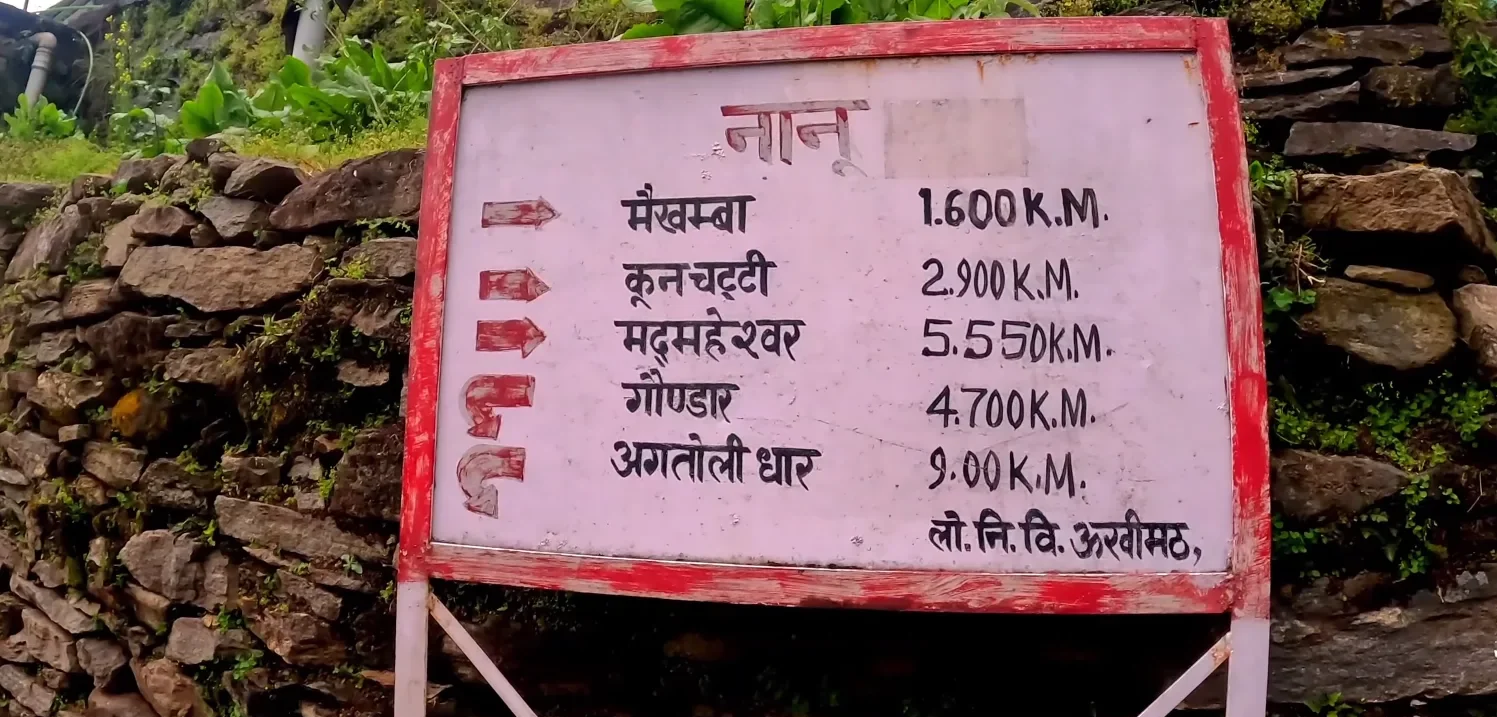
The Madhyamaheshwar Temple trek route is an 18 km scenic and uphill trail, starting from Ransi village and passing via the following:
Ransi village → Gaundhar → Bantoli → Nanu → Madhmaheshwar Temple → Budha Madhmaheshwar
Let’s take a look at the Madhmaheshwar trek route in detail:
- Ransi Village to Gaundhar Village: A first gentle stage of around 4-5 km passing via a scenic village
- Gaundhar to Bantoli: A moderate climb of around 3-4 km, crossing the Madhyamaheshwar Ganga River.
- Bantoli to Nanu Bugyal: A gradual ascent of 2-3 km passing through dense forest.
- Nanu to Madhmaheshwar Temple: A steep climb of around 3-4 km transitioning from oak forest to lush bugyals.
- Madhmaheshwar to Budha Madhyamaheshwar: An optional stretch of about 2 km, but recommended as it offers 360-degree views of Chaukhamba peaks.
Madhyamaheshwar Opening & Closing Date 2026
Madhyamaheshwar opening and closing dates are occasional decisions made by the Badri-Kedar temple committee in consultation with the temple priest at Omkareshwar temple, Ukhimath.
- Madhyamaheshwar opening date (2026): Generally, it’s announced on Mahashivratri based on panchang calculations. For 2026, it is scheduled on 21 May 2026 at 7:00 a.m.
- Madhmaheshwar closing date (2026): Not announced yet, but determined on the day of Dussehra (occurs in September/October).
Best Time To Visit Madhyamaheshwar
The temple is open only for a few months from May to October and closes in winter due to heavy snowfall. Timing and knowing about weather conditions are important considerations for a safe journey.
Generally, May to June and September to November are considered good times to visit Madhmaheshwar, as these windows provide stable weather and accessible trails.
Madhyamaheshwar weather by season for a better understanding is as follows:
- Summer (May to June): It is the peak pilgrimage season; the temple is open after its winter closure. Offers pleasant weather with temperature ranges of 10°C and 20°C and accessible trails, making it a good time for beginners and families.
- Autumn (September to October): Another good time to visit after the wet monsoon. Provide stable weather with a temperature range from 8°C to 15°C, and provide magnificent views of Mt. Chaukhamba.
Time to Avoid
- Monsoon (July to August): Not suitable for travel, as heavy rain makes the trails slippery and difficult to navigate.
- Winter (November to April): During the winter, the temple remains closed due to harsh weather and heavy snowfall, making this entire region inaccessible. The idol of the deity is moved to its winter home at the Omkareshwar temple in Ukhimath for winter worship.
Madhyamaheshwar Temple Timings
| Activity/Ritual | Timings |
| Opening Time | 7:00 AM |
| Morning Aarti | 6:00 AM – 7:00 AM |
| Morning Darshan | 7:00 AM – 12:00 PM |
| Afternoon Break | 12:00 PM – 2:00 PM |
| Evening Darshan | 2:00 PM – 6:00 PM |
| Evening Aarti | 6:00 PM – 7:00 PM |
| Closing Time | 9:00 PM |
Darshan Timing: The temple is open from 7:00 AM to 9:00 PM for darshan, along with an afternoon break between 12:00 PM and 2:00 PM.
Aarti Timing: Morning aarti begins at 6:00 AM, while evening aarti occurs from 6:00 PM to 7:00 PM to coincide with sunset. Timing can vary by season or special occasion.
Places To Visit Near Madhyamaheshwar
- Budha Madhyamaheshwar: An ancient shrine located around 2 km uphill from the main temple. Offers breathtaking views of the Chaukhamba peaks and the Himalayan landscape.
- Kanchani Tal: A high-altitude glacial lake, located around 16 km from Madhyamaheshwar. Accessible by a trek, surrounded by lush green meadows.
- Ransi Village: Primary base for the trek, famous for its local Garhwali culture.
- Ukhimath: Ukhimath is a major scenic spot on the Madhmaheshwar route, serving as the deities’ winter home.
- Chopta-Tungnath: Another famous location en route, the Chopta Tungnath Chandrashila Trek, known for its ancient Tungnath Mahadev temple, is accessible by a short trek from Chopta Valley. Offering the great views of Mt. Nanda Devi and Trishul peaks.
Accommodation & Food Options
Stay options are limited and basic, consisting of homestays, guesthouses, Dharamshalas, and tents along the route. Popular options are:
- Annpurna homestay
- Pine Tree Hotel
- Neelkanth Homestay
- Rudra Cottage
Food options are simple, fresh vegetarian meals at local dhabhas, restaurants, and small local eateries.
Madhyamaheshwar Temple Trek Itinerary
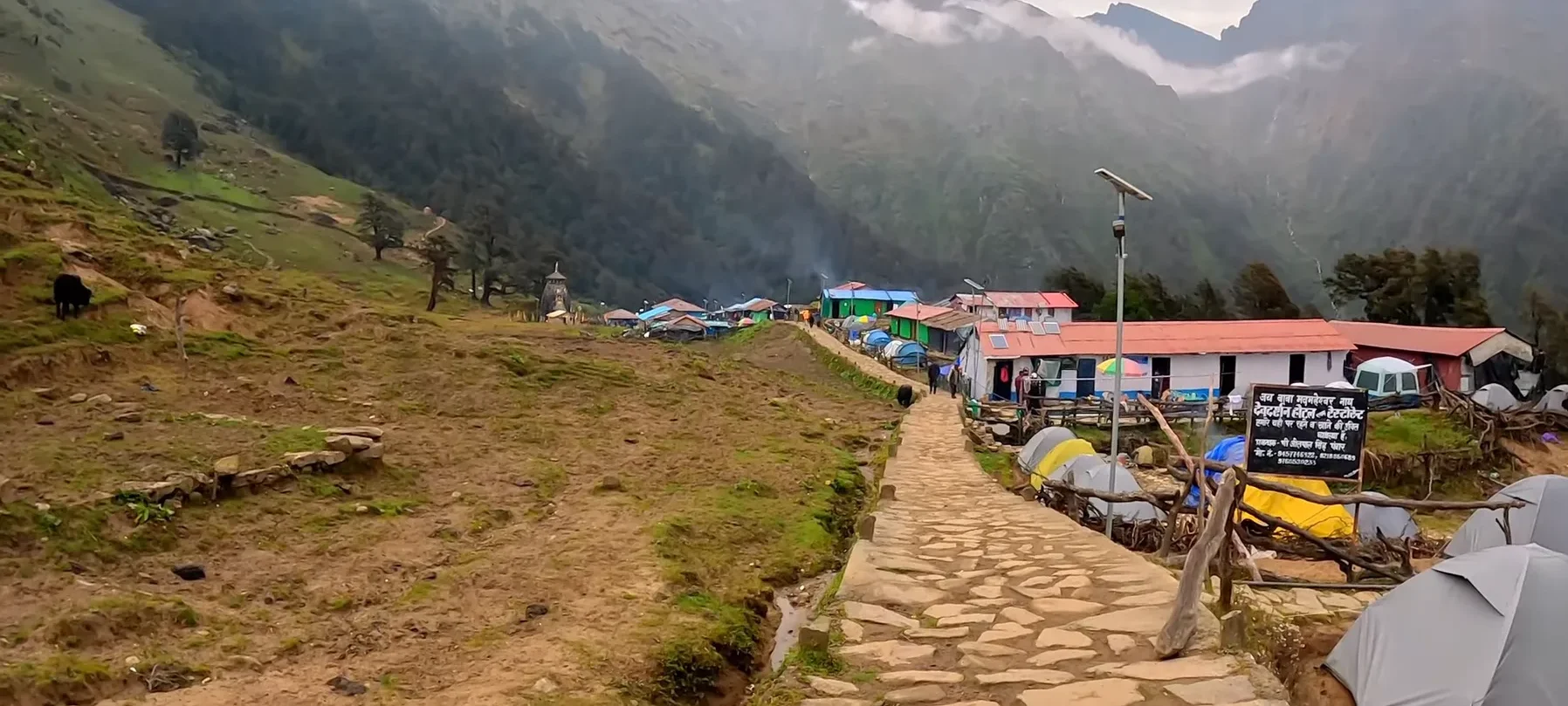
Standard Itinerary for the Madhmaheshwar Temple trek is as follows:
Day 1: Arrival at Gateway cities
Travel to Uttarakhand base cities: Haridwar, Rishikesh, and Dehradun via air, train, and road.
Day 2: Haridwar/Rishikesh to Ransi village
The next day, head out on a drive to Ransi village, the official base for the trek, about 190 km from Rishikesh. Stay a night here to reduce travel fatigue.
Day 3: Ransi to Gaundhar Bugyal
Heads on a trek from gentle to gradual ascent, passing through a scenic village and lush bugyal.
Day 4: Gaundhar to Madhyamaheshwar Temple
Complete the next challenging climb of around 8 km, passing via the massive Madhamaheshwar Ganga river. Get Darshan at Madhmaheshwar temple.
Day 5: Temple to Budha Madhyamaheshwar
An optional 2 km trek to an ancient stone shrine. Offers a golden shrine sunrise over the massive Chaukhamba peaks. Descend to Gaundhar Bugyal.
Day 6: Trek back to Ransi & drive to Haridwar
Trek back to Ransi village and drive back to Rishikesh.
Travel & Safety Tips For Visitors
- Book a stay in advance: Stays are limited and fill up quickly during peak season, so book in advance to avoid last-minute hassle.
- Connectivity: Networks are rare, so inform your family in advance about your travel plan.
- Start trek early: Night trekking is not allowed in forest areas, so always start the trek early.
- Packing tip: Pack light and smart. Carry light warm clothing, trekking gear, hydration and nutrition, a medical kit, etc.
- Keep cash & ID in Hand: Cash is king, as Ukhimath is the last point for ATMs and Poor network coverage on the trek route, digital payments are not supported, so carry cash. ID proof is compulsory during travel.
- Respect the site: Maintain an eco-friendly travel and respect the environment; do not litter.
Conclusion
A journey to Madhyamaheshwar or Madhmaheshwar is a transformative experience, with the Himalayas’ untouched beauty, peace, and divine atmosphere.
The site offers a unique blend of devotion and adventure, surrounded by lush green meadows, flowing rivers, and peaks that make every moment unforgettable.
Unlike the other Panch Kedar shrines, the Madhmaheswar trek not only offers a serene atmosphere but also allows devotees to slow down to feel the calmness of the hilly region.
FAQs
How long is the Madhyamaheshwar trek?
The Madhmaheshwar trek is approximately 16-18 km one way from the base, Ransi village, with an optional stretch of around 2 km to Budha Madhyamaheshwar. It takes around 4-5 days to complete.
How to reach Madhyamaheshwar?
To reach Madhmaheshwar, you must travel by road to Ransi village, which is around 190 km from Rishikesh. From there, you must complete a trek of about 16-18 km to reach the shrine.
Is Madhyamaheshwar Temple open all year?
No, the Madhyamaheshwar temple is not open year-round. Generally, it opens from May to October and is closed from November to March due to heavy snowfall.
How many days are enough for Madhyamaheshwar?
Generally, a 4-5 day trip plan is enough for Madhyamaheshwar, including travel time, trek time, and darshan.
Is the Madmaheshwar trek difficult?
Yes, the Madhyamaheshwar trek is moderately difficult due to its long distance of around 16-18 km, high altitude, steep and uneven terrain, making it physically demanding. Usually completed in 4-5 days, it requires stamina and endurance.
What is the history of Madhyamaheshwar Temple?
The history of the Madhyamaheshwar temple is tied to an ancient legend. The temple was built by the Pandavas, who were seeking atonement for their sins of killing their kinsmen during the Kurukshetra war. It’s an over 1000-year-old shrine protected by many rulers of the Garhwal region.

Partiksha is a dedicated travel content writer with over 5 years of experience in exploring various destinations in India. From mountains, beaches, treks, to spiritual sites, she believes in sharing experiences through creative storytelling, publishing travel guides, and engaging blogs.
She holds the technique to embrace cultures, stories, mythologies, and various experiences to engage with travellers. With an eye for aesthetics, Partiksha has crafted content that motivates travellers to explore beyond the ordinary itineraries. She doesn’t just write content, but makes it relate to the audience and helps them find what they are looking for.
Her expertise is not limited to writing content, but she also does travel blogging, destination reviews, SEO-friendly travel writing, and creative storytelling that reflects both value and authenticity. She believes that every travel destination has a story worth sharing, which helps to connect people with a place. To make your every visit memorable, she continues to do it through her expertise.



Comments (13)