
Baba Baidyanath Temple
Located in the heart of Jharkhand, the Baba Baidyanath temple is a revered Hindu shrine dedicated to Lord Shiva. Known by multiple names such as Baba Dham or Shree Baidyanath Jyotirlinga.
It holds immense spiritual significance as one of the 12 Jyotirlinga of Shiva and houses a Shakti Peeth near the main shrine, renowned as a rare place where Shiva and Shakti are worshipped together, attracting thousands of devotees across the country.
Lord Shiva is worshipped here as “Vaidya,” a divine physician; it is believed that a visit here brings healing and peace of mind.
This guide covers all you need to know about Shree Baidyanath Dham, including its location, story, significance, major highlights, and more.
Quick Facts About Baidyanath Temple
- State: Jharkhand, India
- District: Deoghar district
- Deity: Lord Shiva
- Significance: One of the 12 Jyotirlingas; deity known as Baba Dham & Vaidyanath
- Highlights: Shravani Mela & 21 smaller shrines in the main temple courtyard
- Baidyanath Jyotirlinga Nearest Railway Station: Jasidih Junction (8 km)
- Baidyanath Jyotirlinga Nearest Airport: Deoghar Airport (DGH) (12 km away)
- Temple opening & closing timing: 4:00 AM to 9:00 PM
- Best time to visit: October to March & July-August to witness Shravani Mela
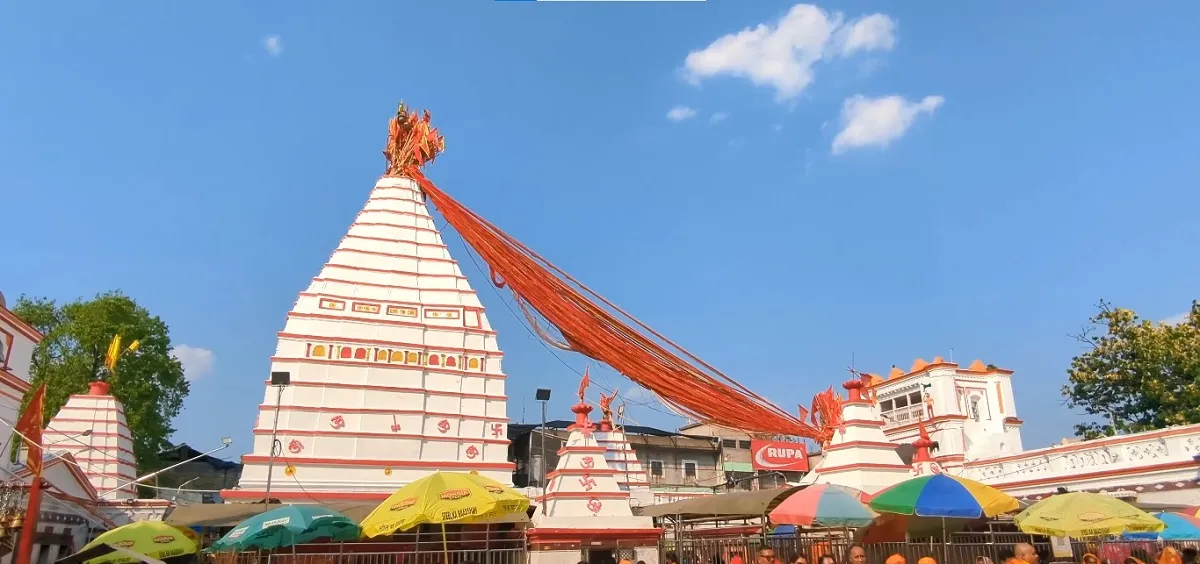
Table of Content
- Baba Baidyanath Temple
- Where is Baidyanath Dham?
- Why is Baidyanath Dham Famous?
- Is Baidyanath one of 12 Jyotirlinga?
- Baidyanath Temple History
- What is the story behind Baidyanath Temple?
- Spiritual & Cultural Significance of Baidyanath Dham
- How to reach Baidyanath Jyotirlinga
- Hotels near Baidyanath Temple
- Baba Baidyanath Temple Timings
- Is VIP Darshan available at Baidyanath Jyotirlinga?
- Places to visit near Baidyanath Dham
- Conclusion
- FAQs
Where is Baidyanath Dham?
Shree Baidyanath Dham is located in the Deoghar town of Jharkhand, within the Santhal Pargana division. The area is known for its unique geographical features, surrounded by towering hills and lush green forests.
Why is Baidyanath Dham Famous?
The Baidyanath temple is famous for its immense cultural and spiritual prominence, featuring its dual status as one of the 12 Jyotirlingas, a divine manifestation of Lord Shiva, and part of the 51 Shakti Peeths associated with Hindu mythology.
The temple was built in traditional Nagara architecture style, and the main complex houses the Shivlinga and is also connected by a red dhaga to the nearby Goddess Parvati temple. It represents the divine unity of Shiva-Shakti.
What makes the shrine so special is the world’s longest continuous religious fair, the iconic Shravani Mela, where thousands of Kawar Yatris visit Baba Baidyanath Dham Jyotirlinga to offer the holy water of the Ganges collected from 105 meters away in Sultanganj by carrying it in a heavy Kalash (a container) on their backs.
Is Baidyanath one of 12 Jyotirlinga?
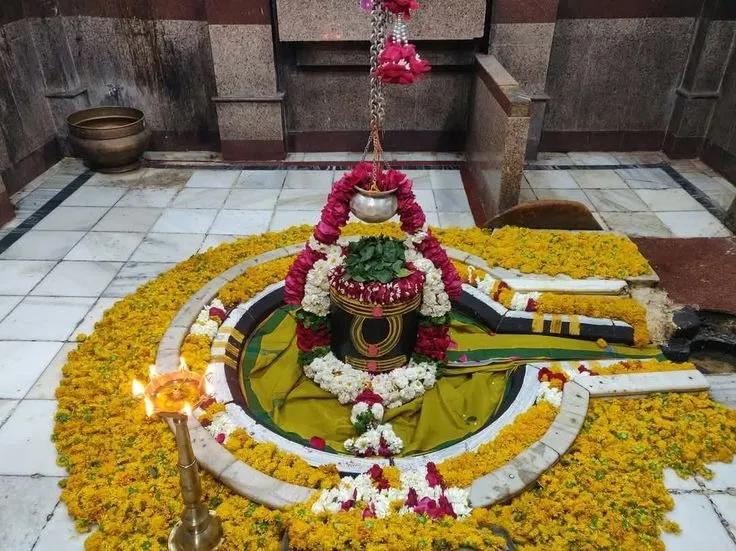
Yes, Baidyanath Shivling is one of the revered 12 Jyotirlingas in India, believed to be a self-manifested Shivlinga, known as Kamna Linga, that fulfils devotees’ wishes.
Lord Shiva is worshipped here as “Vaidyanath,” meaning lord of Physicians (divine healer). The unique thing is that Baidyanath is not just a Jyotirlinga but also a revered shrine of 51 Shakti Peeths, believed to be the place where Goddess Sati’s heart fell, giving it the name “Hriday Peeth”.
Baidyanath Temple History
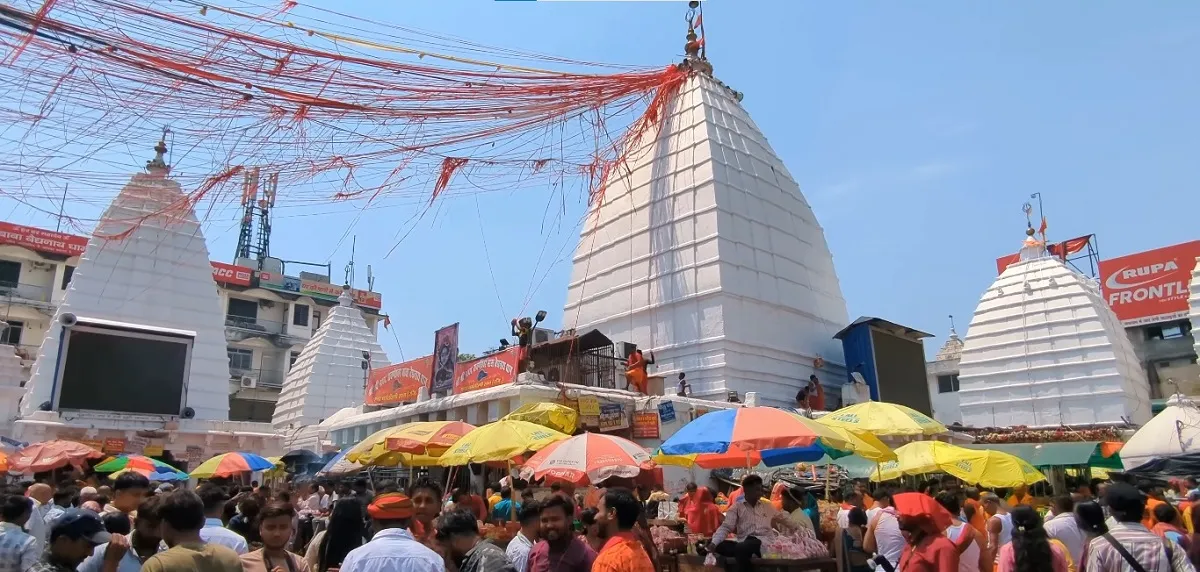
The history of Baidyanath Dham is rooted in an ancient account dating back to around the 8th century AD.
However, the mythological origin of Baidyanath Dham is tied to the legend of King Demon Ravana, who was granted a boon by Lord Shiva to take a sacred Jyotirlinga to his palace in Lanka.
But he placed it on the ground in Deoghar, where the Lingam permanently resides.
While the structural foundation was established in the 8th century by the last emperor of the Gupta Dynasty, King Adityasen Gupta.
Lately, the maintenance and protection of the temple complex were taken over by Raha Vikram Singh of the Gidhaur region in 1266 AD.
The main temple visited by devotees was constructed in 1562 AD by Raja Ram Puran Mal. He also donated a Panchaula (a distinct trident and Golden Kalash) that still sits atop a 72-foot spire.
Historically, it has become a popular pilgrimage site, and the British rulers took an interest in the temple’s revenue collections. In 1757-88 AD, they handed over the religious administration to the local chief priest while keeping actual control in their hands.
Today, the temple is administered by a dedicated committee known as Sanchalan evam Prabhandan Upsamiti.
What is the story behind the Baidyanath Temple?
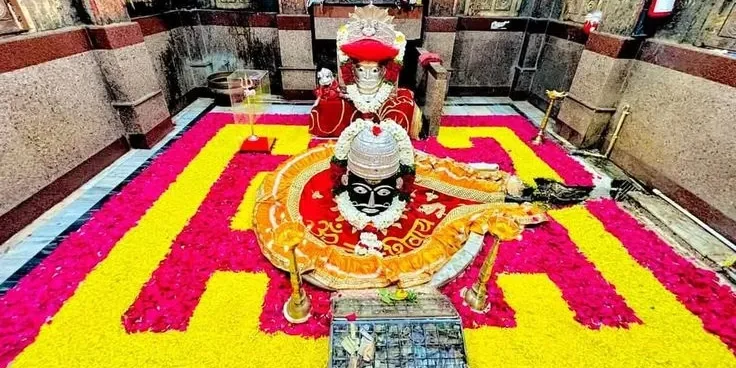
The Baidyanath Jyotirlinga story is centred on the epic legend of Ramayana; the Demon King Ravana performed intense penance and offered all his nine heads to Lord Shiva. As he offered his last tenth of a head, Shiva appeared to him.
Being pleased by his devotion, Lord Shiva restored his heads and healed his wounds; this event earned Lord Shiva the name “Baidyanath” or “Vaidyanath” (the divine physician or healer).
Ravana also grants a boon to take the Atmalinga (divine manifestation of Lord Shiva) from Mt. Kailash to his palace in Lanka. But with a very strict condition of Shiva’s, if he placed the linga on the ground, it would remain permanently there.
All the gods were worried and asked for help from Lord Ganesha (god of wisdom). Ganesha took the form of a young shepherd and met with Ravana in Deogarh, where the Jyotirlinga is located.
Ravana handed over the lingam to a boy when he received a nature call. Being impatient, Ganesha placed the lingam on the ground and disappeared. As Ravana returned, he saw that the Jyotirlinga was put on the ground, and he tried to lift it but did not succeed.
Frustrated Ravana put his thumb on the lingam so hard that it left an impression, visible in the original Jyotirlinga Today.
Spiritual & Cultural Significance of Baidhyanath Dham
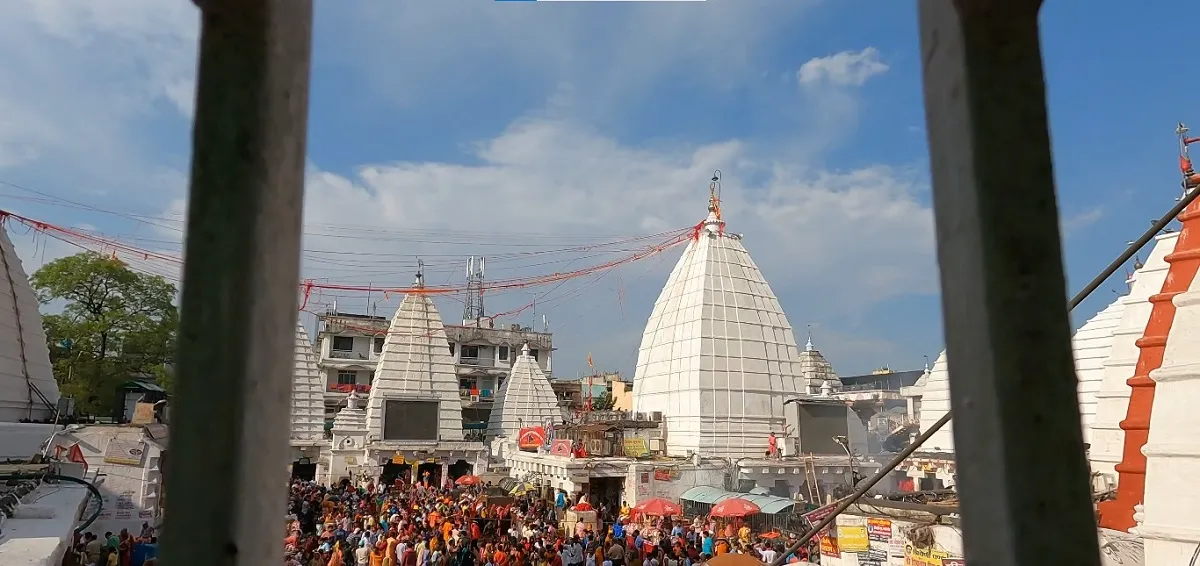
Baidhyanath Temple Deogarh holds immense spiritual significance due to its rich cultural heritage and religious importance.
Lord Shiva acted as a divine healer of Ravana’s wounds. The Baidyanath Jyotirlinga is worshipped as “Vaidyanath,” the lord of physicians, according to the local folklore of Matasya Purana.
Shiva and his consort Shakti reside, freeing the people of this region from incurable diseases. Devotees visit here to seek blessings and relief from physical and mental ailments.
Baidyanath Temple is a rare site where a Jyotirlinga and a Shakti Peeth reside adjacent to one another. Believed to be a place where Sati’s heart fell during her self-immolation, a sacred red thread tied together the Shakti temple and the Baidynath Shiva temple, symbolising the divine union of Shiva and Shakti.
Shravani Mela Baidyanath
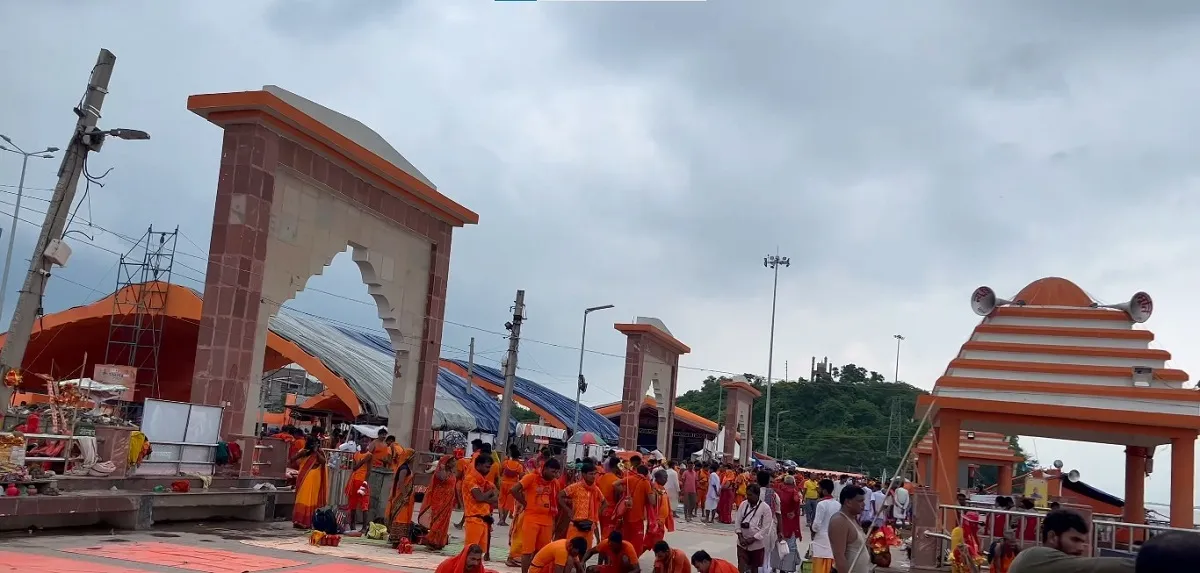
The main focal point of Baidyanath Dham is the Shravani Mela, a grand celebration of faith and the world’s longest continuous religious fair. It is held every year during the Hindu Shrawan months (July to August).
Thousands of pilgrims (called Kanwar yatris) carry holy water from the Ganga River near Sultanganj in Bihar and walk barefoot around 108 km to the Baidyanath Temple to offer it to the Kamna lingam inside the main temple complex.

How To Reach Baidyanath Jyotirlinga
To reach Baba Baidyanath Jyotirlinga, you can take a flight to the nearest airport, Deogarh Airport, or take a train to the nearest railway station, Jasidhi Junction, for an economical option.
Then, completing the remaining journey by road travel in a local shared taxi to the temple.
By Air: To reach Baidhyanath Dham by flight, take a flight to the nearest airport, Deogarh International Airport, located just 9 km from the temple.
It is well connected to the major cities, including Delhi, Patna, Ranchi, and Bangalore. From the airport, you can take an e-rickshaw to reach the site.
By Train: Travelling by train is the most economical option; you can take a train to the nearest Jasidih Junction, located 7 km from the temple.
If you are travelling from Delhi, you can take the New Delhi-Howrah main line with popular trains, such as Vande Bharat and Rajdhani Express.
From the railway station, take a local rickshaw that drops you directly to the temple gate.
By Road: Deogarh is well-connected by road to the national and interstate highways from cities such as Ranchi, Patna, and Kolkata. You can take a state-run bus to Deogarh and then a local rickshaw to reach the shrine.
Hotels Near Baidyanath Temple
As you reach Baba Baidyanath Dham, you can easily find numerous stay options at various budgets. Below are some of the best suggested hotels near Baidyanath Dham:
- Hotel Ekta International
- Hotel Satyam Palace
- Hotel Girija Sunrise
- Hotel Mannum Palace
Budget hotels in Deoghar near Baidyanath Temple:
- Rupak Rest House
- Chinta Haran Rest House
- Hotel Radiation, Deogarh
All are located just 200-300 meters from Baidyanath Dham. You can check the availability and prices directly from their site.
Baba Baidyanath Temple Timings
The Baidyanath Temple follows a strict schedule of daily darshan and puja rituals. Generally, the temple is open from 4:00 AM to 9:00 PM for daily darshan.
Baba Baidyanath Darshan Timings & Daily Rituals
| Event/Ritual | Timing |
| Temple Kapat opens with Mangla Aarti | 4:00 AM |
| Morning Darshan (Jalabhishek) | 5:30 AM to 3:30 PM |
| Bhog Aarti | 12:00 PM |
| Midday Break for Cleansing | 3:30 PM to 6:00 PM |
| Evening Shringaar Darshan & Prayers | 6:00 PM to 9:00 PM |
| Sandhya Aarti & Bhog | 7:00 PM |
| Shayan Aarti | 9:00 PM |
Note: You can also stream Baba Baidyanath Live Darshan on Darshnam’s official YouTube channel, which typically broadcasts the morning and evening Aarti Puja rituals of Baidyanath Jyotirlinga.
Is VIP Darshan available at Baidyanath Jyotirlinga?
Yes, VIP Darshan is available at Baidyanath Jyotirlinga Temple, known as Shighra Darshan Passes, with a cost range between ₹250 and ₹300 per ticket.
It’s the most popular service allowing devotees to bypass long darshan queues and get faster darshan close to the sanctum during the peak season. Pilgrims can book this ticket through the designated counters near the temple.
Special Puja Available At Baidyanath Dham
- Rudrabhishek Puja (1 Pandit): A traditional Vedic bath ritual of sacred Jyotirlinga.
- Grand Rudraabhishek Puja (4 Pandits): ₹4,000 to ₹6,000, conducted inside the Garbhgirah with Vedic chants.
- Sankalp Puja: ₹1,100 for 2 people, for families’ well-being and prosperity prayers.
- Gadhbandhan Puja: ₹1,350 to ₹1,500, a sacred knot-tying ritual performed by a couple to tie the sacred Shiva and Gauri temples with a Red silk ribbon.
Places To Visit Near Baidyanath Dham
The Places to visit in Baidyanath Dham include the massive temple complex featuring the main Jyotirling shrine and 21 small shrines of other Hindu deities. There are also some tourist places near Baidyanath Dham, such as Trikut hills, Naulakha Temple, and more.
- Baidyanath temple complex: The main spiritual identity of Jharkhand is the Baidyanath temple complex, which comprises the main shrine, housing the Kamna Shiva Linga, and 21 other small shrines of Goddess Durga and other deities.
- Shivaganga Pond: A small revered water tank just 200 meters from the main shrine, where devotees take the holy dip before proceeding to the main shrine of Lord Shiva and Devi Parvati.
- Trikuta Hills: Situated just about 10 km from the main temple, Trikuta Hills are natural retreats featuring the three sacred peaks dedicated to the Trinities: Brahma, Vishnu, and Mahesh (Shiva). It houses a sacred temple named the Trikutachal Mahadev temple.
- Naulakha Temple: Located around 1.5 km from the main temple, it’s a beautiful temple of Radha-Krishna. The temple construction started with 9 lakh rupees, giving it the name Naulakha Temple.
- Rikhiapeeth Ashram: A spiritual and Yoga retreat ashram located just around 10 km away from the main town.
- Basukinath temple: A highly revered Shiva shrine, located around 45 km away in the neighbouring Dumka district in Jharkhand. Devotees often visit here along their journey to Baidyanath Dham.
Conclusion
Baba Baidyanath Temple is not just an ordinary pilgrimage site, but a place where devotees visit with the hope of curing their pain and incurable disease. Visiting this sacred Bidyanath Jyotirlinga signifies the divine energy of Shiv-Shakti.
The beautiful significance of this place as a Jyotirlinga and a Shakti Peeth, where the heart of Devi Sati fell, makes it an incredible place for every devotee. Knowing about the temple before actually visiting it helps you connect better during the visit.
FAQs
Which Baidyanath Jyotirlinga is original?
The Original Baidyanath Jyotirlinga is in the Baidyanath Temple in Deoghar district of Jharkhand, also called Baba Dham Deogarh, Jharkhand. It holds great significance as the most visited shrine of Baidynath, one of the 12 Jyotirlingas.
Which is the nearest railway station to Baidyanath Jyotirlinga?
The Jasidih junction is the nearest railway station to Baidyanath Jyotirlinga, just 7 km away. It has great train connectivity to major cities, such as Delhi, Mumbai, and Kolkata.
In which city is Baidyanath Dham?
Baidyanath Dham is located in Deoghar, within the Santhal Pargana division of Jharkhand state, India.
Are Baba Dham and Baidyanath the same?
Yes, the names Baba Dham and Baidyanath are the same, referring to the sacred Baidyanath temple in Deogarh, Jharkhand, dedicated to Lord Shiva and part of the 12 Jyotirlingas.
Why is Baidyanath Shivling so small?
The Baidyanath Shivlinga is a self-manifested (swayambhu) shivlinga that appears naturally small. Mythology says that Ravana pressed his thumb to the top of the lingam, which immersed it in the earth.
How long is the Shravani Mela?
The Shravani mela in Baidyanath Dham is a month-long festival that occurs during the Hindu Shrawan month (July-August). Lakhs of Kawar Yatris visit here carrying the holy water from the Ganga River in Sultanganj to offer it to the deity. It is the longest continuous religious fair in the world.
Is there any Shaktipeeth in Baidyanath Dham?
Yes, the Baidyanath temple is a sacred Shakti Peeth, located adjacent to the main shrine. Believed to be the revered site where Sati’s (the consort of Lord Shiva) heart fell. It is earning the name Hriday Peeth. It’s a unique place where a Jyotirlinga and Shakti Peeths reside together, showing the unity of Shiva-Shakti.

Partiksha is a dedicated travel content writer with over 5 years of experience in exploring various destinations in India. From mountains, beaches, treks, to spiritual sites, she believes in sharing experiences through creative storytelling, publishing travel guides, and engaging blogs.
She holds the technique to embrace cultures, stories, mythologies, and various experiences to engage with travellers. With an eye for aesthetics, Partiksha has crafted content that motivates travellers to explore beyond the ordinary itineraries. She doesn’t just write content, but makes it relate to the audience and helps them find what they are looking for.
Her expertise is not limited to writing content, but she also does travel blogging, destination reviews, SEO-friendly travel writing, and creative storytelling that reflects both value and authenticity. She believes that every travel destination has a story worth sharing, which helps to connect people with a place. To make your every visit memorable, she continues to do it through her expertise.



Comment (0)