
Introduction
Nestled in the peaceful mountains of Uttarakhand, Rudranath is a spiritually awakening site that welcomes devotees with raw Himalayan beauty and a divine atmosphere. Rudranath Temple is the fourth and most difficult among the Panch Kedar, dedicated to Lord Shiva.
The strenuous Rudranath trek is 20 km from Sagar village and passes through the dense forest, lush bugyals, and river streams; the journey is a blend of adventure and devotion. It is considered more challenging than the Kedarnath Yatra and Tungnath Temple Trek.
So whether you are planning a spiritual pilgrimage or looking for a peaceful Himalayan adventure, this Rudranath Mahadev Temple guide will explain everything you need to know.
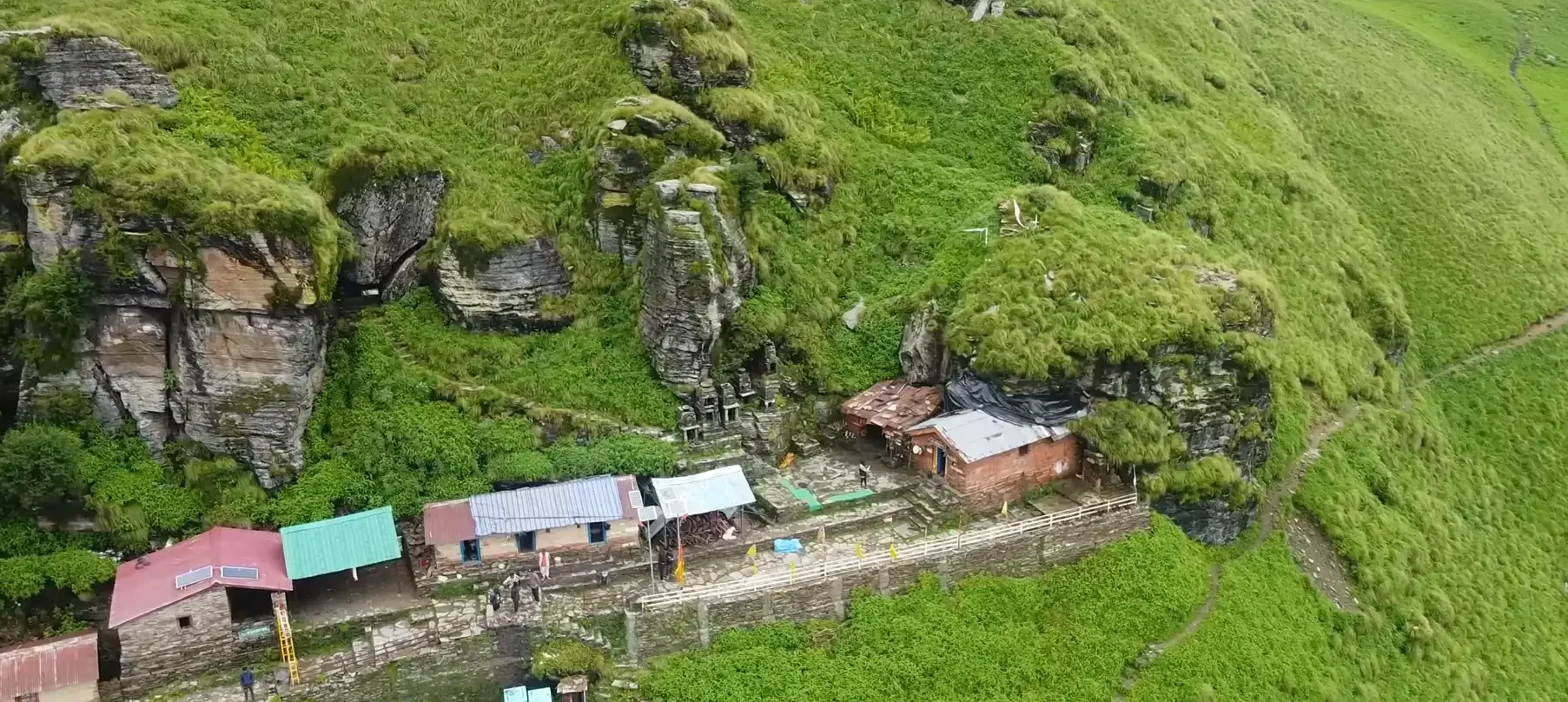
About Rudranath Temple
The Rudranath Mahadev Temple is a famous Hindu temple, dedicated to Lord Shiva in the Garhwal region of Uttarakhand, as one of the sacred Panch Kedar Temple circuit.
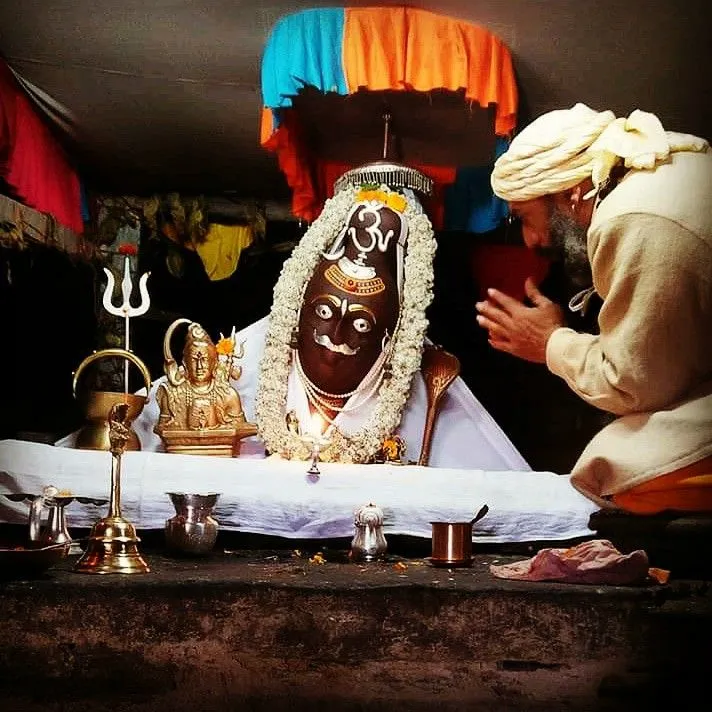
It sits in a natural cave famous for its unique worship of Lord Shiva’s Face (Mukha). The Rudranath Shivling is famous as a naturally formed rock (swayambhu shivlinga) formation rather than a man-made idol.
Quick Facts
| State | Uttarakhand, India |
| District | Chamoli district of Uttarakhand |
| Altitude | 11,811 feet (3,600 meters) |
| Significance | One of the Panch Kedar circuits |
| Body Part | Mukh (Face) of Lord Shiva |
| Trek Base Point | Sagar Village |
| Rudranath Trek Distance | 20 km one way |
| Best time to visit | May to June & September to October |
| Highlights | Serene Himalayan bugyals and ancient stone temples |
| Nearest Airport | Jolly Grant Airport in Dehradun |
| Nearest Railway Station | Haridwar and Rishikesh |
| Nearest Town | Gopeshwar |
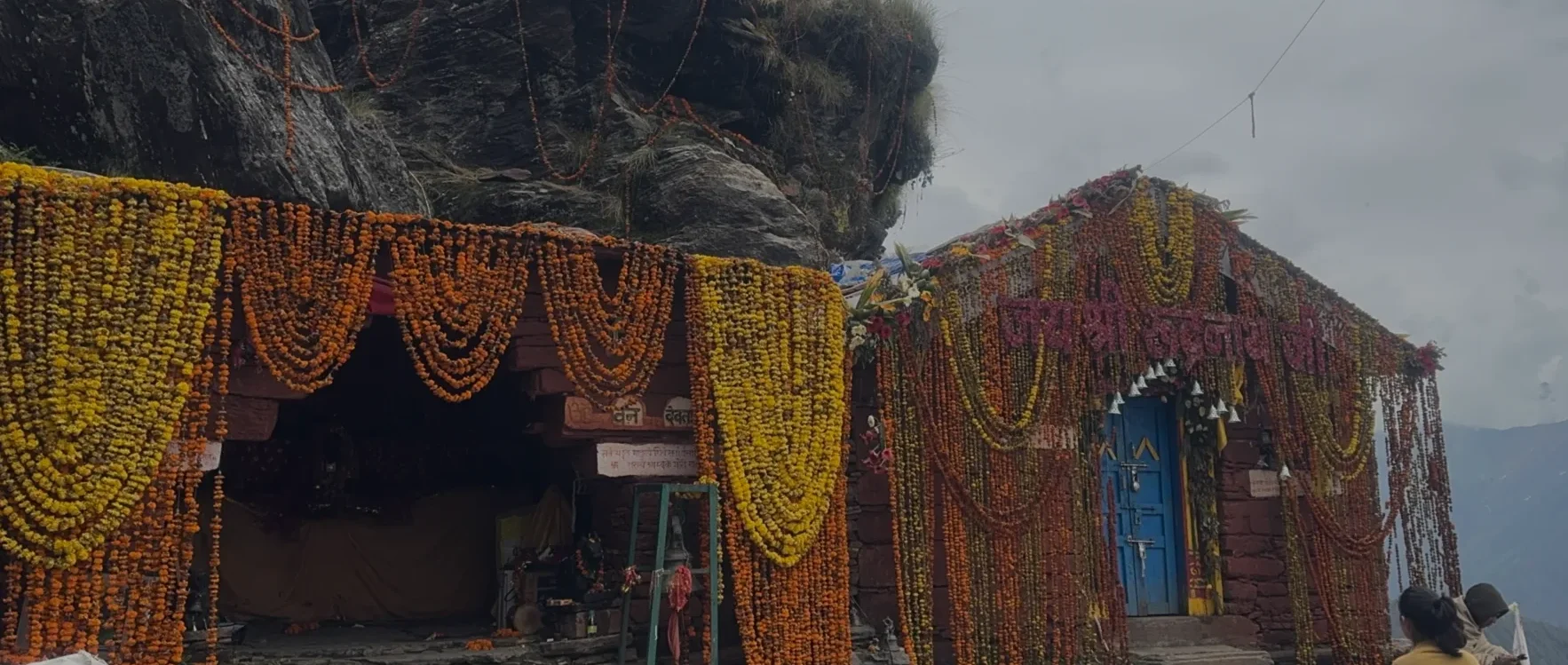
Where is Rudranath Temple located?
Shri Rudranath Temple is located in the Chamoli district of Uttarakhand, within the Garhwal Himalayas. With views of the alpine meadows and rhododendron forest, with proximity to Gopeshwar. The temple sits at an altitude of 3,600 meters (11,811 feet) above sea level.
Mythological Story of Rudranath Temple
The story of the Rudranath Temple is associated with ancient legends. According to the Hindu mythology, after the Mahabharata war, the Pandavas sought atonement for their sins of killing their kins during the war of Kurukshetra. Lord Krishna and sage Ved Vyasa advised them to approach Lord Shiva for the atonement.
But due to the disruption of the war, Lord Shiva was not ready to meet them, and he resided in the Himalayas in the form of a bull, so that the Pandavas could not find him. When Pandavas were dedicatedly searching for Mahadev in the Himalayas, Bhima, the strongest brother, recognised the bull and grabbed its hump.
The bull suddenly began to merge into the earth, and later five body parts manifested at five different places in Uttarakhand, and one of them was Rudranath Panch Kedar, where the face of Lord Shiva appeared. The other body parts appeared at:
- Kedarnath Temple (Hump)
- Madhamaheshwar Temple (Navel)
- Tungnath Mahadev (Arms)
- Kalpeshwar Mahadev (Hair)
These five places are collectively known as Panch Kedar, which is now a famous pilgrimage in Uttarakhand.
The face of Lord Shiva is in Rudranath, inside the temple, renowned as a crucial part of the sacred pilgrimage. The Rudranath Shivlinga signifies the Mukh (Face) of Lord Shiva, making it a prominent site among the five.
The Vaitani River, which flows near the Temple, is highly auspicious, and devotees perform ancestral rituals there. Also, the temple is surrounded by many holy kunds, such as Tara Kund and Chandra Kund, which hold immense spiritual importance.
How To Reach Rudranath Temple
To reach the temple, travellers must first reach the nearest base town, Gopeshwar, and continue to Sagar village. From there, you need to undertake a strenuous trek of around 20 km to reach the shrine.
There is no direct connectivity to the temple itself; pilgrims must choose a combination of these and combine it with a trek to reach the temple.
How to reach Rudranath from Delhi?
Overview of how to go to Rudranath Temple by air, train, and road:
Step 1: Travel to Dehradun/Haridwar/Rishikesh
- By Flight: Take a flight to Jolly Grant Airport in Dehradun from IGI Airport in Delhi. From the airport, take the bus or taxi to Gopeshwar, continue to Saga village, and head towards the trek to reach the shrine.
- By Train: Take the train to Haridwar or Rishikesh Railway Station. From there, proceed on a road trip to Gopeshwar, continue to Sagar village, and then proceed on the Rudra Kedar trek to reach the Rudranath Temple.
- By Road: Take an overnight bus from ISBT Kashmiri Gate to Haridwar/Rishikesh, then board another vehicle to reach Gopeshwar and Sagar village. From there, undertake a scenic and strenuous trek to reach the shrine.
Step 2: Dehradun/Haridwar to Sagar Village
To reach Sagar Village from Haridwar, Rishikesh, and Dehradun. Take a bus or taxi/cab for a road journey towards Gopeshwar. From there, take a local bus or taxi to reach Sagar village.
- Travel distance: 240-250 km
- Duration: 7-8 hours, depending on traffic and road conditions
- Route: Follows the NH-7 route, passing via Haridwar → Rishikesh → Devprayag → Rudraprayag → Karnaprayag → Chamoli → Gopeshwar → Sagar village → Rudranath
Step 3: Sagar Village to Rudranath
After reaching Sagar village, head on a trek considered one of the toughest due to its steep, strenuous inclines demanding decent physical fitness.
- Sari Village to Rudranath distance: 20 km one way
- Trek duration: 1 or 2 days to complete safely
- Route: Sagar village → Panar Bugyal → Lyuti Bugyal → Pitradhar → Rudranath Temple
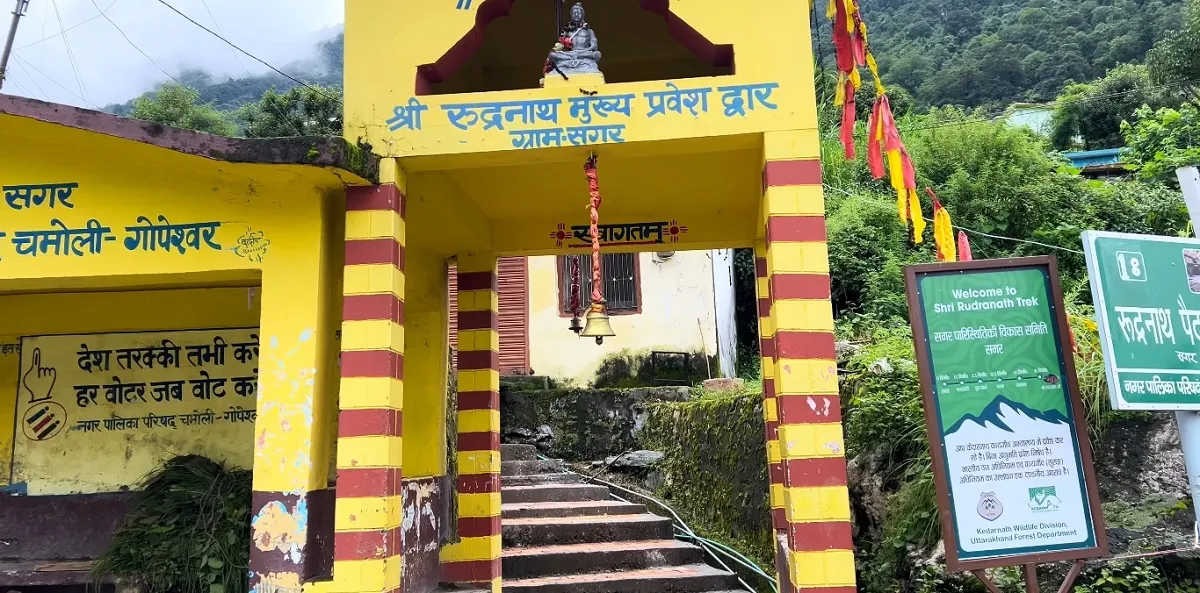
Rudranath Trek Guide
The Rudranath trek is the toughest trek among the Panch Kedar pilgrimage sites and one of the best treks in Uttarakhand, due to its steep vertical climb and long distance.
It covers a distance of around 20 km one way from Sagar village (the most popular base), passing via lush green bugyals and dense forest, offering panoramic views of the peaks.
Key details about the Rudranath Temple Trek:
- Starting Point: Sagar village
- Leading Point: Rudranath Temple (3,600 meters)
- Trek Distance: Approximately 20 km one way from the most recommended base, Sagar village.
- Time Taken: 3-4 days, along with necessary halts and breaks.
- Difficulty Level: Moderately challenging due to continuous ascents and rugged terrain; requires a good fitness level and stamina.
- Permit: A forest entry permit is required and obtained from the Uttarakhand forest department at the check post in Sagar village.
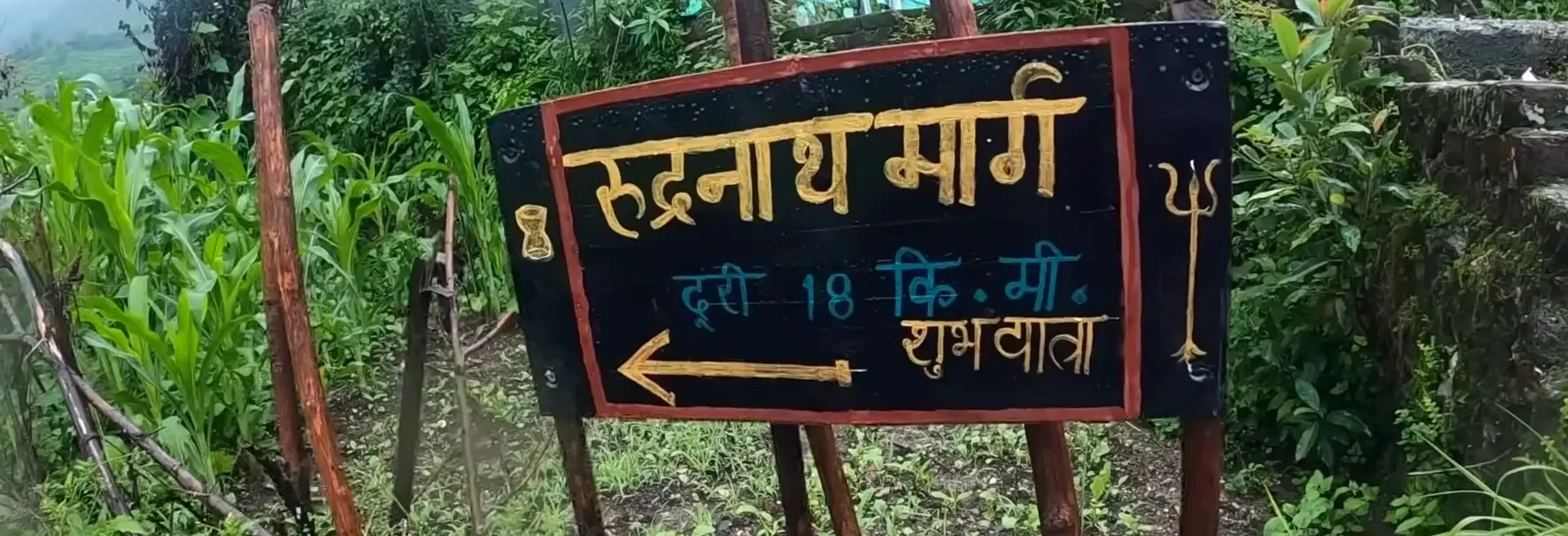
Rudranath Trek Route
Sagar village is the primary and most popular base for the trek, passing via the following route: Sagar Village → Lyuni Bugyal → Panar Bugyal → Rudranath Temple
Below is the complete breakdown of the Rudranath trek route map with distance and duration:
- Sagar Village to Lyuti Bugyal: First stage, covering a distance of around 7-9 km, takes around 4-5 hours. It’s a steady ascent through oak forest.
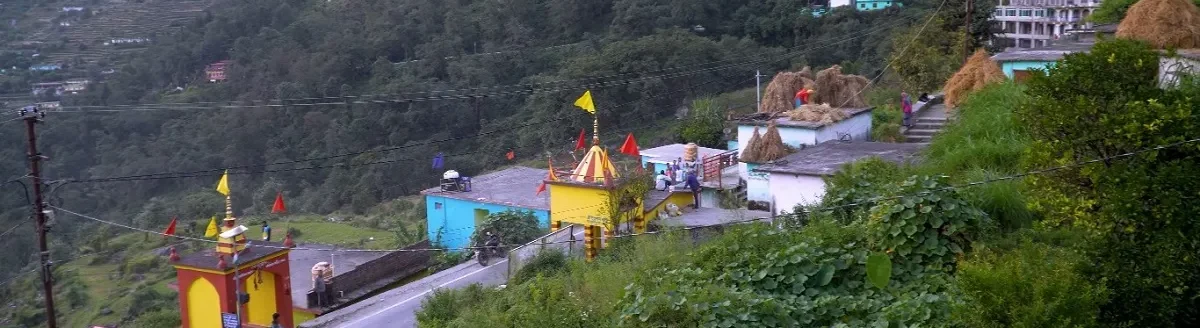
- Lyuti to Panar Bugyal: The next stretch is about 3 km and takes around 2-3 hours. Passing through lush bugyals, offering serene views of greenery and mountain peaks.
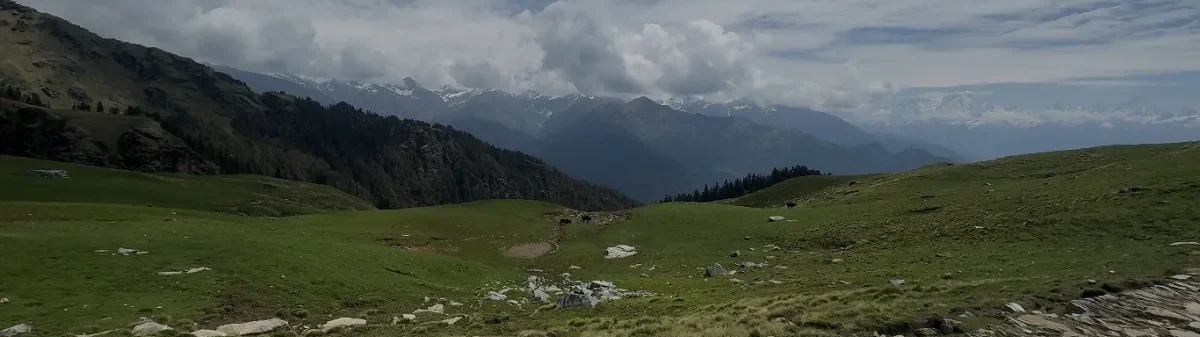
- Panar Bugyal to Rudranath Temple: The last stretch to the temple is about 10-12 km, with the most strenuous section, including a steep ascent to Pithradhar, the highest point of the trek, before the final ascent to the temple.
Note: A stretch of 4-5 km trek from Panar Bugyal will take you to the highest point of Rudranath Trek, known as Pitradhar at an altitude of over 4,000 meters (13,000 feet). It is located on a sharp ridge between Panar Bugyal and Rudranath, offering 360° views of Himalayan peaks, Chaukhamba, Nanda Devi, and Trishul.
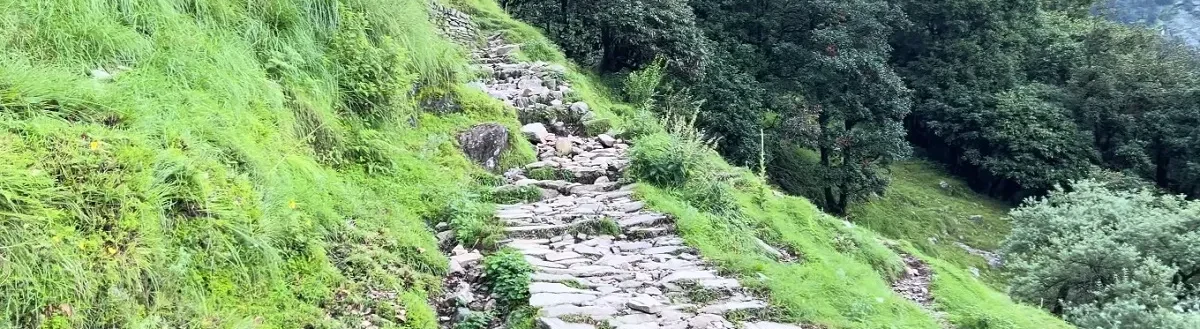
Rudranath Trek Itinerary
Generally, the Rudranath trek requires 4 to 5 days to complete the journey smoothly, so we have crafted a suggested Itinerary for the Rudranath Temple trek as follows:
Day 1: Arrival at Haridwar & Rishikesh
Firstly, drive to the base cities of Haridwar, Rishikesh, and Dehradun via air, train, and road.
Day 2: Drive to Sagar village
The next day, drive to Sagar village, approx. 240-250 km from Rishikesh. Takes around 8-9 hours. Stay a night here before heading on the trek.
Day 3: Trek to Panar Bugyal
Trek to Panar bugyal first. Covering a distance of around 9-10 km takes around 4-5 hours.
Day 4: From Panar to Rudranath Ji Temple
Heads on to the next stage, steep hikes to the Rudranath Mahadev Temple, next 9-10 km.
Day 5: Trek back to the base point and drive back to Gopeshwar
Get Darshan at the temple, spend some time, trek back to Sagar village, and drive on to Haridwar and Rishikesh.
Rudranath Opening & Closing date 2026
Rudranath temple opening and closing dates are auspicious decisions made by the official temple committee based on astrological calculations and traditional rituals.
Usually, it opens in summer & closes in winter.
- Rudranath Opening Date 2026: For the year 2026, the temple will open on 18 May 2026 at 7:00 a.m., along with traditional rituals and Vedic chants during the opening ceremony.
- Rudranath Closing Date 2026: Not announced yet, but the expected closing date of Rudranath is 17 October 2026, when the deity is moved to its winter abode in the Gopinath temple at Gopeshwar.
When will Rudranath Temple open in 2027?
In 2027, Rudranath Temple is expected to open in mid-May between the 14th and 18th of May, 2027. The official date will be announced by the temple committee and head priest on the 11th of February, 2027, on the occasion of Basant Panchami.
Best Time To Visit Rudranath Temple
Due to longer, steep treks and high-altitude treks, knowing about the Rudranath weather and temperature, and the best time to visit for the Rudranath trek is important for a safe and memorable trip.
Generally, May to June and September to October are considered the best time for Rudranath trek, as the temple is open, and the weather is pleasant, making it a good time for the challenging trek and darshan.
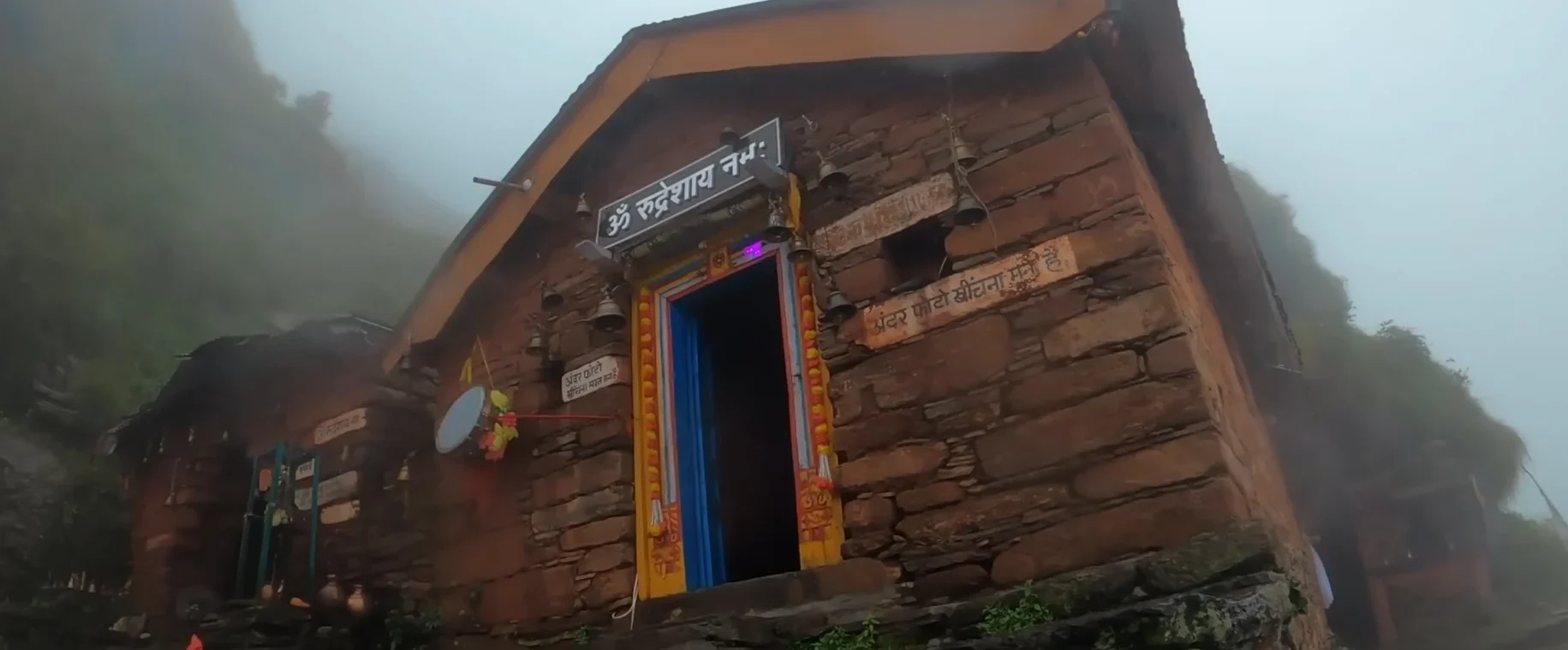
Rudranath Temple weather and temperature by season are as follows:
- Summer (May to June): Summer is the most suitable time to visit the temple, as the snow melts, the temple is open after its winter break, the weather is pleasant with a temperature range from 15°C to 22°C, and trails are accessible, making it a really good time.
- Autumn (September to October): After the monsoon, the weather becomes mild again with crisp air and clear views of peaks, making good time for sightseeing and peaceful temple darshan.
Time To Avoid
- Monsoon (July to August): Monsoon is not recommended due to heavy rainfall, which can trigger landslides, making trails slippery and difficult to navigate, so avoid this time.
- Winter (November to April): During the winter period, the temple is closed due to heavy snowfall, making this region inaccessible, and the idol of the deity is shifted to its winter abode in Gopeshwar.
Rudranath Temple Timings
| Activity/Ritual | Timings |
| Opening Time | 6:00 AM |
| Morning Aarti | 6:00 AM – 7:00 AM |
| Morning Darshan | 6:00 AM – 3:00 PM |
| Afternoon Break | 3:00 PM – 5:00 PM |
| Evening Darshan | 5:00 PM – 9:00 PM |
| Evening Aarti | 6:30 PM to 7:30 PM |
| Closing Time | 9:00 PM |
Darshan Timings: The temple is open from 6:00 AM to 3:00 PM and 5:00 PM to 9:00 PM, along with an afternoon break from 3:00 PM to 5:00 PM.
Rudranath Aarti Timings: Morning Aarti begins at 6:00 AM to 7:00 AM, and evening Aarti is from 6:30 PM to 7:30 PM.
Rudranath Trek Vs Kedarnath Trek
Both the Rudranath trek and the Kedarnath Temple trek are good in their own way, as both are difficult but scenic treks, offering spiritual and beautiful views. But there are many differences too, which set them apart.
| Basis | Rudranath Trek | Kedarnath Trek |
| Distance | 20 km one way from Sagar Village | 16 km one way from Gaurikund |
| Duration | 3 to 4 days with a halt | 6 to 8 hours |
| Altitude | 11,811 feet (3,600 meters) | 11,755 feet (3,583 meters) |
| Difficulty | Extremely challenging | Moderately difficult |
| Trek Route | Strenous trek route with uneven terrain, steep climbing, and steep ridge | Wide and well-paved trekking trails, but steep inclines |
| Facilities | Very few small shops at specific points and no porter or mechanical facilities are available | Small eateries, water facility, Kedarnath pony/palki, and Kedarnath helicopter services are available |
| Experience | Adventurous, tranquil, and serene views | Rushed paths but scenic viewsThe |
Rudranath trek is more challenging than the Kedarnath trek due to its strenuous trek route and high altitude, where oxygen is thinner. Also, the facilities are almost nonexistent, making it hard for many trekkers. Kedarnath trek is slightly better due to the available facilities with shorter distance and lower altitude.
Places To Visit Near Rudranath Temple
There are so many spiritual and scenic destinations around the region, which make your journey more joyful and memorable.
- Gopeshwar: Gopeshwar is one of the most scenic towns and serves as a main stopover point for travellers visiting Rudra Kedar. It is the winter home of the Rudranath Shivling, where the idol of the deity continues to be worshipped during the winter.
- Panar Bugyal: A most scenic stop on the trek route, famous for its wide, lush green bugyals that offer stunning views of the peaks.
- Holy Kunds: This region is home to many kunds, including Chandra Kund, Tara Kund, and Nandri Kund.
- Anusuya Devi Temple: An alternative route of the Rudra Kedar trek via Mandal village passes through the Anusuya Devi Temple, dedicated to Goddess Sati, which offers a serene atmosphere.
- Chopta: Chopta Valley is a popular meadow, known as the “Mini Switzerland of India,” famous for its panoramic Himalayan landscapes. Serves as a primary base for the Tungnath temple and the Chandrashilla trek.
- Tungnath Temple: World’s highest Shiva temple and a part of Panch Kedar, Tungnath is a well-revered Shiva shrine. Located around 30-32 km away from this region and accessible by a short 3.5 km trek from Chopta.
Stay Options on Rudranath Trek
Stays in Rudranath Uttarakhand, are basic, consisting of guesthouses, private dharamshalas, and tents run by GMVN. Mostly, stays are seasonal and require booking well in advance due to high demand.
Popular stay options:
- GMVN Rest house: located near Sagar village
- Private Dharamshalas
- Tented Camps, along trek routes in Lyuti Bugyal and Panar Bugyal
Food Option: Food is generally simple and authentic, local Garhwali at small dhabhas and food stalls along the trek route. But it is advisable to pack survival snacks, such as dry/dried fruits, energy drinks, and protein bars.
Is camping allowed in Rudranath Trek?
Yes, camping is allowed on the Rudranath trek, but regulated under strict orders of the Uttarakhand High Court; you can not pitch a tent in the meadows, such as Panar Bugyal. Camping is allowed in specific areas, such as Lyuti Bugyal, Sagar Village, and near the temple.
Travel Tips for Visitors
- Book your stay in advance: Stays are limited, and demand gets high during peak season, so book in advance to avoid last-minute hassle.
- Proper Acclimatisation: Acclimatisation is necessary to reduce travel fatigue and altitude sickness risk.
- Check Weather & Trails: Weather can fluctuate easily in this region, so check before planning for the trip.
- Keep Cash Handy: Carry sufficient cash for your trip, as ATMs are limited, and online payments can be disrupted due to poor networks.
- Prepare for a high-altitude trek: Prepare your body and mind for the high-altitude trek.
- Respect the Environment: It’s an eco-sensitive zone, so avoid using plastic, respect the site, and avoid littering.
Conclusion
The entire region of the Rudranath Temple offers divine spiritual energy, peaceful meadows, and breathtaking Himalayan landscapes, making visiting this holy shrine more than just a trip. It is an unforgettable experience, offering a blend of adventure and devotion.
It feels like a journey of self-discovery, nature tranquillity, and spirituality together. So whether you are a trekker looking for a peaceful escape or a pilgrim heading on a Panch Kedar Yatra, Rudranath is something special.
FAQs
In which district is Rudranath Temple?
Rudranath temple is located in the Chamoli district of Uttarakhand, within the Garhwal Himalayas. Situated at an altitude of 3600 meters (11,811 feet) above sea level.
How long is the Rudranath trek?
The Rudra Kedar trek is around 20-22 km long from the most popular base via Sagar Village; it takes around 4-5 days to complete. Distance can vary by the alternative route via Helang village; it is around 24-26 km.
Which trek is difficult, Kedarnath or Rudranath?
The Rudranath trek is more difficult than the Kedarnath trek. It is around 20 km one way and involves continuous steep ascents, while the Kedarnath trek is around 16 km, which also provides alternate methods for the trek, like Pony/Palki and helicopter service.
However, both trek routes are moderately difficult and physically demanding due to steep climbs and long trekking distances.
Which part of Shiva is in the Rudranath Temple?
The face of Lord Shiva is in the Rudranath Temple, where he is worshipped in his unique fierce “Mukha,” often referred to as the Rudra rup, making it one of the Panch Kedar circuit.
How to go to Rudranath?
To visit Rudra Nath, travellers must reach Sagar Village from Haridwar/Rishikesh, around 240-260 km away, taking around 8-9 hours. From there, head on a steep trek to reach the temple, passing through the rhododendron forest and bugyals.
Why Rudranath Trek is difficult?
Rudranath trek is difficult and the toughest among Panch Kedar, due to a long distance of around 20 km and steep inclines and uneven terrain; it requires physical fitness and stamina.
Can beginners do the Rudranath Trek?
Yes, a beginner can do the Rudranath Temple trek with proper planning and guidance from an experienced trek guide. Having good stamina and decent physical fitness is the first requirement of the trek.
Is Rudranath a jyotirlinga?
No, Rudranath is not a Jyotirlinga; it’s a highly revered Shiva temple and one of the Panch Kedar circuits, where the face of Lord Shiva is enshrined as the Rudranath Shivlinga, manifested in natural rock (swyambhu Shiva Linga).
Can Rudranath Trek be done in one day?
Yes, a professional trekker with strong physical abilities can complete the 20 km Rudranath trek in one day, by trekking continuously for 10-14 hours. But for beginners and those who are not used to trekking a lot, can not do the trek in a day.
What is the story behind the Rudranath Temple?
The story of the Rudranath temple tied the legend of the Pandavas from the Mahabharata, who were seeking Lord Shiva’s forgiveness for atoning for the sins of killing their Kinsmen.
But Lord Shiva was not ready to forgive them and took the form of a bull to evade them and hide in the Himalayas. Lately, appeared at distinct locations, and Rudranath is one of them, where the face of Lord Shiva is worshipped.

Partiksha is a dedicated travel content writer with over 5 years of experience in exploring various destinations in India. From mountains, beaches, treks, to spiritual sites, she believes in sharing experiences through creative storytelling, publishing travel guides, and engaging blogs.
She holds the technique to embrace cultures, stories, mythologies, and various experiences to engage with travellers. With an eye for aesthetics, Partiksha has crafted content that motivates travellers to explore beyond the ordinary itineraries. She doesn’t just write content, but makes it relate to the audience and helps them find what they are looking for.
Her expertise is not limited to writing content, but she also does travel blogging, destination reviews, SEO-friendly travel writing, and creative storytelling that reflects both value and authenticity. She believes that every travel destination has a story worth sharing, which helps to connect people with a place. To make your every visit memorable, she continues to do it through her expertise.



Comments (11)