
Introduction
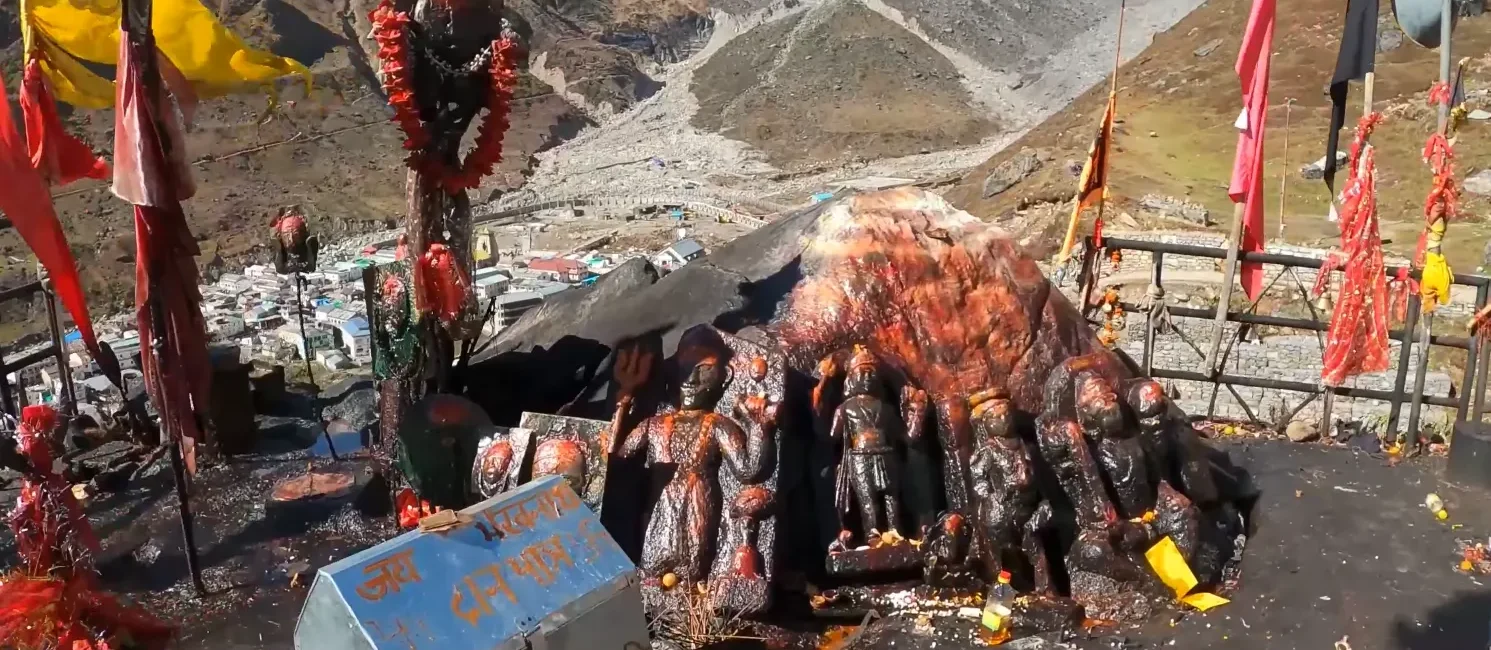
Just above the sacred Kedarnath Temple stands the powerful and peaceful Bhairavnath Temple (also known as Bhukund Bhairav mandir), which is an open-air shrine. Surrounded by the towering Himalayas of Uttarakhand, the temple is dedicated to Lord Bhairava (a fierce manifestation of Lord Shiva).
This sacred site is an essential spiritual extension for the pilgrimage; it has become a powerful symbol of protection, faith, and divine energy. It is believed that the Kedarnath Yatra remains incomplete without visiting here, so we also cover this place in our Kedarnath trip package.
The Bhairavnath Temple is considered the guardian deity of Kedarnath Dham, especially in the winter months when the main shrine is shut due to heavy snow.
Quick Information About Bhairavnath Kedarnath
- Location: Located on a hillock around 500-800 meters from the main Kedarnath Temple
- Altitude: 3,600 meters (11,800 feet)
- Kedarnath to Bhairavnath distance: 0.5 km (500 meters) to 0.8 km (800 meters)
- Trek Difficulty: Moderate to difficult
- Main Deity: Lord Bhairavnath
- Highlights: Snow-capped peaks and powerful energy
Who Is Bhairavnath in Kedarnath?
Bhairavnath, also known as Bhukund Bhairav, is a fierce manifestation of Lord Shiva in Hindu mythology. Shri Bhairavnath is believed to be the guardian deity (Kshetrapal) of the Kedarnath Temple and the entire Kedar valley.
His fierce and powerful manifestation is associated with ultimate protection and destruction, reminding devotees that the power doesn’t just exist in peace but also in courage and protection.
Where is Bhairavnath in Kedarnath?
The Bhairavnath Temple Kedarnath is located on a hillock on the eastern side of the Kedar valley, offering a bird’s-eye view of the entire valley and the Kedarnath Temple complex. The temple sits roughly at an elevation of 3,600 meters above sea level, within the Garhwal Himalayas of Uttarakhand.
Distance from Kedarnath: Approximately 500 meters to 800 meters, in the south-east area of the shrine.
How To Reach Bhairavnath Temple
Kal Bhairavnath Kedarnath is easily accessible by a short hike of 500 to 800 metres, followed by a 16 km trek from Gaurikund and a road journey.
Steps to reach the Bhairavnath Temple Kedarnath, are as follows:
Step 1: Reach Gaurikund
First, reach the base camp for the Gaurikund to Kedarnath Trek, accessible by a road journey from major towns.
Step 2: Gaurikund to Kedarnath
From Gaurikund, embark on the 16 km trek to reach the Kedarnath Temple, taking around 7-8 hours trekking on foot, passing through small villages and scenic views.
Note: You can either choose the Kedarnath helicopter booking for the 16 km trek. Check this, if you want to know which is better, Trek vs Helicopter for Kedarnath.
Final Stretch: Kedarnath to Bhairavnath
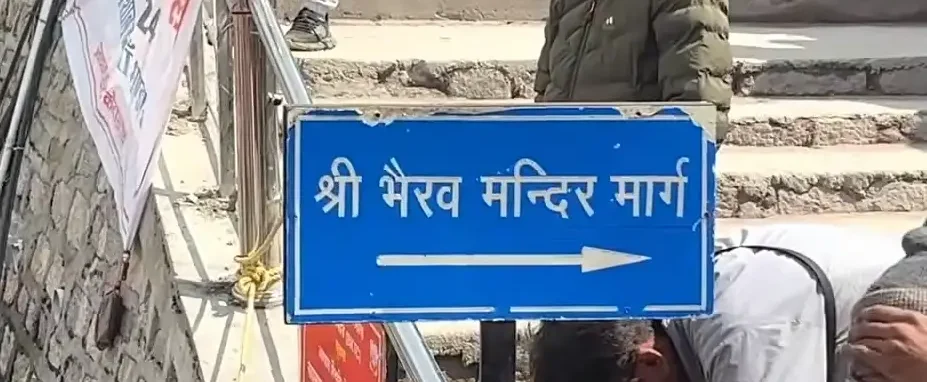
From there, head on a steep uphill trek of around 0.5 km to 0.8 km from the main shrine to reach the guardian deity of the shrine.
Trails & Accessibility: The trek to Bhairavnath Temple is short but uphill and steady, taking around 20-30 minutes. The trail to this shrine starts from the right side of the main shrine.
You can reach there by trekking or by the Kedarnath Palki/Pitthu service, which is available for those unable to trek.
Bhairavnath Story
The story of Shri Bhairavnath Mandir holds deep mythology. According to local beliefs, Shri Bhairavnath is a fierce manifestation of Lord Shiva, who acts as the Kshetrapal of the entire valley and the shrine.
After the Pandavas built the temple to atone for their sins, Lord Shiva manifested the eternal guardian to protect the sanctity of the divine Kedarnath shrine from ghosts, evil forces, and demons.
Since then, the Kshetrapal has been protecting the shrine from natural calamities and storms. Also, there is a belief that during the winter closing, Bhairavnath protects the Kedar Valley and the shrine.
Moreover, it is believed that no worship would be considered without acknowledging the fierce protector of the shrine, standing still even in devastating disasters.
Features of Shri Bhairavnath Mandir
Unlike the many enclosed Himalayan shrines, the Bhairav Nath Temple is an open-air site, with no roof over the deity. It symbolises the infinite nature of Bhairava.
The deity is worshipped here in a unique form: On a rock-form idol (called Bhukund) holding a Trishul under the sky.
It sits with a mountain backdrop, offering breathtaking views of the peaks. The surrounding atmosphere is truly divine, where devotees offer prayers and meditate to feel the divine energy.
Significance of Bhairavnath Temple
The Bhairav Nath Temple holds immense spiritual significance among the devotees and plays a crucial role during the Kedarnath Yatra. According to local belief, Lord Bhairav is considered the Kshetrapal (protected deity) of the Kedar valley and the Kedarnath Temple.
During the winter, the main Kedarnath Temple is closed due to heavy snowfall. Baba Bhairavnath guards the shrine and entire region from evil forces and natural calamities. As per the local rituals and customs, the Kedarnath Temple opens after its winter break, with Bhukund Bhairav worship first in every season.
There is a belief that a pilgrimage to Kedarnath is considered incomplete without paying reverence at the shrine. Traditionally, worshipping Lord Bhairava to pray for divine strength, safe passage, and fearlessness has become part of the sacred journey.
Beyond its spiritual importance, the Bhairavnath Kedarnath is popular for its breathtaking natural beauty. Due to its hilltop location, the shrine offers panoramic views of the entire Kedar valley and surrounding snow-capped peaks. It reflects the raw spiritual energy and deep connection between nature and devotion.
Things To Do In Bhairavnath Above Kedarnath
- Trekking on Hillside Trail: It is accessible by a short, moderate hike, which tests your stamina but offers you a great reward of mesmerising views and divine energy.
- Offering Prayers: After reaching there, pay respects to the stone idol of Lord Bhairava. Traditionally, pilgrims offer mustard oil, red flowers, and bells to the deity to seek the blessing of fearlessness and inner strength.
- Photography: Capture the beautiful Himalayan landscape from a vantage point
- Meditation: Sit at the shrine for some time and meditate; you will feel the reflection of calmness and inner peace.
- Interact with resident Sadhus: Gathering with the resident priest or Sadhu who lives and meditates here at the extreme conditions during the yatra season.
Places To Visit Near Bhairavnath Mandir
The area has many scenic & spiritual destinations, including Kedarnath Temple, Chorabari Lake, Vasuki Tal Trek, Adi Shankaracharya Samadhi, etc. Let’s take a look at this.
- Kedarnath Temple: The main attraction is located in the Garhwal Himalayas of Uttarakhand. Dedicated to Lord Shiva, part of the 12 Jyotirlinga and Panch Kedar Temples.
- Vasuki Tal: An alpine crystal lake, located around 8 km away from Kedarnath, accessible by an uphill trek that offers breathtaking views of the peaks and lake.
- Chorabari Lake: It is often known as Gandhi Sarovar, a small glacial lake located 3 km away from Kedarnath. Chorabari Glacier is believed to be a place where the ashes of Mahatma Gandhi were immersed, known for its peaceful surroundings.
- Rudra Cave: A revered meditation cave, just 1 km away from the main temple. Offering a solitary environment for meditation. Gained popularity after the meditation of PM Modi here.
- Gaurikund: A primary base for the Kedarnath trek and its nearby attractions, Gaurikund is a prominent spiritual town, famous for its ancient Gauri Devi temple and Gaurikund hot spring.
- Retas Kund: A small holy kund, located just a few meters away from the main shrine. Holding great importance due to its magical appearance, the water of the kund is believed to bubble when devotees chant “Om Namah Shivaye” near the kund.
- Adi Shankaracharya samadhi: A memorial site dedicated to sage Adi Shankaracharya, who re-established the Kedarnath shrine. Located just behind the temple. Believed to be the final resting place of Shankaracharya, who attained the great samadhi here.
Travel Tips For Visitors
- Pack warm clothes: Wear proper warm clothing, as it is located at very high altitudes and experiences cold and extreme weather, so layering is key.
- Best time to visit: The best time to visit the Bhairavnath Temple is aligned with the opening and closing of Kedarnath. May to June & September to October are the best months for visiting. Visit during early morning along with the Kedarnath Darshan.
- Wear proper trekking gear: The trek to Bhairavnath is steady and steep, demanding good stamina and health. So wear trekking shoes and use a walking stick to navigate the trails.
- Carry water & energy snacks: Shops are not available along the trail, so carry a water bottle and energy snacks during the trek.
- Keep the surroundings clean: It’s an eco-sensitive zone, so keep the valley clean. Avoid littering.
Conclusion
The Bhairavnath Temple Kedarnath is truly a divine manifestation and spiritual experience that connects devotees with the powerful form of Shiva. From traditional pilgrimage to modern times, the site has become a vital part of the Kedarnath Yatra.
Visiting Kedarnath is incomplete without visiting the sacred Shri Bhairavnath mandir. With open-air and rock-stone idols of the deity and scenic Himalayan views, the temple offers a great sense of devotion and calm to devotees.
Our package includes this sacred temple. You can check out our Delhi to Kedarnath package cost and details about our other Kedarnath package from Mumbai, Nagpur, and more for a complete tour to Kedarnath from your city, along with nearby attractions.
FAQs
Which bhairav is in Kedarnath?
The Bhairav worshipped at Kedarnath is Bhukund Bhairav, believed to be the fierce manifestation of Lord Shiva. Bhukund Bhairav is located on a hilltop rock, around 500 meters from the Kedarnath Temple, where he worshipped on an open-air rock.
How far is the trek from Kedarnath to Bhairavnath?
The trek from Kedarnath to the Bhairavnath Temple is around 800 meters of uphill hiking, considered challenging due to the steady trail. It begins from the right side of the main shrine and takes around 20-30 minutes.
How far is Bhairavnath Mandir from the Kedarnath Temple?
Shri Bhairavnath mandir is approximately 0.5 km to 0.8 km, almost 1 km from the Kedarnath Temple, accessible by trekking.
Is the Bhairavnath trek difficult?
Yes, the trek to Bhairavnath is moderately difficult due to uphill hikes and steady climbs, requiring good physical fitness and stamina
Can senior citizens visit Bhairavnath Temple?
Yes, senior citizens can visit the Bhairavnath Temple. Pithouses are available for those who can not trek. Take proper precautions, such as carrying a portable oxygen cylinder and wearing warm clothes.
Is Bhairavnath Temple open throughout the year?
No, the timing of the Bhairavnath Temple aligned with the opening and closing of the Kedarnath Temple. It is open from May to October and closed in winter from November to April due to heavy snowfall.
How much time is required for the visit?
Usually, 30 minutes is enough to visit the Bhairavnath Temple to complete the uphill trek.
Is photography allowed near the temple?
Yes, photography is allowed near the site, since it’s an open-air shrine, so there are no strict restrictions.
| Packages Kedarnath Package From Ahmedabad Kedarnath Tour Package from Bangalore Kedarnath Package from Nagpur Kedarnath Tour Package From Surat |

Partiksha is a dedicated travel content writer with over 5 years of experience in exploring various destinations in India. From mountains, beaches, treks, to spiritual sites, she believes in sharing experiences through creative storytelling, publishing travel guides, and engaging blogs.
She holds the technique to embrace cultures, stories, mythologies, and various experiences to engage with travellers. With an eye for aesthetics, Partiksha has crafted content that motivates travellers to explore beyond the ordinary itineraries. She doesn’t just write content, but makes it relate to the audience and helps them find what they are looking for.
Her expertise is not limited to writing content, but she also does travel blogging, destination reviews, SEO-friendly travel writing, and creative storytelling that reflects both value and authenticity. She believes that every travel destination has a story worth sharing, which helps to connect people with a place. To make your every visit memorable, she continues to do it through her expertise.



Comments (4)